




Our daily Field Notes email is just the kind of jumpstart you need. A fast read. Maybe less than a minute. Because sometimes it just takes one insight to change the trajectory of the day.
Search Field Notes
-
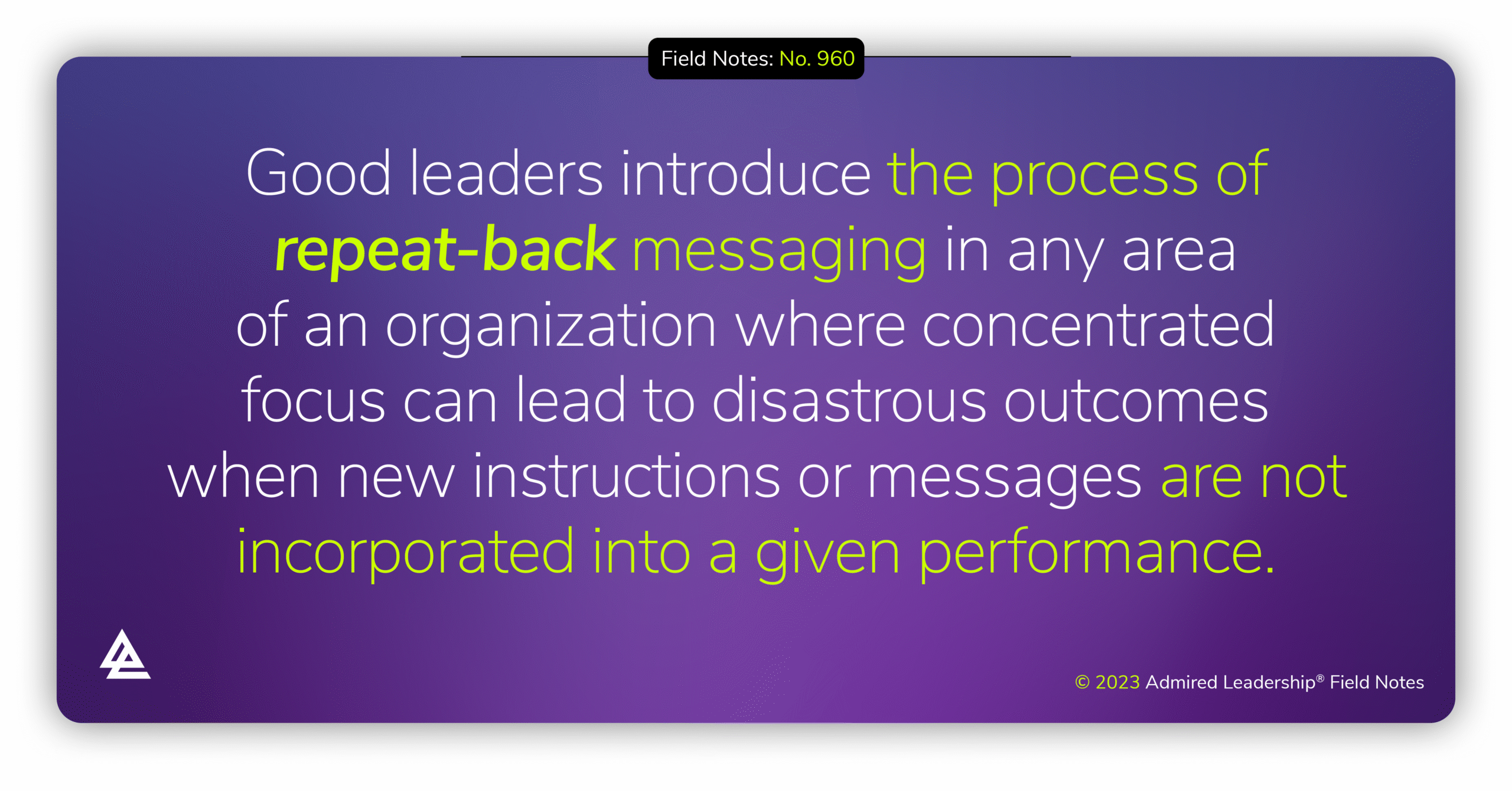
Concentrated Focus and Repeat-Back Messages
We often think this process is the domain of military organizations and overlook the value of this practice in tasks such as mechanical repairs, kitchen prep and recipe execution, hospitality service, financial reporting and analysis, patient care, software testing, customer orders, and legal strategy, to name just a few. Good leaders introduce the process of…
-
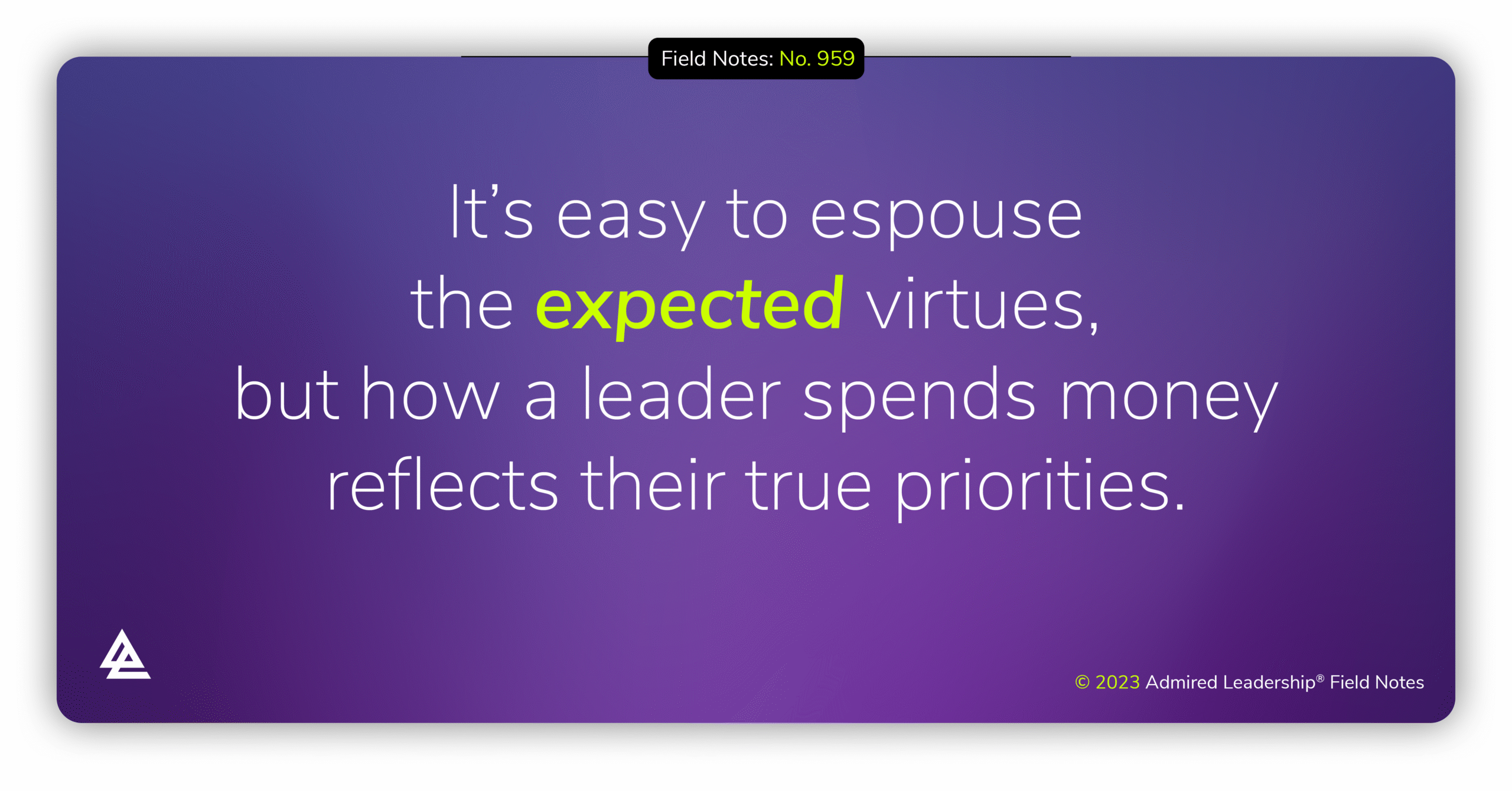
How a Leader Spends Money Tells You Who They Really Are
While these are broad generalizations, how leaders spend money and what it reflects is fairly obvious to everyone around them. Over time, colleagues, friends, and family members come to know how a leader views money and uses it to represent their values. Whether they put their money where their mouth is can suggest a mismatch…
-
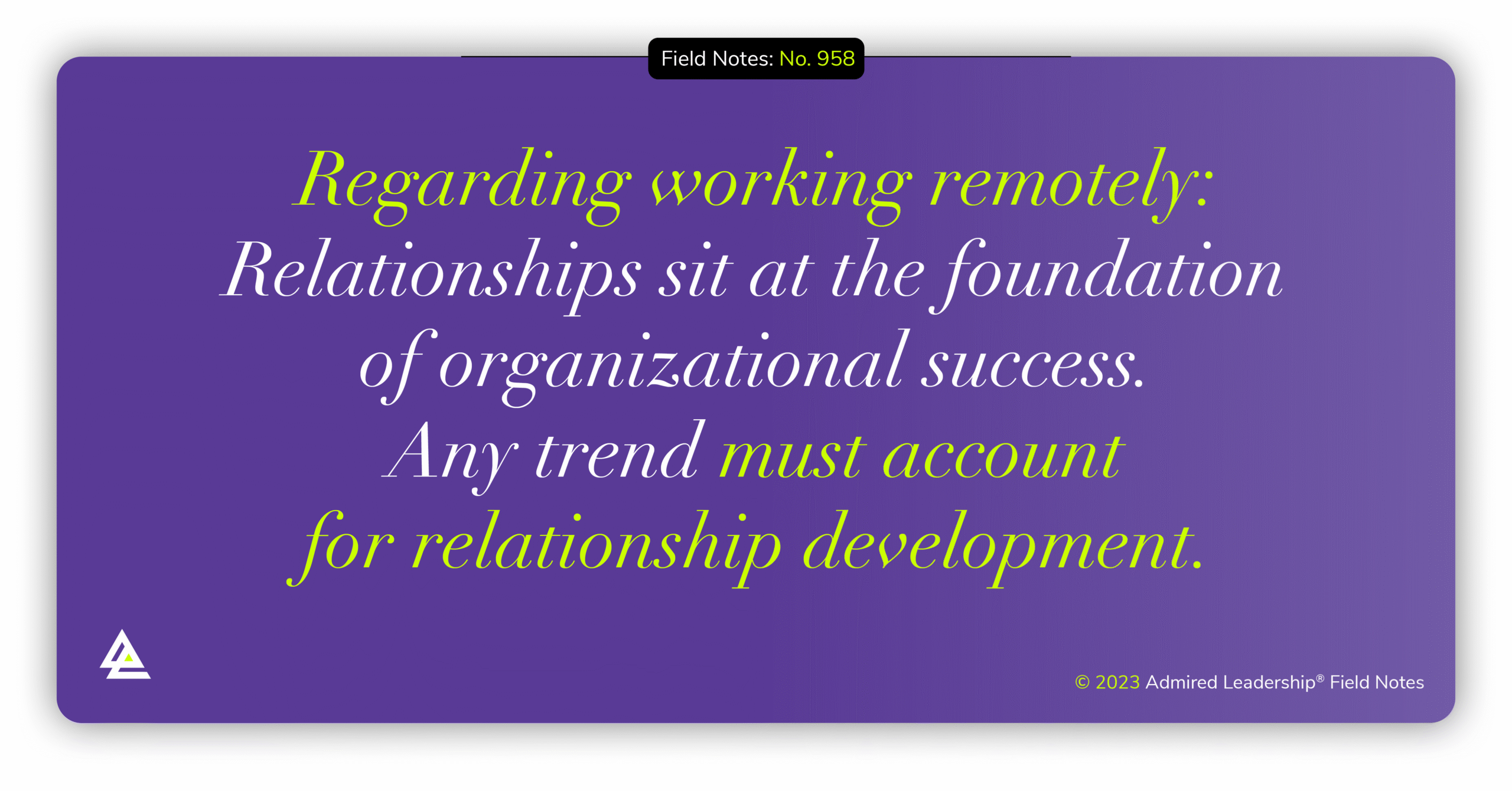
Out of Sight, Out of Mind
None of us fully knows where the workplace options of remote, partially remote, or back-to-the-office will shake out over the next few years. Expert predictions slightly favor a return to on-site work with fewer colleagues working remotely, but the nature of the workplace and the work itself influences much of how things will materialize in…
-
Learning to Ask for Help
Get in the habit of asking for help when it isn’t critical and you’ll have an easier time finding the courage to request a hand when you need it most. Before lifting others up, a good leader must learn not to let themselves down by going it alone. Learn to ask for help.
-
Why Good Working Relationships Sour and End When They Didn’t Need To
Good leaders learn that whatever is bothering them must be addressed early on. Finding a way to bring it up with the other party and explore it is how strong relationships maintain their strength. Solid working relationships can’t survive without a commitment to openly discuss the good and the bad. Learn to talk about what…
-
Holding Yourself Accountable Is Easier With a Buddy
Depending on the behavior, it may be best to turn to a spouse, coach, colleague, or friend to play this role. The most important criterion is to select someone you trust that will live up to the mutual pledge to hold you accountable. They won’t accept excuses or allow you to surrender without putting up…
-
Schedule a Conversation Instead of a Meeting
We attend way too many meetings and engage in too few conversations. While the best meetings have some conversation-like qualities, the idea that status, agenda, and information drive meetings makes them very different from conversations. In meetings, people often compete to stand out, get heard, and advocate for their ideas, resulting in unfocused discussions replete…
-
True Advocates Don’t Let Others Bad Mouth You
Trusting that the team is comprised of full-hearted advocates, leaders and team members don’t feel as if they might be judged or belittled behind their backs. This allows them to operate openly, without defensiveness, and to engage others with candor. Teams perform best when everyone believes in the good intentions of others and is willing…
-
The Power of Appreciation or Not
Appreciation is an echo from the lips of leaders to the walls of great teams. People who are appreciated feel more grateful for leaders, as well. Maybe that’s what Voltaire meant when he said: “Appreciation is a wonderful thing: It makes what is excellent in others belong to us as well.” By acknowledging the positive…
-
True Genius Expresses Itself in Multiple Mediums
Pablo Picasso wasn’t just a world-class painter. He was also a master sculptor, a consummate printmaker, a celebrated ceramicist, and an innovative theatre designer. We often think of those with extraordinary talents as having genius. Picasso certainly fit that category and shared something all true geniuses have in common: They can express their unique insights,…