




Our daily Field Notes email is just the kind of jumpstart you need. A fast read. Maybe less than a minute. Because sometimes it just takes one insight to change the trajectory of the day.

Search Field Notes
-
Building Up Delegation Trust
In short order, the adage “If you want something done right, you have to do it yourself” becomes replaced with the mindset “If you want to get everything done, you have to delegate.” To achieve great outcomes, good leaders know they must learn to delegate. It all starts with sharing the smallest tasks and building…
-
If You’re Going to Withdraw, Retreat Forward
Writing with AI is fast and often as good or better than our own writing. Not everything works out the way we envisioned it would. Sometimes the best move is to admit that the goal is no longer attainable and to regroup. But there are two ways to withdraw. One is to surrender. When we…
-
Authenticity and Writing With Artificial Intelligence
Writing with AI is fast and often as good or better than our own writing. Give the AI a guide trained on your preferences, and it can even match your voice, diction, and style. The efficiency of writing with AI certainly makes it hugely attractive to anyone who creates words for others to consume. But…
-
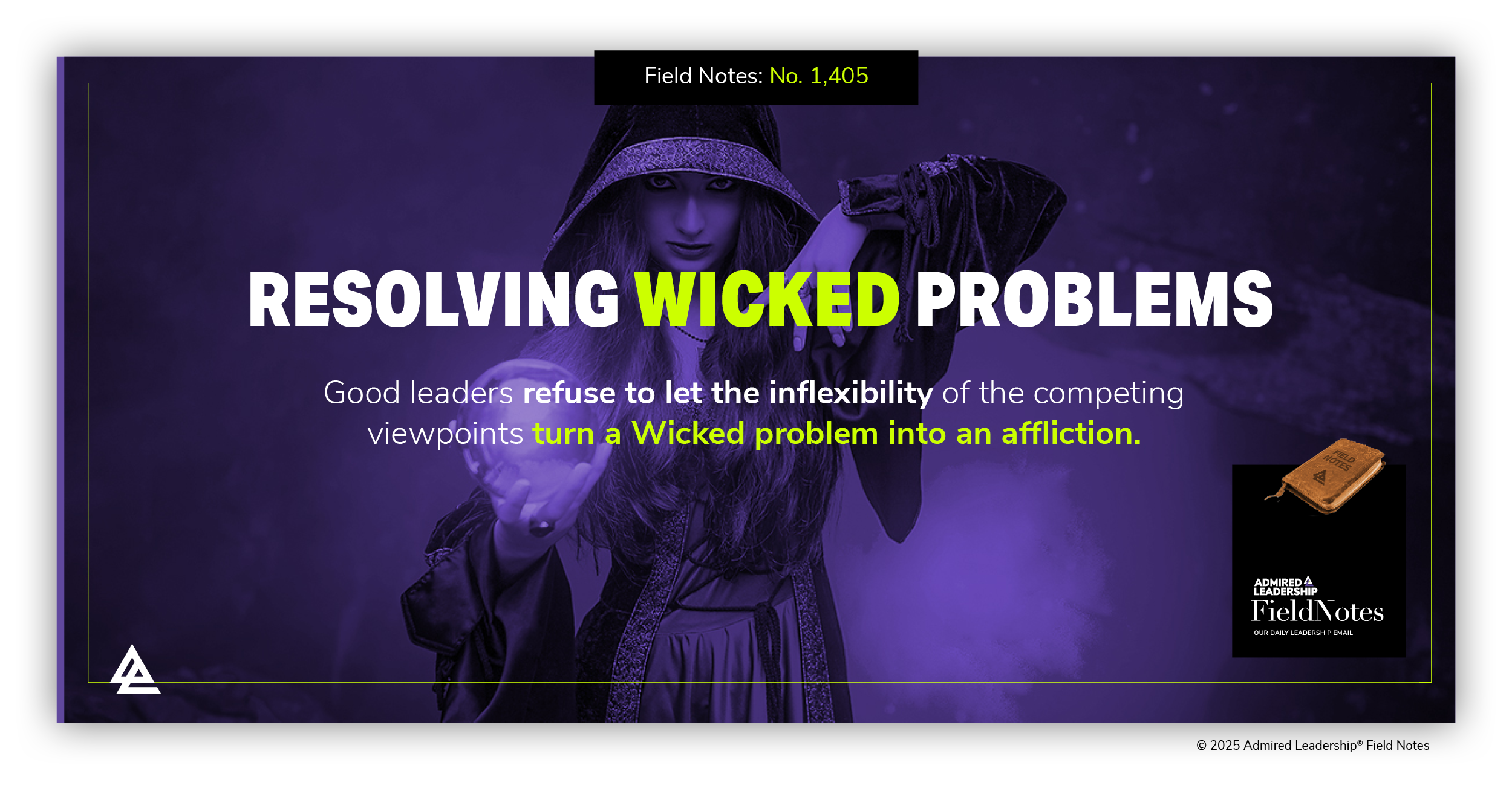
Resolving Wicked Problems
Some problems defy a solution. Whereas most difficult problems can be reframed or divided into parts to be solved, wicked problems present leaders with a more unique challenge. Wicked problems are complex and multi-faceted, with competing advocates that cannot escape engaging one another. The issues inside a wicked problem are typically ongoing and need a…
-
The Key to Reading Micro Expressions
Reading people is a prized leadership skill and critical for leadership success. Great leaders adapt the style of their messages and approaches based on the audience and situation. They are better able to craft the right message when they accurately assess what others are thinking and feeling. That’s where micro expressions come in.
-
Do You Truly Motivate or Just Bribe Others to Raise Their Game?
People are motivated by a wide variety of needs and desires, including praise, autonomy, higher purpose, status, belonging, and challenge. Chief among the needs leaders tap into to compel action and inspire higher performance are incentives. Incentives include anything people desire that they would change their behavior for. Promotion, title, resources, time, affection, and special privileges…
-
When Advocacy Crosses the Line
Good leaders are strong advocates, confident in their views, and have an ability to persuade others through sound and compelling arguments. Persuasive advocates believe deeply in what they are proposing and marshal passion and enthusiasm to make their case. Passion sells, but it can sometimes go too far. Without meaning to, strong and passionate advocates…
-
Connecting Goals to Criticism Shows Others You’re Trying to Help and Not Hurt Them
People don’t separate the content of feedback from the person giving it. The source of the feedback we receive is as important as the message itself. People judge the value of the feedback almost entirely on who is delivering it. Once those receiving the feedback conclude that the giver has the experience, skill, and context…
-
The Country Club Mindset
Why are so many clubs, volunteer organizations, and member-centric associations so poorly run? Despite the fact that there is nothing about the nature of such organizations that prevents them from being well managed and led, national surveys show that a minority of member-oriented institutions are viewed as being effectively managed and operated compared to other…
-
For the Hopelessly Impatient
Impatient people simply can’t wait. They want to hear the news, achieve the outcome, and talk through the problem right NOW. They’ve been told repeatedly over the years that they need to slow down, “hold their horses,” and accept what they cannot control. But they find waiting painful. Their intolerance for delay makes them anxious…