




Our daily Field Notes email is just the kind of jumpstart you need. A fast read. Maybe less than a minute. Because sometimes it just takes one insight to change the trajectory of the day.

Search Field Notes
-
Code Words for Resistance to Feedback
People resist incorporating the feedback they receive by responding in ways that suggest they will make change when they really have no intention to do so. In yesterday’s Field Note, we discussed the response of Happy Talk to mollify leaders but avoid taking action. However, there are several other resistance strategies that leaders should be…
-
When People Respond to Feedback with Happy Talk.
Good leaders are always on the lookout for happy talk and push through this resistance by being specific with their recommendations and by following up afterward to make sure the feedback has been considered and applied. Good leaders don’t fall for happy talk. They expect colleagues to take their feedback seriously and to make the…
-

How Often Do You Use Your Strengths During the Workday?
Management consultants remind us that higher job satisfaction is commonly a function of well-known ingredients: high task diversity, a positive workplace climate, consistent recognition for good work, the flexibility to create a reasonable work-life balance, opportunities for advancement, highly connected relationships with colleagues, and competitive compensation. One other factor that research has proven to be…
-
Holding on to Grudges
Sometimes, people strongly resent what others say or do. If the infraction is large enough, the feelings of ill will and distaste can linger. Harboring this bitterness or resentment over time constitutes a grudge. Those who hold a grudge refuse to forgive the offending party and often fail to treat them with the respect, courtesy,…
-
What Are You Avoiding?
To reduce discomfort, lower anxiety, or push aside difficulty, leaders avoid things they really shouldn’t. At any given moment, most leaders are avoiding something they need to address. Avoidance gives them temporary control over a situation they would rather not face, and leaders like the feeling of control much more than the stress and negative…
-
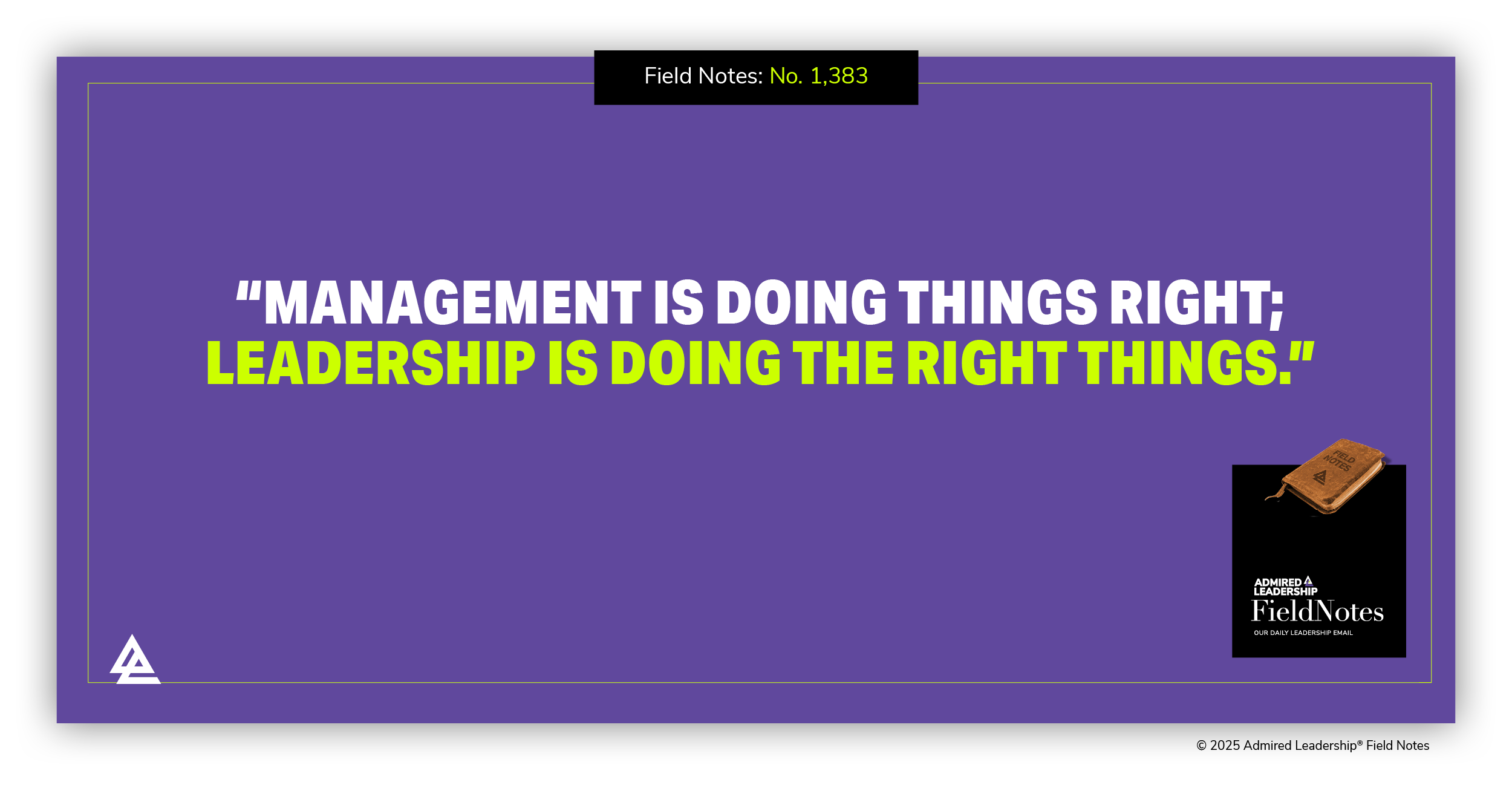
Allocate Time in Each Day for Both Strategic and Tactical Work
In his attempt to emphasize the difference between efficiency and effectiveness, management guru Peter Drucker famously drew a line between “doing things right” and “doing the right things.” Thus, the popular quotation: “Management is doing things right; leadership is doing the right things.” The ability to think about and do both every day is what constitutes balance…
-
Three Critical Behaviors That Display a More Senior Style
Leaders and team members sometimes get the feedback that they don’t show up as “senior” enough. This is another way of saying they don’t engage or sound like peers when they are in the room with more experienced and seasoned members of their organization. The view that a colleague has a style that is too…
-
An Exercise for Practicing Team Dialogue
Advocacy-based discussions dominate in team interactions. Team members propose ideas, advocate for positions, and try to persuade others to accept their viewpoints. Our need to influence others and to make our convictions known runs deep. So much so that it is exceedingly rare for a team to engage in any conversation that is not advocacy-based.…
-
How Quickly Will Others Notice My Changes in Behavior?
Leaders who make a change and expect to see differences quickly reflected in performance reviews or manager appraisals will be sorely disappointed. It takes a long time to convince others that you operate differently, and they won’t reward you for that change until they see the behavior dozens of times and in different situations. Are…
-
To Grow, a Leader Needs to Be Inauthentic
Contrary to popular leadership wisdom, authenticity is not a reflection of how leaders display what is in their hearts or heads. Authenticity resides in what leaders do most often. For instance, a leader who believes themselves to be compassionate and hopes to display their warmth for others is, in reality, not authentically kind-hearted until they consistently act compassionately. We know leaders…