




Our daily Field Notes email is just the kind of jumpstart you need. A fast read. Maybe less than a minute. Because sometimes it just takes one insight to change the trajectory of the day.
Search Field Notes
-
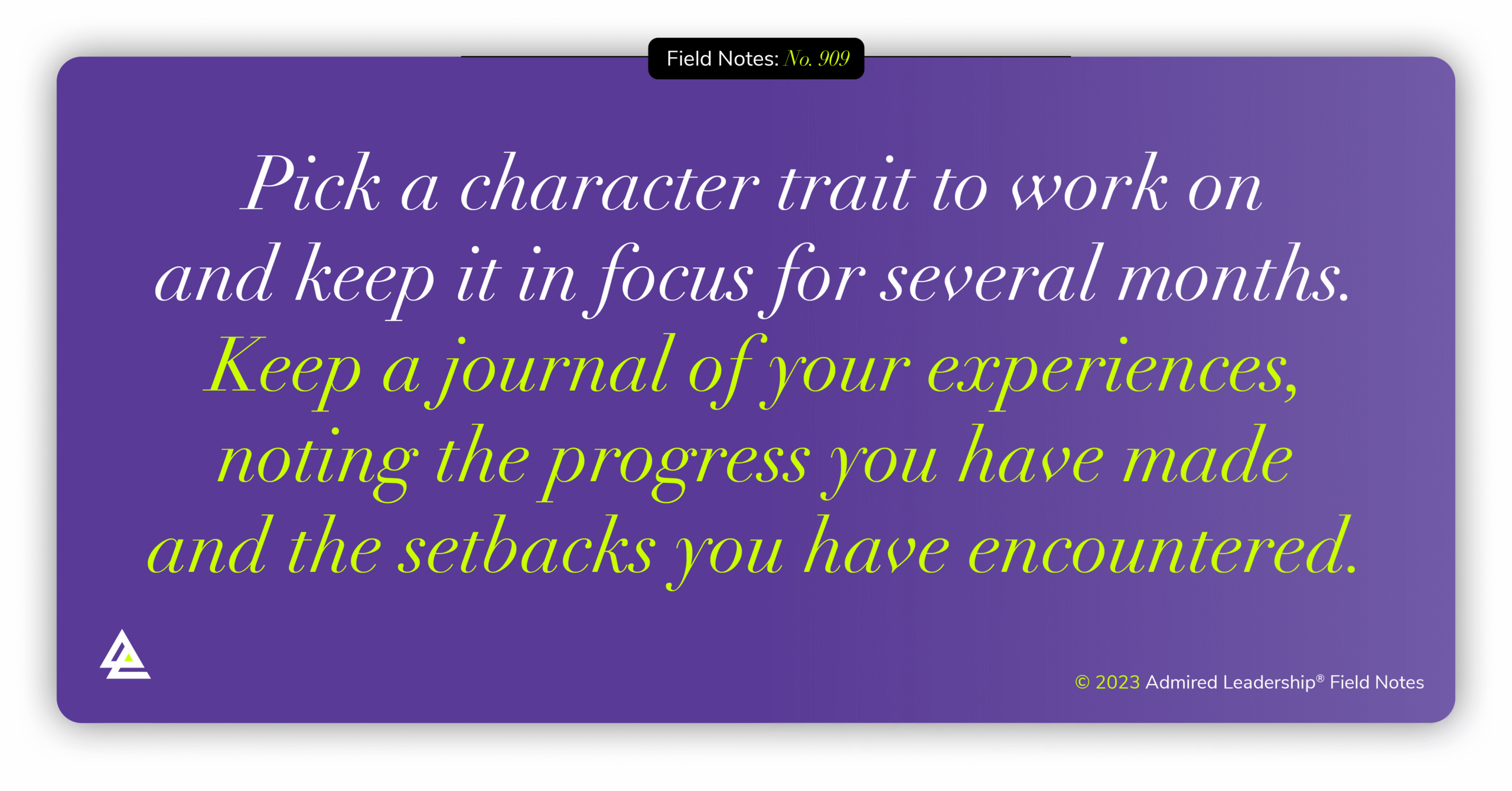
Pick a Character Trait to Work On
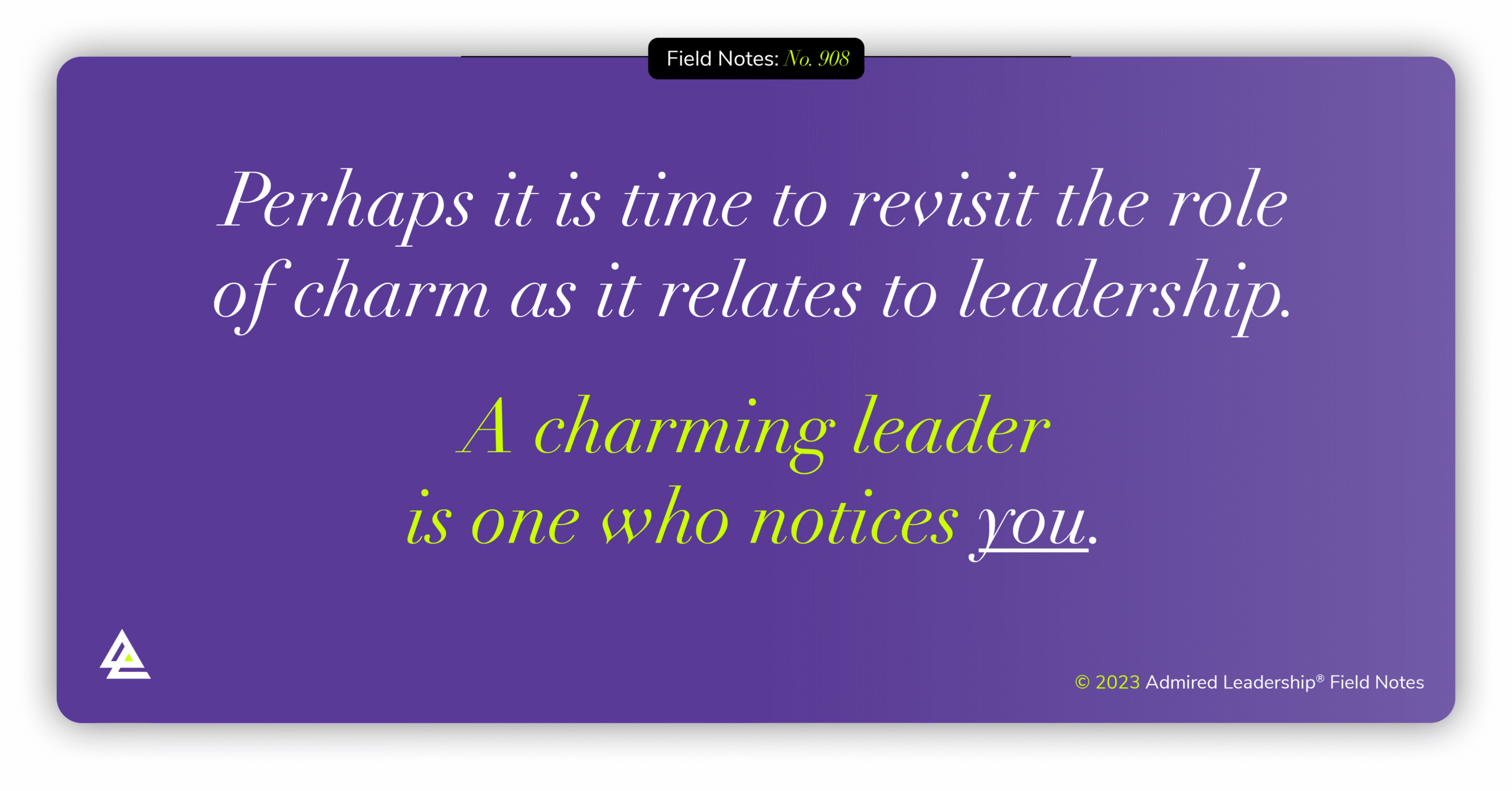
Perhaps it is time to revisit the role of charm as it relates to leadership. We often think of leaders as people with a presence and gravitas worthy of our notice. In contrast, a charming leader is one who notices you. Maybe all leaders need to be more charming.
-
Are Great Leaders Charming?
Perhaps it is time to revisit the role of charm as it relates to leadership. We often think of leaders as people with a presence and gravitas worthy of our notice. In contrast, a charming leader is one who notices you. Maybe all leaders need to be more charming.
-
Self-Importance Can Lead to Unintentional Insults
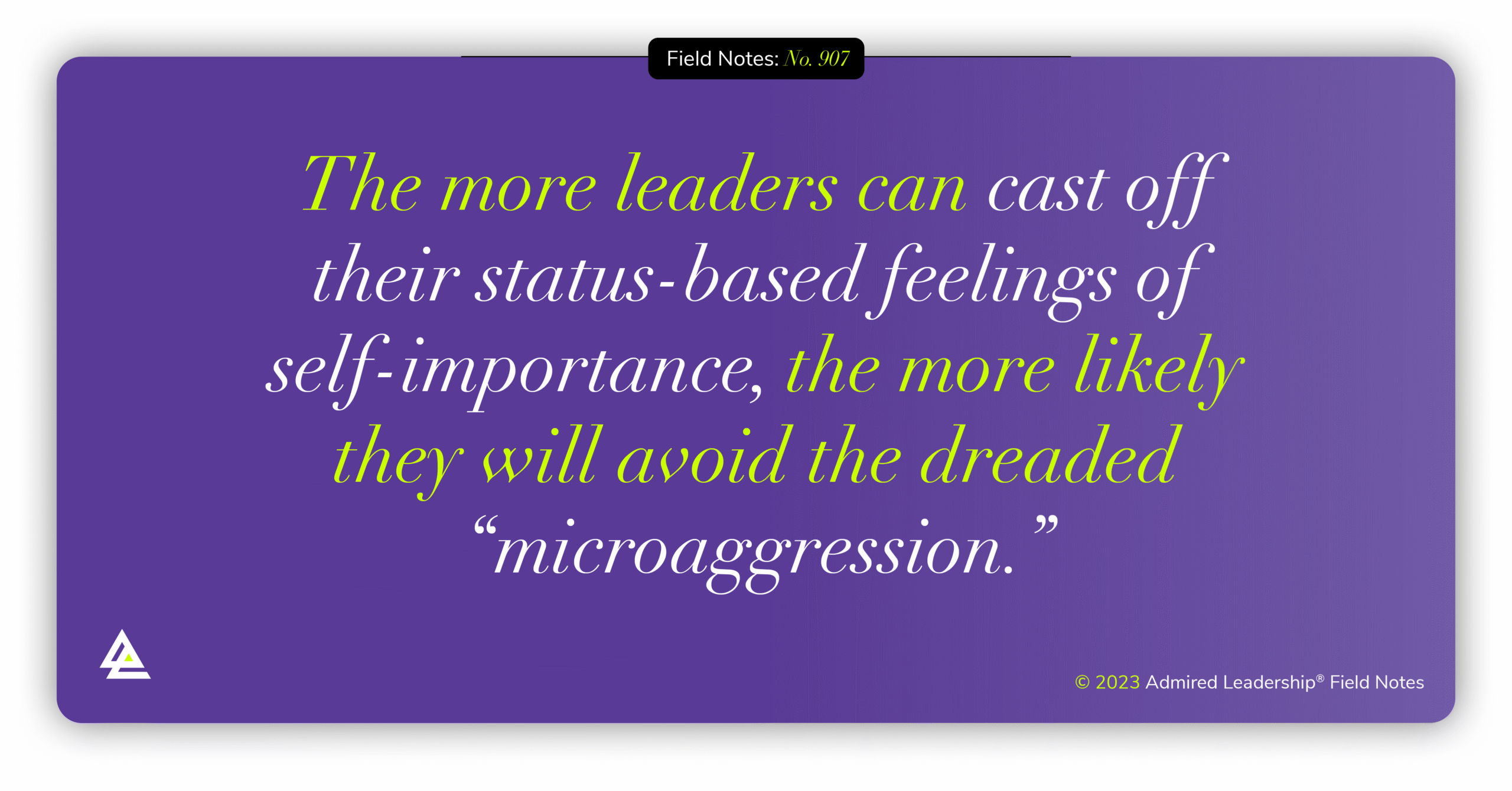
By definition, peer communication sheds status and replaces it with mutual respect. Ideally, peer-like praise and compliments recognize value without reference to the status of either party. The ultimate lesson here is that good intentions alone do not guarantee leaders won’t inadvertently insult people when they are trying to praise or comfort them. The more…
-
Make Individual Performance Transparent to the Team
The best leaders don’t discuss the metrics openly with the team, but rather let the numbers do the talking. They get to spend more time helping low performers develop a plan for success and less time arguing over perceptions of high performance that have long since lapsed. Truth be known, the pressure to perform is…
-
When it Comes to a Critical Choice, Ask an Equally Critical Question
Consequential choice decisions that are repetitive in nature can normally be boiled down into one or more critical questions that streamline the decision. It is the goal of any leader to use their experience and wisdom, matched with data, to determine what those questions are. Whether the choice is to decide who gets the new…
-
Developing an Ethic of Accountability
Great leaders are different in subtle ways. They present themselves differently, ask questions others don’t ask, and balance short and long-term goals masterfully. Perhaps most distinctive about them is the view they have about responsibility. Over the course of their lives, they have created an ethic of accountability for themselves.
-
How Many Roberts Do You Know?
As personal networks expand during a career, so do learning opportunities, job offers, invitations to attend life-shaping events, and occasions to be a part of special experiences. Who you know really matters, and as your network grows, so does the probability of good fortune. So, estimating the size of your personal network and those of…
-
Waiting for Inspiration
Some gnarly tasks and problems require inspiration to be addressed or solved. They are primed for a brand-new solution…if only one came to mind. Without some creative insight or flight of imagination, progress becomes slowed or stalled. Inspiration is often the missing ingredient in solving a problem. Without it, leaders can’t propel the team, or…
-
Lubricating the Mind and Body Before Performance
Lubricating the Mind and Body Before Performance. All high performers share a common goal. They all want to be their best each time they enter the arena, wherever that might be. Without a consistent warmup routine to lubricate the mind and body and to boost self-confidence, even talented and highly polished professionals will find it…
-
Taking Charge Is Not About Getting Your Way
Those who must take charge falsely believe that without them things won’t happen. The bias for action gets translated to only I know the right actions to take. Taking charge when the situation calls for it is very different from the need to get your own way. The former is an act of leadership. The…