




Our daily Field Notes email is just the kind of jumpstart you need. A fast read. Maybe less than a minute. Because sometimes it just takes one insight to change the trajectory of the day.
Search Field Notes
-
In the Absence of Feedback, the Most Experienced People Presume the Negative
In the absence of feedback, people often presume they are doing poorly. In the words of legendary coach Pat Summit, they prefer to “fill in the blanks with a negative.” People have a genuine need to know where they stand in the eyes of the leader. Leaders who are reluctant to praise, criticize, or comment…
-
When You Lose, Learn Like You’ve Won
But a team member with a well-earned reputation for lateness must be dealt with. This starts with an understanding that being on time is completely within the team member’s control. From there, good leaders make it clear that lateness reflects one of two essential problems. Either the team member believes what the team is doing…
-
Can a Good Leader Be Too Candid?
Colleagues and team members exposed to the onslaught of candid viewpoints on nearly every matter soon learn to stay silent. In an ironic twist, unbridled honesty by the leader produces less candidness from others. While good leaders will always have to remain vigilant about being insensitive in their candidness, the most important aspect to guard…
-
The Stand-Up Exercise to Illustrate Shared Values and Experiences
In a time where issues of ideological division are commonly broadcast across various media, it is important for leaders to remind the team that what they share in common is much more powerful than what separates them. Making this point demonstrably, on occasion, can have a profound impact on how people orient to each other.…
-
What Is Your Leadership Derailer?
When left unchecked, personality derailers hijack how leaders think, act, and respond. The key is to not deny that you have one or more derailers. We all do. Knowing your derailers allows you to become more conscious of them and to find avenues to offset them, curtail them, moderate them, or tether them. Remember, a…
-

Tolerate People Until You Don’t Have To
The moment they don’t have to tolerate a team member who needs to go, good leaders pull the trigger. They don’t wait a second longer. No leader on earth has ever uttered the words, “I should have waited longer to terminate that person.” But practical realities prevail. So, the best leaders stage the exit and…
-

Mid-Point Adjustments Can Be the Winning Strategy
Mid-Point Adjustments Can Be the Winning Strategy. Aside from sports, too many leaders fail to adjust their strategy and game plans mid-stream to the detriment of a great result. Short-term adjustments are the key to long-term success. Even small or tiny adjustments can affect the outcome. So, remember that, as the truth presents itself, good…
-
Communicating Constructive Displeasure
For teams, it sometimes takes a mild spectacle to get everyone to appreciate the seriousness of the message. But leaders who do so must find a way to elevate the displeasure constructively without embarrassing or humiliating anyone. Displeasure never needs to be unkind.
-
Thinking About the Consequences in the Moment of Decision
Thinking About the Consequences in the Moment of Decision. Every decision is connected to positive and negative consequences, some intentional and others unexpected. Thinking through the possible consequences and implications of a decision is something all good decision-makers do. However, it is important to know when to leave the consequences aside and let the facts…
-
Team Members Who Are Always Late
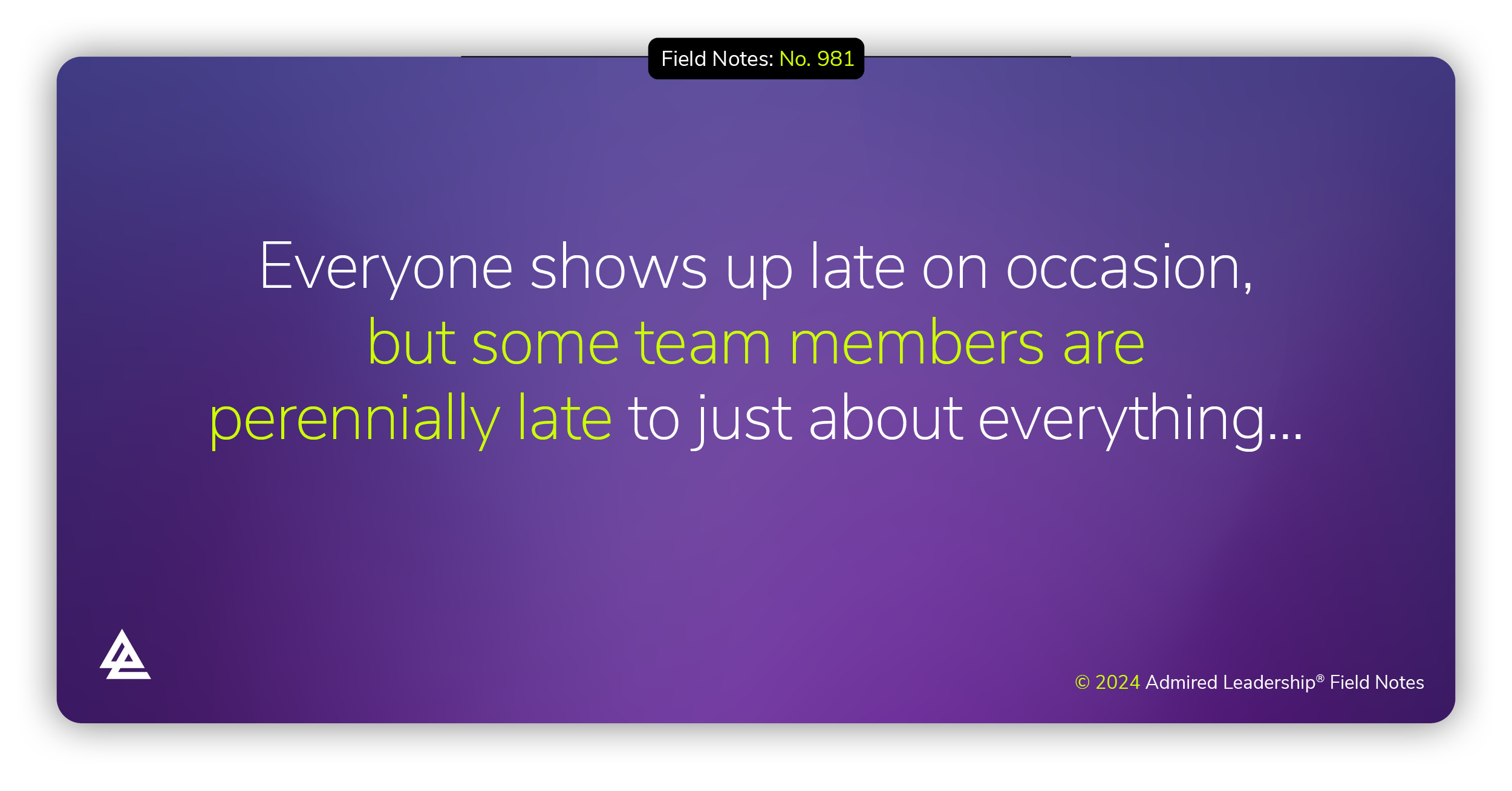
But a team member with a well-earned reputation for lateness must be dealt with. This starts with an understanding that being on time is completely within the team member’s control. From there, good leaders make it clear that lateness reflects one of two essential problems. Either the team member believes what the team is doing…