




Our daily Field Notes email is just the kind of jumpstart you need. A fast read. Maybe less than a minute. Because sometimes it just takes one insight to change the trajectory of the day.
Search Field Notes
-
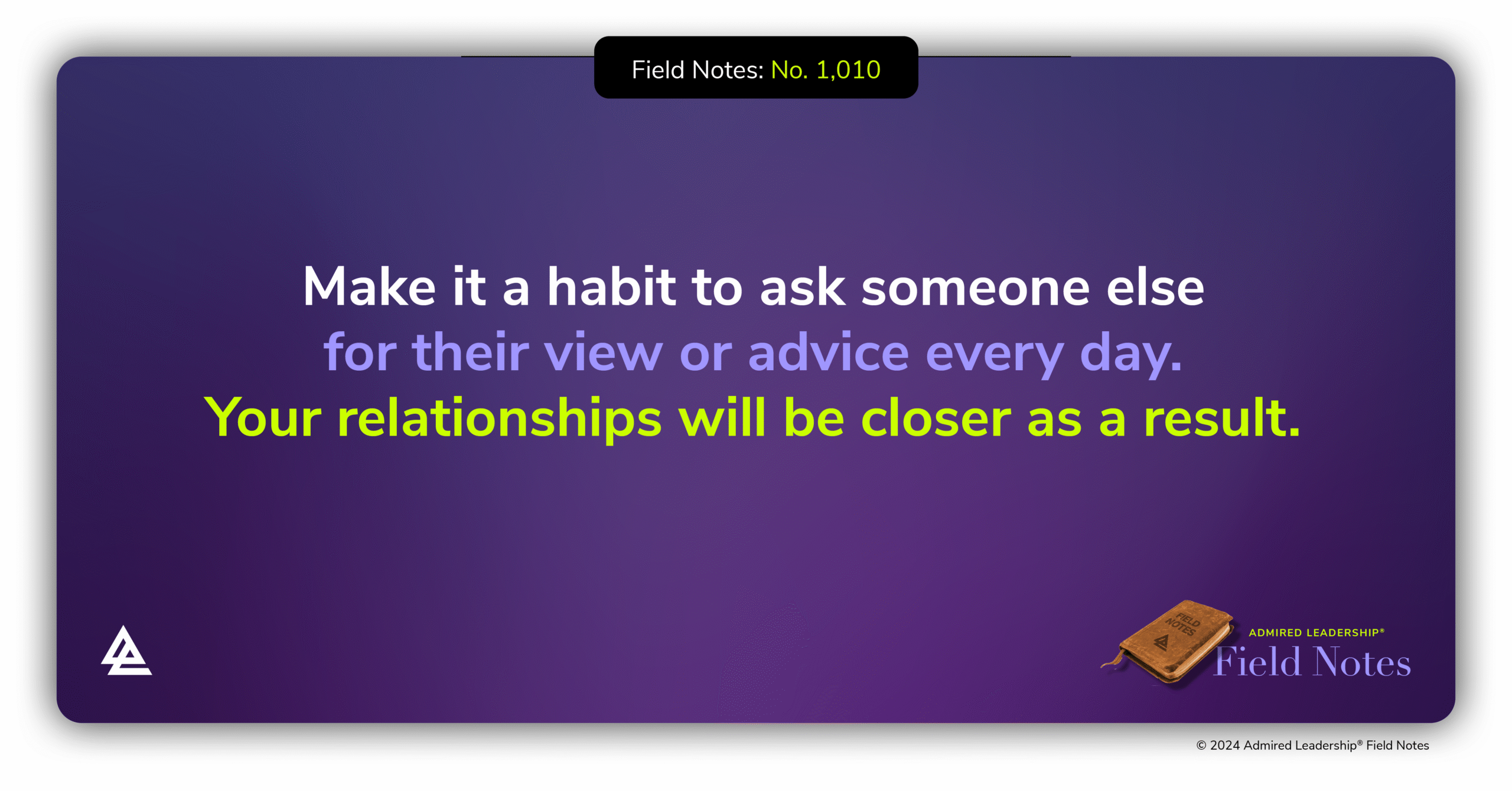
Asking for Advice From Others Who Don’t Expect It
In a strange way, the reluctance of leaders to ask others for advice and input can actually be an advantage. Most people don’t expect it. So, when it happens, asking others for their views can have a profound influence on the development of a relationship. People so enjoy it when leaders ask for their views,…
-
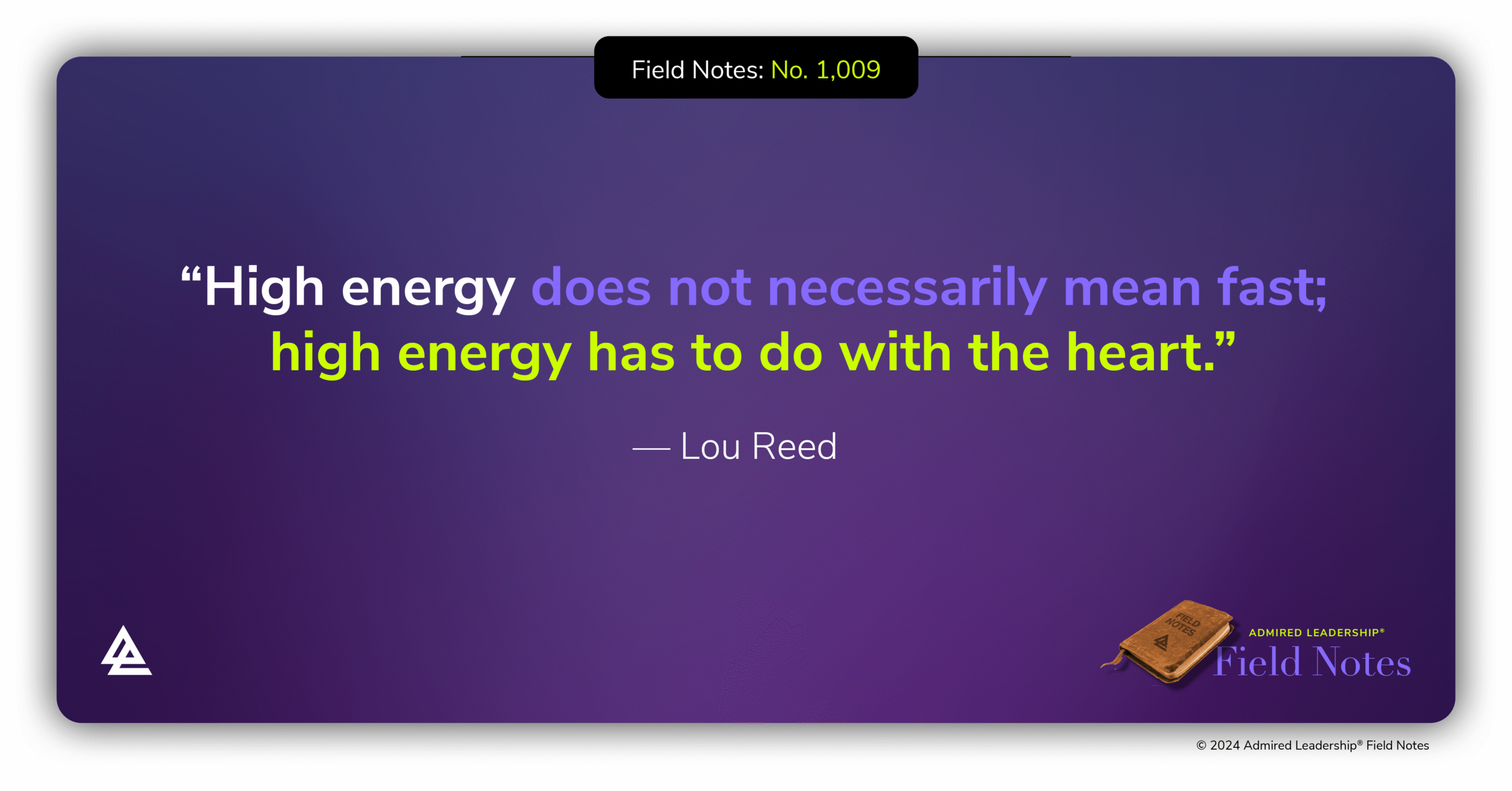
The Upside of Boundless Energy
Not every leader is blessed with boundless energy, but all leaders can lead with more passion and enthusiasm. Any time a leader wants to convey importance to a project or assignment, they can choose to raise their own personal energy around the work. Good leaders find a way to infuse their leadership and the team…
-

If I Truly Learned From All of My Mistakes, I Would Be a Genius by Now
Everyone makes mistakes. Some blunders are bigger than others, but all come dressed in a lesson or an important takeaway. The idea of viewing mistakes and failures as opportunities to grow and as springboards to propel future success is now a part of popular culture. Failing forward is what good leaders do. After so many missteps and…
-
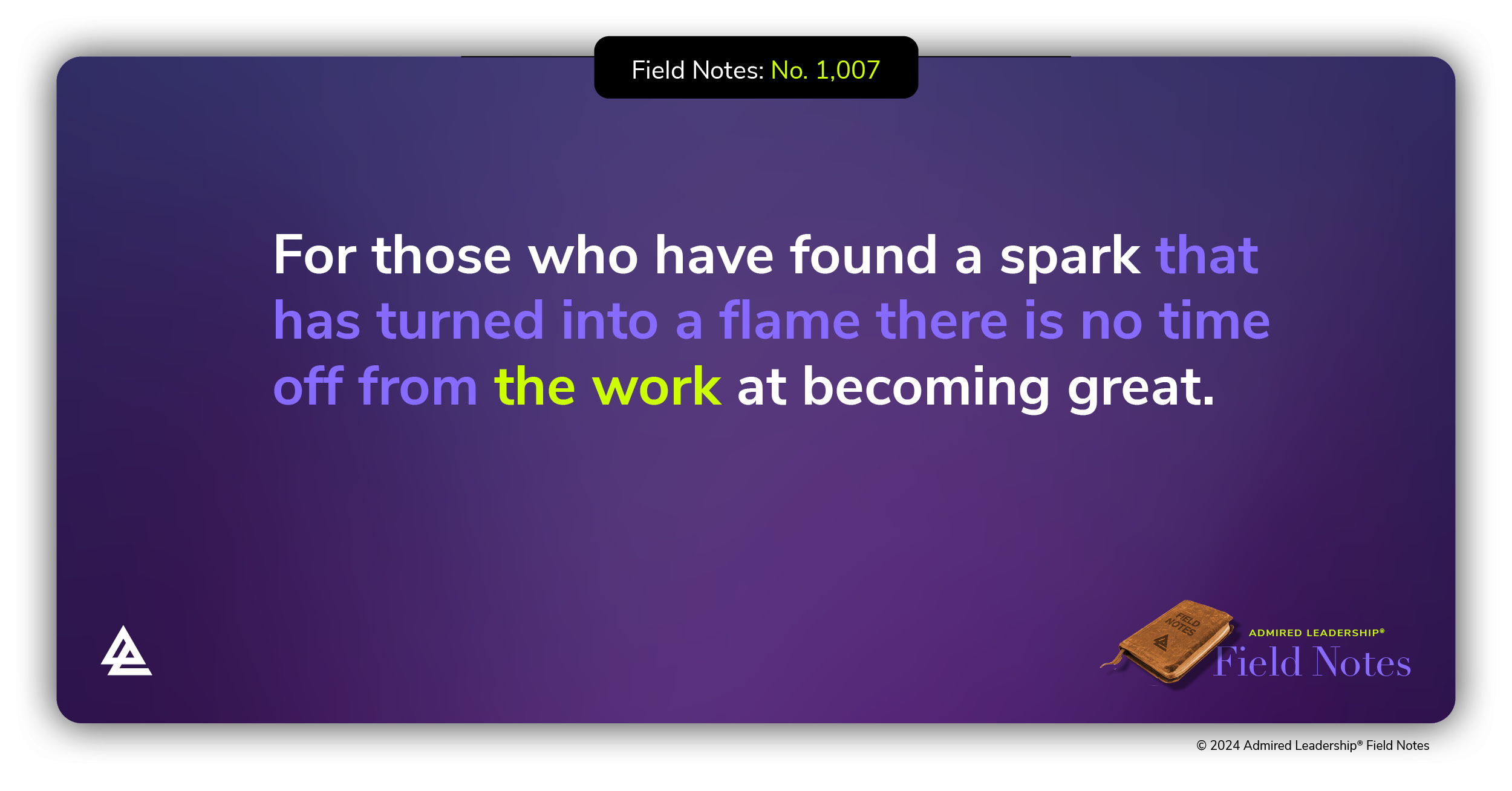
Why Are We Sometimes So Wrong About Who Has Extraordinary Talent?
Why Are We Sometimes So Wrong About Who Has Extraordinary Talent? Learning who has the fire is made even more difficult because the flame of drive often doesn’t take hold until after rejection or disappointment. Perhaps Walt Disney really did lack creativity and originality when he worked his first job at a newspaper. Maybe his…
-
Leader Visibility Is Even More Important When Team Members Work Remotely
For teams that work and engage remotely, a leader’s visibility is even more important. Aligning the team with expectations, goals, and strategy is never easy, but it becomes much more difficult when team members don’t get the opportunity to validate their views and experience face-to-face interaction. Creating more visibility helps to create more transparency and…
-
What Does It Really Mean to Be Productive
Striving to be as productive as possible is something nearly everyone attempts to do. Yet, it’s not actually clear what it means to be productive. Are we talking about efficiency, effectiveness, the number of tasks completed, the feeling we did the best we possibly could, or all of the above? It would seem that the…
-
Expand the Set of Options to Produce Higher-Quality Decisions
If you want to improve your skill at making higher-quality decisions, your best bet is to focus on generating more options. Research for over three decades confirms that generating more viable options when making a decision substantially increases the likelihood of finding a great one. The best decision-makers don’t settle for a small set or…
-
Clarifying Next Steps Before the Meeting Ends
What a difference such a simple best practice can make when it is instituted and incorporated across an organization. In some workplaces, a poster with the words NEXT STEPS? is on the wall of every meeting or conference room. Reminders help with creating a new norm for the group. As it turns out, common sense,…
-
Does Your Team Take and Enjoy Its Own Medicine?
In the best organizations, it is expected that every team member partakes in the enterprise’s products, services, or advice. When team members are personally engaged with what the enterprise offers, sells, or promotes to others, pride swells, commitment hardens, and innovation soars. Good leaders encourage this connection and promote the idea that experiencing what the…
-
With Some Help, You Can Find Your Fatal Flaws During Practice
Tom Brady was renowned in the NFL for paying practice squad players if they intercepted him. Most quarterbacks resent it when second-string players intercept them in practice. But Brady wanted to avoid mistakes in the game, so he needed the practice players to not only imitate the opposition, but also to raise his game by playing for…