

FieldNotes
Our daily Field Notes email is just the kind of jumpstart you need. A fast read. Maybe less than a minute. Because sometimes it just takes one insight to change the trajectory of the day.
Search Field Notes
-

Leaders Who Act as Jupiter
The best leaders act like Jupiter, protecting the team from unwanted distractions. Be Jupiter. Without the 95 moons.
-
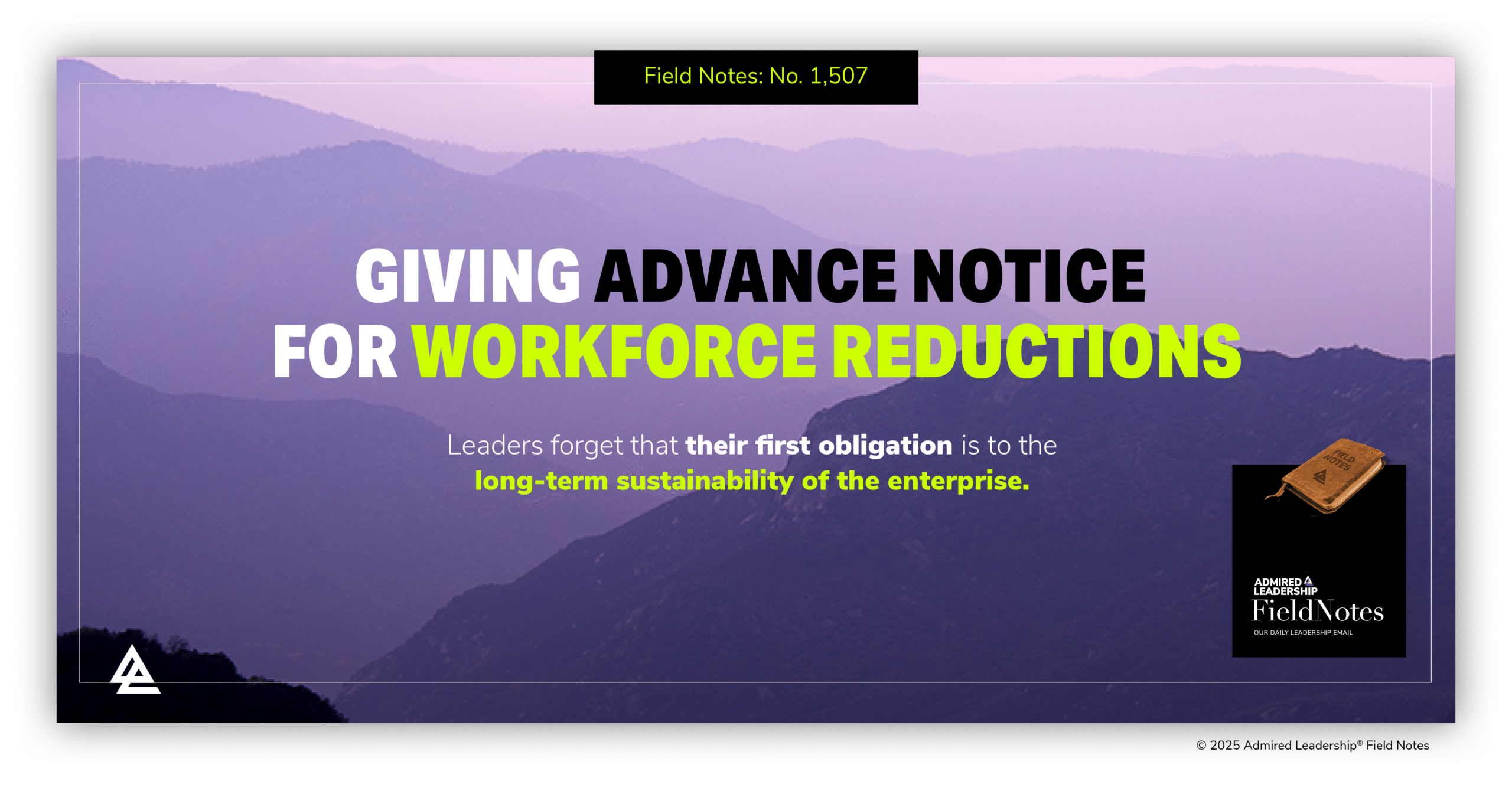
The Practice of Giving Advance Notice for Workforce Reductions
The question always comes down to what leaders value. In a world with an increasing short-term focus, too many leaders follow the pack and disregard the long-term consequences of negative team morale and distrust. Good leaders don’t make that call because they value people more than they value short-term gain.
-
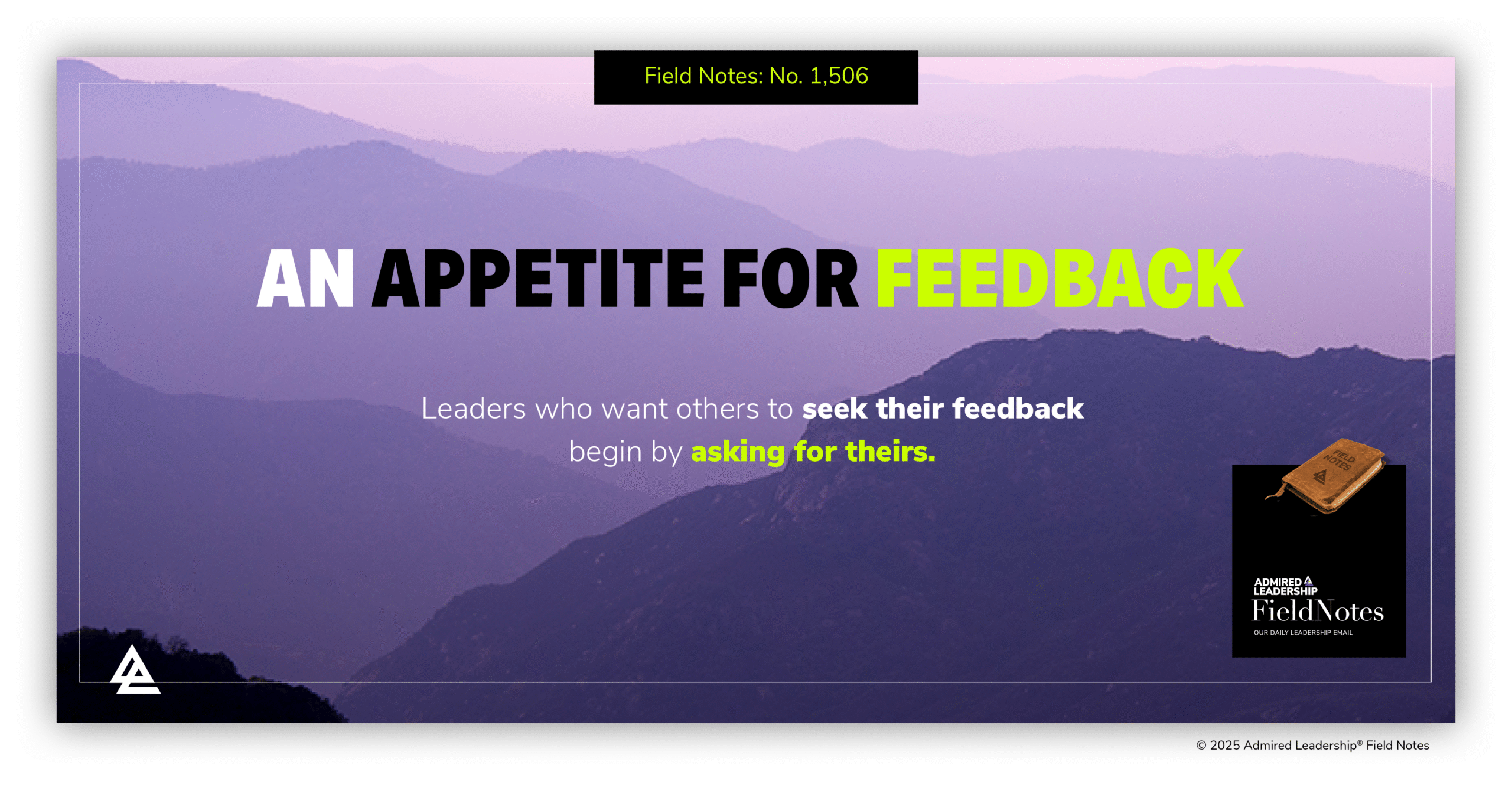
Creating an Appetite for Feedback
Leaders who want others to seek their feedback begin by asking for theirs. This doesn’t mean requesting a general evaluation of their leadership effectiveness. A much better place to start is simply seeking their specific views and feedback for you regarding a recent meeting, a project, or a strategic initiative.
-
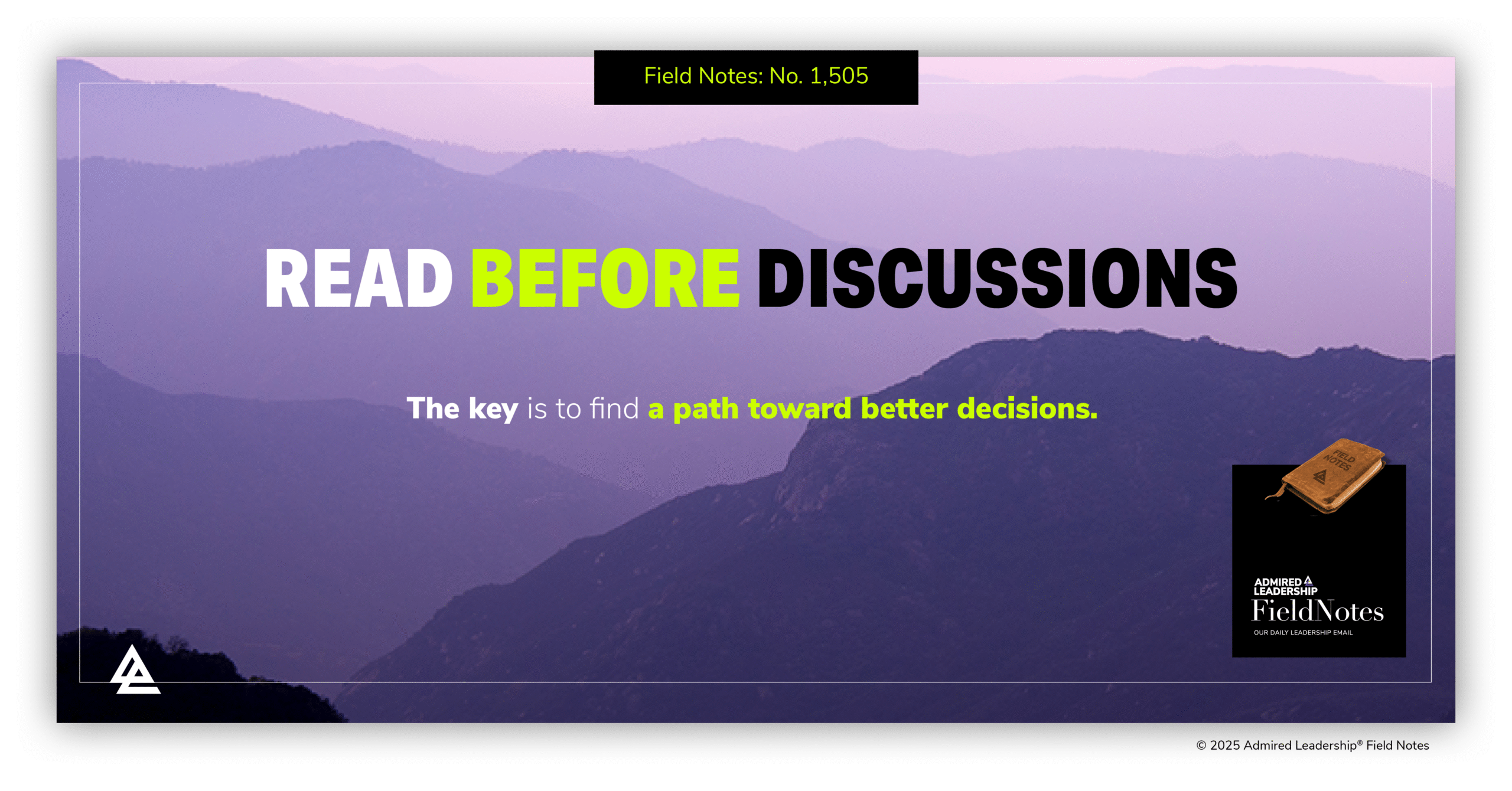
Should You Ask Team Members to Read Before Discussions
Perhaps attempting the six-page memo and silent reading on one critical issue would prove a valuable experiment. But whatever process leaders embrace for more rigorous and objective debate, the key is to find a path toward better decisions. The quality of decisions at any organization most defines its long-term success. Would you care to read…
-

Learn to Speak in Headlines
Communicating like an expert, rather than as a leader, can undermine clarity, credibility, and influence in high-level meetings and discussions.
-
Why Asking a Lot From Team Members Makes Them More Committed
Leaders who expect a lot of their team members are typically rewarded with superior results. Research consistently confirms that what leaders expect from team members has a tremendous influence on the outcomes they achieve.
-
Reciprocity and the Domino Effect of Kindness
Being a good-hearted leader is not enough. Reciprocity usually occurs with each act of a leader’s kindness, but does not become pervasive across the team until other team members join in without being asked.
-
The Signs of Overcollaboration
Overcollaboration is a serious issue and manifests itself in slow and ineffective decision-making and an endless stream of unproductive meetings.
-

When Asked About a Colleague, Speak as if They Were in the Room
Some advice is solid but hard to enact, sustain, or live up to. This is one of the all-time gems: The best rule of thumb is to only speak about others as if they were in the room with you.