
FieldNotes
Our daily Field Notes email is just the kind of jumpstart you need. A fast read. Maybe less than a minute. Because sometimes it just takes one insight to change the trajectory of the day.
Search Field Notes
-
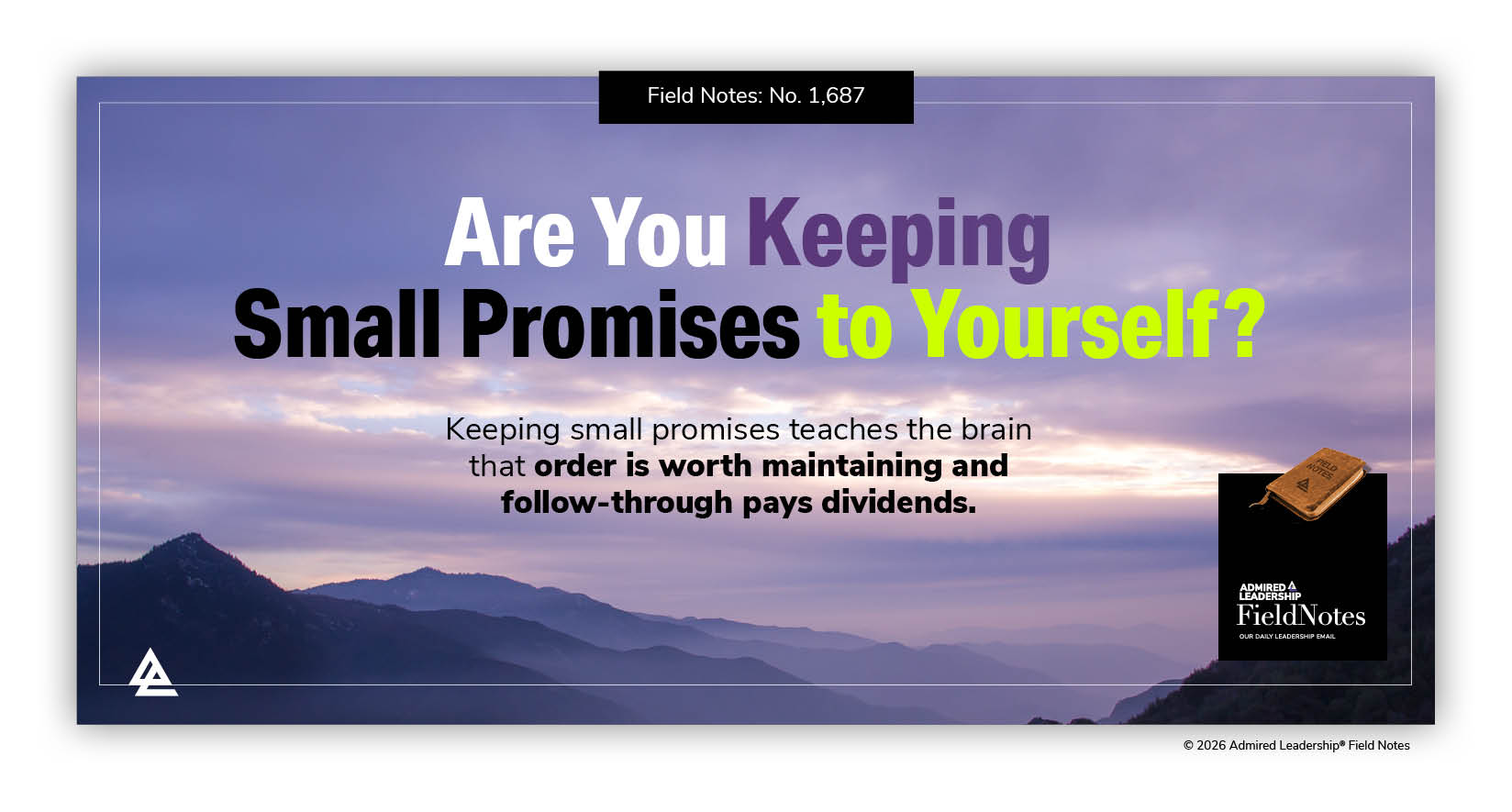
Keeping Small Promises to Yourself Is Foundational for Being Organized
Organization starts with self-trust. When you tell yourself, “I’ll put this away later,” or “I’ll start on that tomorrow,” or “I’ll write this down in my journal after we are done,” and you don’t follow through, you weaken trust in your own intentions. Every time you fail at keeping a personal promise, you teach yourself…
-
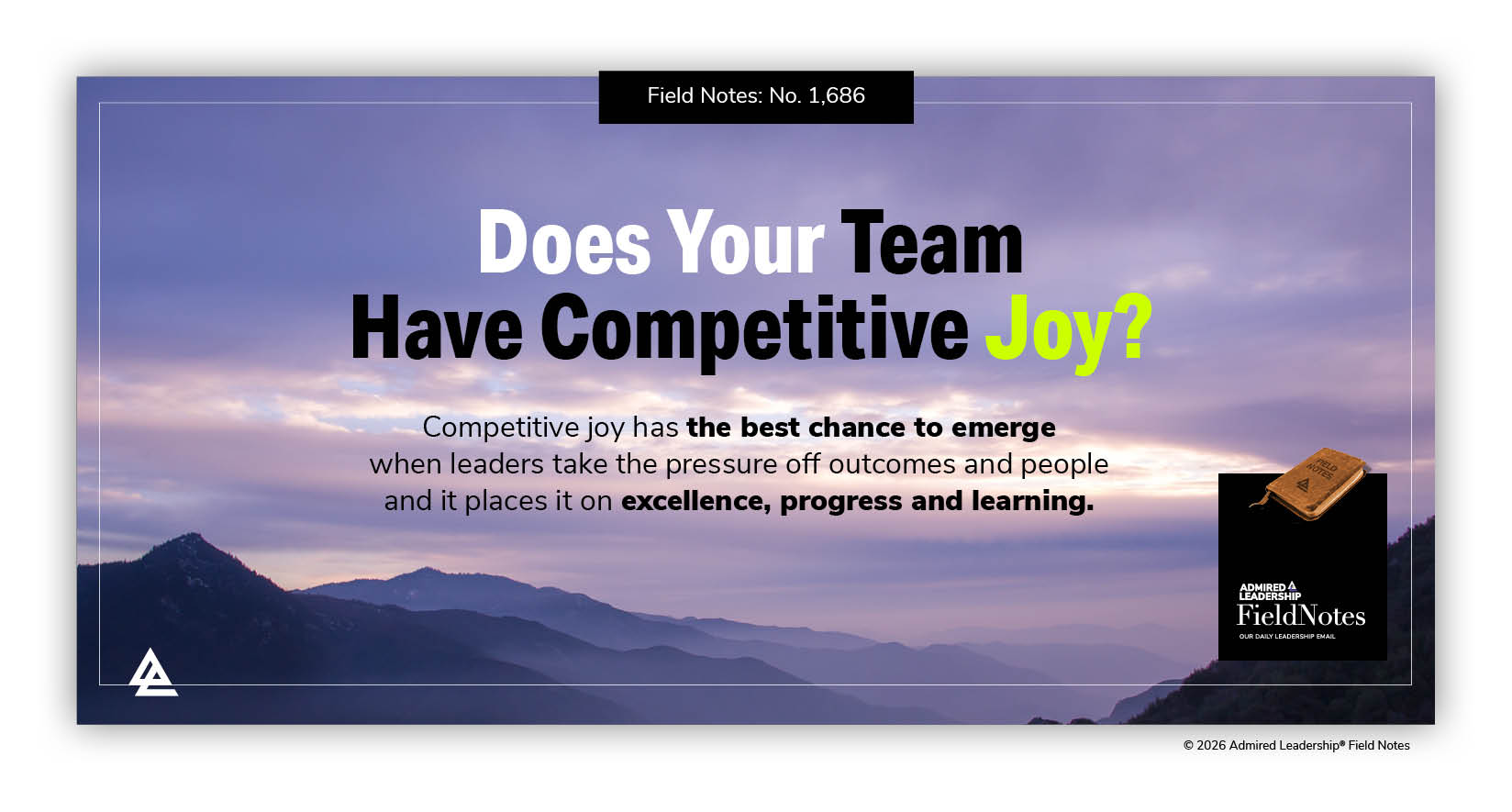
Does Your Team Have Competitive Joy?
Competitive joy is the emotional fuel of high-performing teams. NBA coach and executive Pat Riley, who popularized the concept, describes it as the deep satisfaction that comes from pursuing excellence together as a team. For Riley, competitive joy is what sustains sports dynasties after success removes the fear of failure. Competitive joy is not
-
Why Setting Boundaries for Assignments Signals Trust, Not Control
Why Setting Boundaries for Assignments Signals Trust, Not Control.
-
What High-Potential Team Members Need Most From Leaders
Great leaders see hidden potential in people. And they create the conditions for those with undiscovered talents to soar. So, they go about creating opportunities, setting challenges, investing in skill development and training, providing resources, offering critical feedback, and establishing the support these team members need to thrive. Surprisingly, what these high-potential team members need
-
Practicing Optimism
Practicing Optimism… by continually expressing optimism, good leaders train the brain to expect possibility. Optimistic leaders are possiblitarians.
-
Why Do Some Leaders Feel More Stress?
Stress is the body’s natural response to demands, pressures, and challenges, whether they come from real situations or perceived circumstances. When feeling stressed, the brain releases hormones that both narrow focus and heighten anxiety. Stress becomes harmful when it’s intense, frequent, or long-lasting. When leaders are in that state, it affects nearly every system in
-

The Transparency of Individual Compensation Is Fraught With Danger
Transparency in organizations creates buy-in and engagement. Team members feel more accountable, responsible, and connected when they are invited to discuss decisions and strategies openly and candidly. Contemporary leaders purposely expose the workings of the organization to build trust, fairness, and alignment. The benefits of sharing and discussing such issues as capital expenditures, promotion criteria, performance ratings, financial health,
-
How to Interpret the Candor of Things Said in Anger
People say the meanest things when they are angry. Anger removes the filters people use to edit themselves. It creates a conversational urgency, giving people a sense that something they are thinking or feeling must be said now.
-
What Shouldn’t Change About the Culture?
Just like people, organizations sometimes lose their way. Because of poor leadership, organizations can drift toward mediocrity, underperformance, and dysfunction. To revive them, leaders need to reset the culture and establish a new way for team members to work together. Transforming a culture takes time and focus.