




Our daily Field Notes email is just the kind of jumpstart you need. A fast read. Maybe less than a minute. Because sometimes it just takes one insight to change the trajectory of the day.
Search Field Notes
-

Tell Me What You’re Excited About
When you’re excited about an experience, idea, insight, or result, sharing it with others produces a variety of positive benefits. It doesn’t matter if the excitement is about the potential of a new endeavor or an outcome already in the books. The more often you share your excitement with others, the more you experience a…
-
Leaders Who Trust Too Slowly
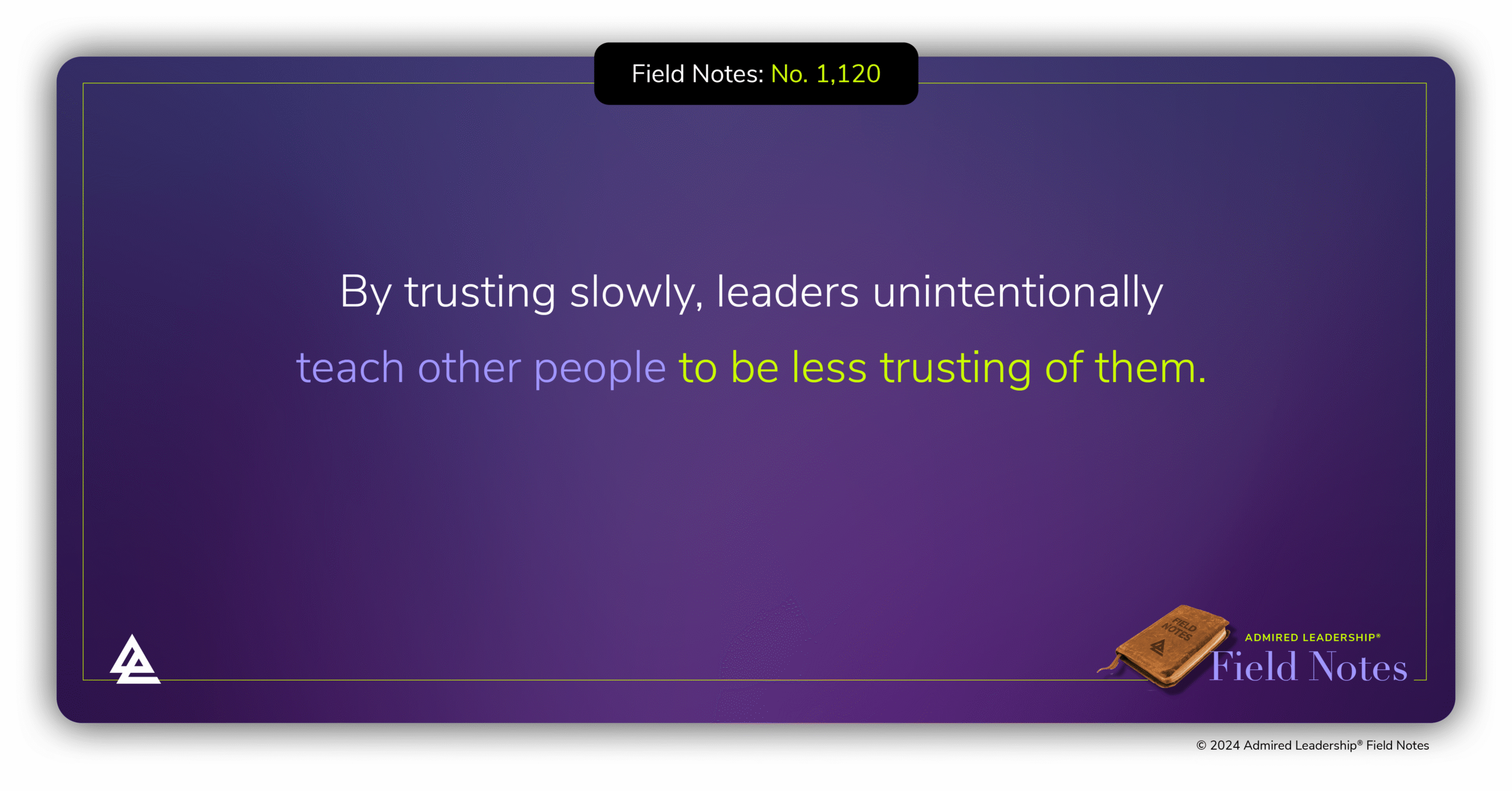
Leaders, like everyone else, have been burned by trusting people they shouldn’t have. They then sometimes use past experiences where they were betrayed or let down as a guide for cautiously trusting others. When taken too far, they can become reluctant, without even an iota of proof or evidence, to trust others. This means they…
-
The Quality of the Conversation Perfectly Reflects the Quality of the Relationship
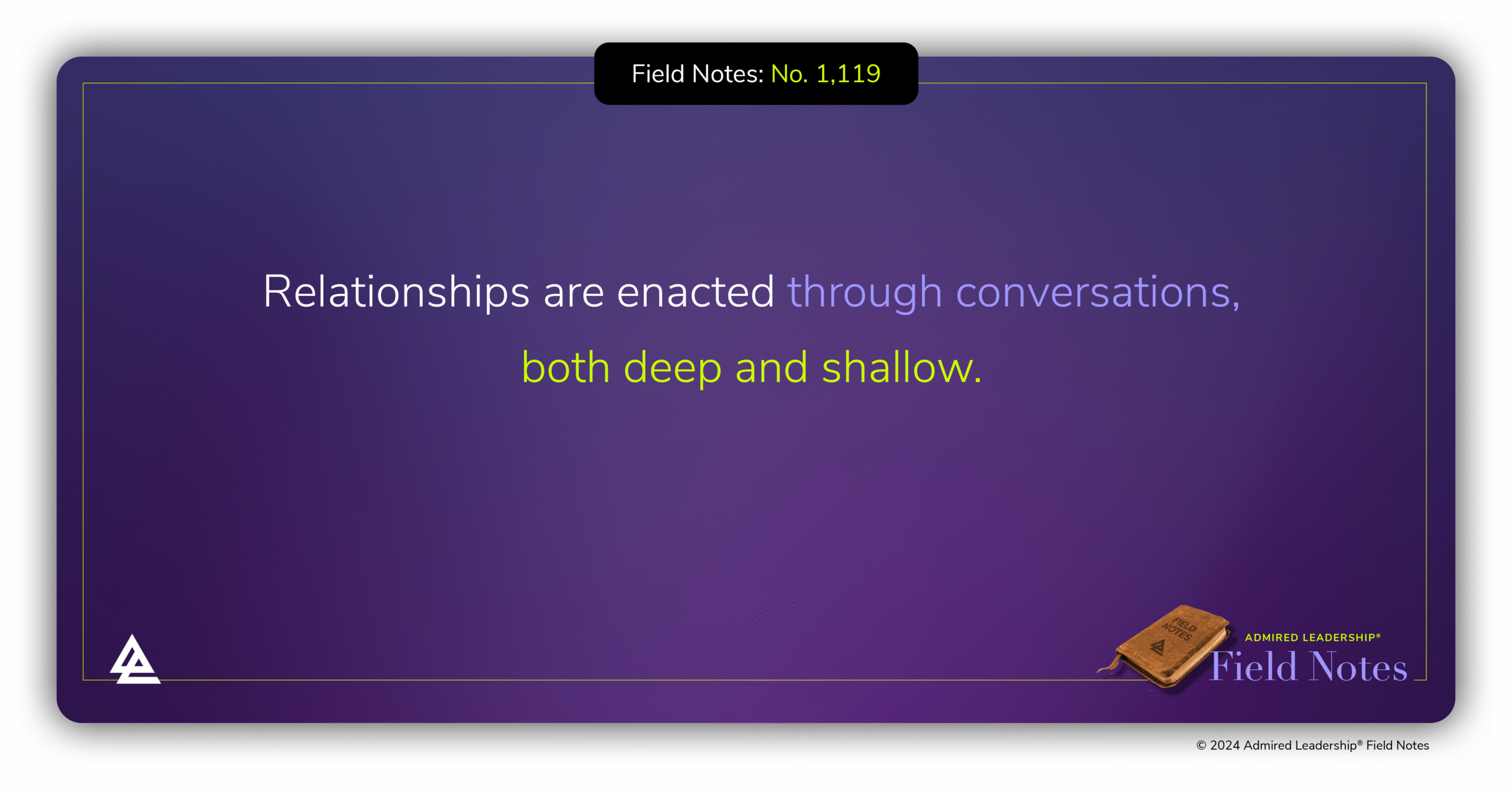
Relationships are enacted through conversations, both deep and shallow. Relationships are formed and sustained through the shared meaning that conversations provide. The two ideas are so intertwined they are almost indistinguishable. The implications of this connection are powerfully important. Without a meaningful conversation as a foundation, those who pursue a relationship with others come off…
-
The Power of Prompts to Reinforce New Behaviors
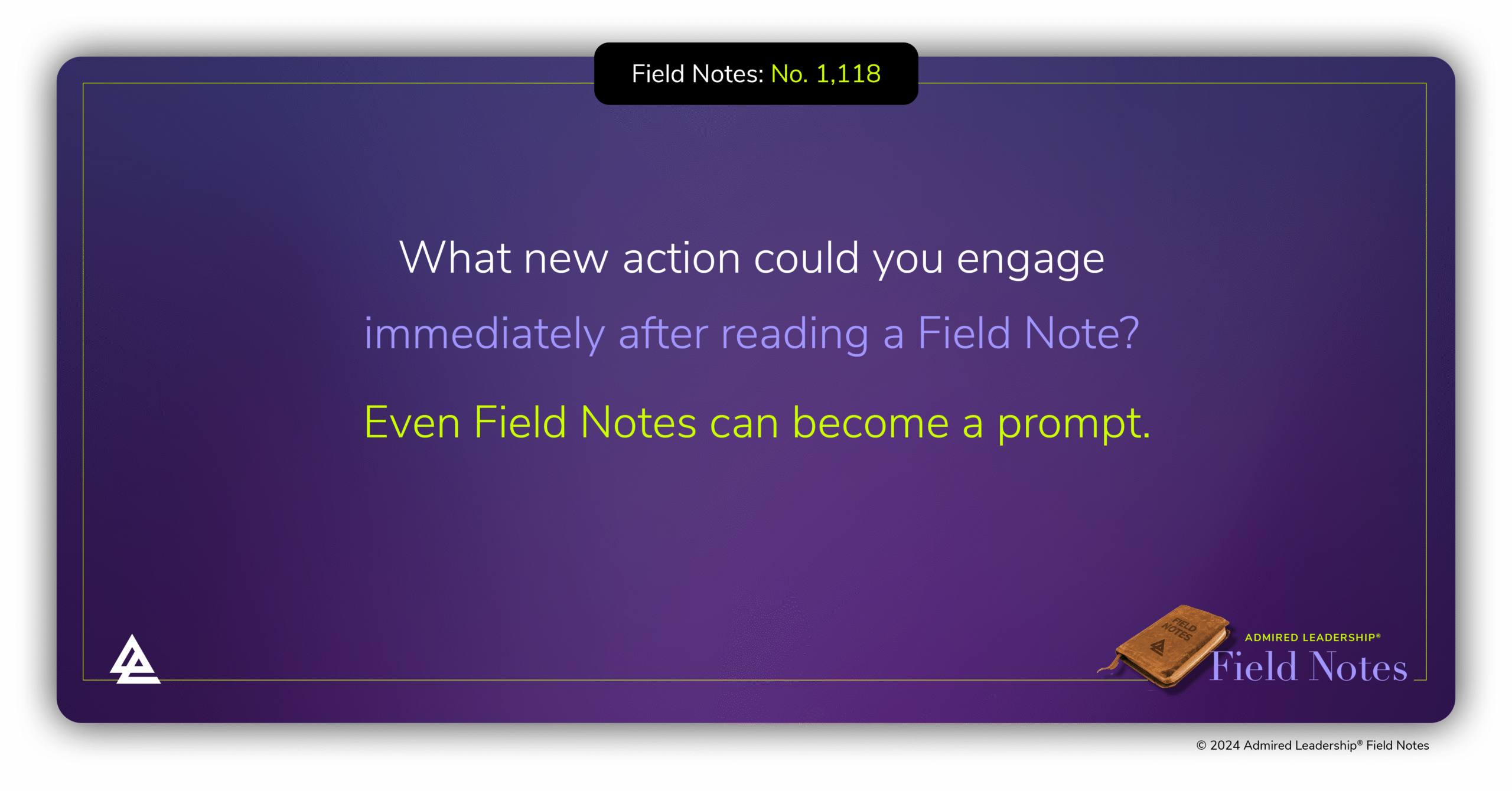
Prompts activate behaviors. Without them, most behaviors and actions would never happen. Take, for example, what occurs when we see a red light or feel a few drops of rain. We instantly hit the brakes or grab an umbrella in response. Life is filled with so many prompts that we often take them for granted…
-
When Leaders Must Choose the Least Worst Option
In the novel Sophie’s Choice by William Styron, the author tells the story of a mother who must make the choice between saving one of her two children, a boy, and a girl, or letting them both be killed by Nazis. She takes the least worst option, choosing to save her son who she believes has the best chance…
-
A Primer on Humility While Touting Achievement
Philosopher Blaine Pascal reminded us, “If you want people to think well of you, do not speak well of yourself.” But since Pascal wrote those words in the 17th century, we have learned much about modesty, humility, and letting others know what you have achieved. As Pascal correctly inferred, bragging about one’s accomplishments is a…
-
Organizing Yourself Relationally
When leaders think of being highly effective, efficient, and organized, they naturally turn to thoughts of strategy, tasks, and tactics that promote productivity. As they set their daily and weekly calendars, they organize themselves in terms of what must get done and how to efficiently complete the most important and urgent tasks. Given the sheer…
-
Why Team Members Tolerate a Tyrannical Leader
Like people, leaders come in all shapes, sizes, and personalities. Along the continuum of benevolent to malevolent, a small slice of leaders has developed a harsh and highly coercive style, bordering on cruelty. They berate, admonish, embarrass, ridicule, and threaten their way to the results they believe are more important than people. In far too…
-

When to Remind Team Members They Are Part of Something Bigger Than Themselves
When to Remind Team Members They Are Part of Something Bigger Than Themselves
-
When Delivering Bad News, Is It Better to Surprise Others or Give Them Advance Notice?
When Delivering Bad News, Is It Better to Surprise Others or Give Them Advance Notice?