




FieldNotes
Our daily Field Notes email is just the kind of jumpstart you need. A fast read. Maybe less than a minute. Because sometimes it just takes one insight to change the trajectory of the day.
Search Field Notes
-
Strengthening Weak Ties to the Organization
Strengthening Weak Ties to the Organization. For a host of reasons, some team members can become disconnected or uncommitted to the team and the team leader. Their everyday interaction, lack of connection to more than one or two colleagues, and reluctance to seek opportunities to collaborate reflect their weak ties to the organization and its…
-
Leaders Who Lack Courage Allow Bad Ideas to Prosper
When we think of leaders who lack courage, we typically envision people who have a difficult time making tough personnel decisions or delivering a strong message to those who need it. To be sure, courage is required to be an effective leader largely because decisions have consequences and workplace relationships need both caring and accountability.…
-
On Thinking Gray
The disadvantages of black and white thinking are well known. Any time a leader oversimplifies a decision or issue by choosing to see things in extreme good’s and bad’s or right’s and wrong’s, they typically make poor choices and draw inadequate conclusions. By giving up the middle ground, or shades of gray, leaders lose the
-
When Character Traits Are Out of Balance
A strong character is a prerequisite for strong leaders. Although critics often point to the character flaws of leaders after they fail or make a consequential but poor decision, the truth is that there are very few leaders who lack any semblance of character. While some leaders can certainly be plagued by character flaws, the…
-
The Best Team Members Are Sponges
No team has too many sponge-like members. Adding the metaphorical qualities of this marine animal to the criteria for selecting new team members is a wise choice. Leaders can’t create sponges, but they can select for them.
-
The Smallest Details Carry a Company’s Culture
Any debate about whether a strong and positive organizational culture predicts high performance has been settled by the recent stream of books, research, and data that underlines the power of culture to deliver results. High performance doesn’t promote a strong culture nearly as much as a cohesive culture produces top-tier performance. To achieve success, good
-
Becoming a “Spend Time With Me” Leader
The requests a spend-time-with-me leader makes of others offer quality time not just substance: “Join me and let’s work on that project together.” “Come with me and take a walk so we can talk things through.” “Let’s travel to the meeting together so we can spend some time discussing that issue.” “Join me for breakfast…
-
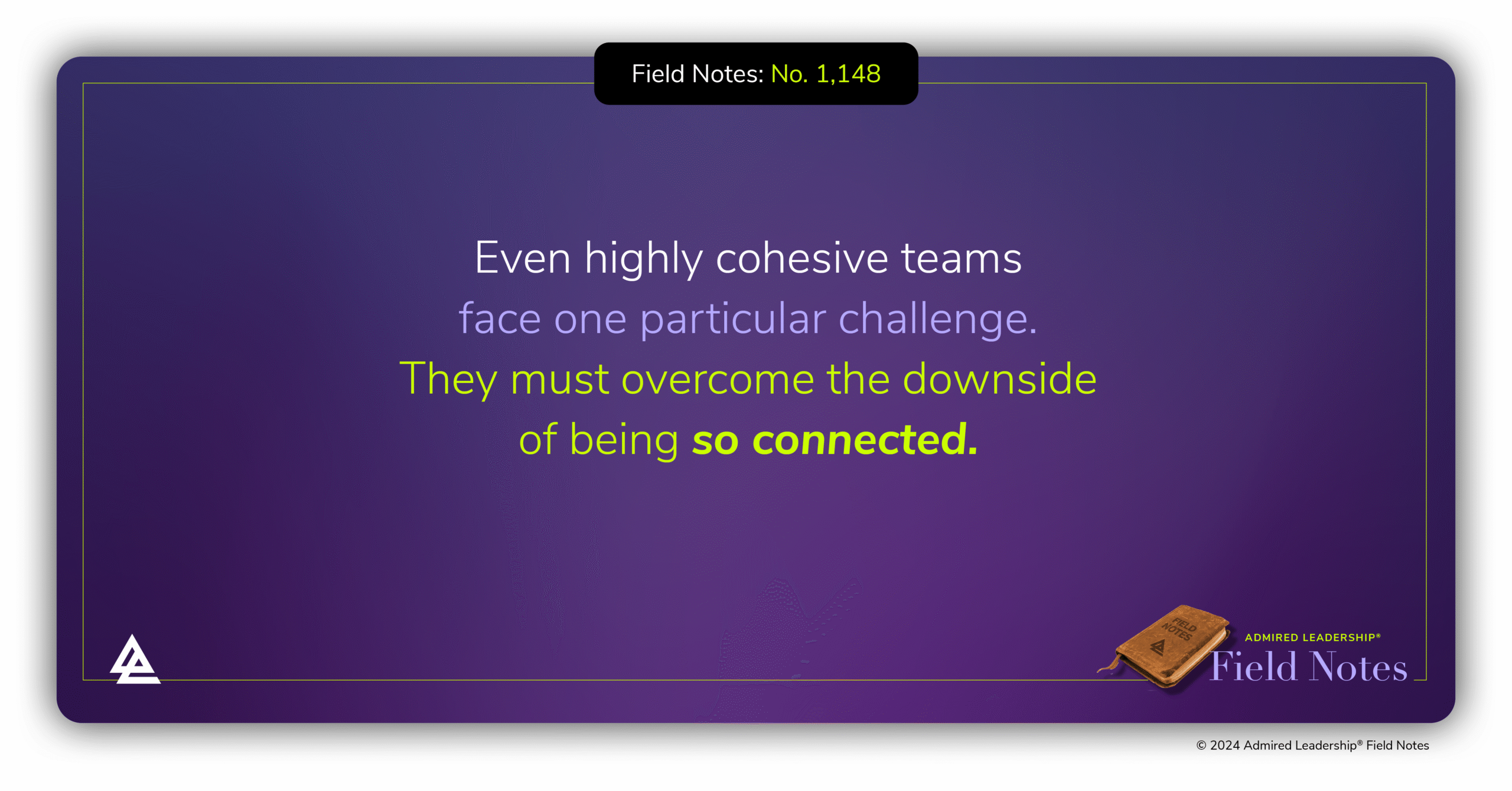
The Hidden Challenge of a Highly Cohesive Team
Teams that are full of trust, comradery, shared values, and possess the ability to work together through challenges are the gold standard. Spending time on shared tasks in close proximity brings such teams even closer. These tight-knit teams possess the elusive quality of “chemistry” so critical to high performance and typically go beyond trust to…
-
When You Strongly Disagree, Show Your Work
Showing the steps used to reach a conclusion not only explains your reasoning but fully demonstrates your skill. Those who are suspicious about how you reached the outcome or whether you might have taken a shortcut are reassured when they can examine the steps you used to get there. This is equally true for leaders
-
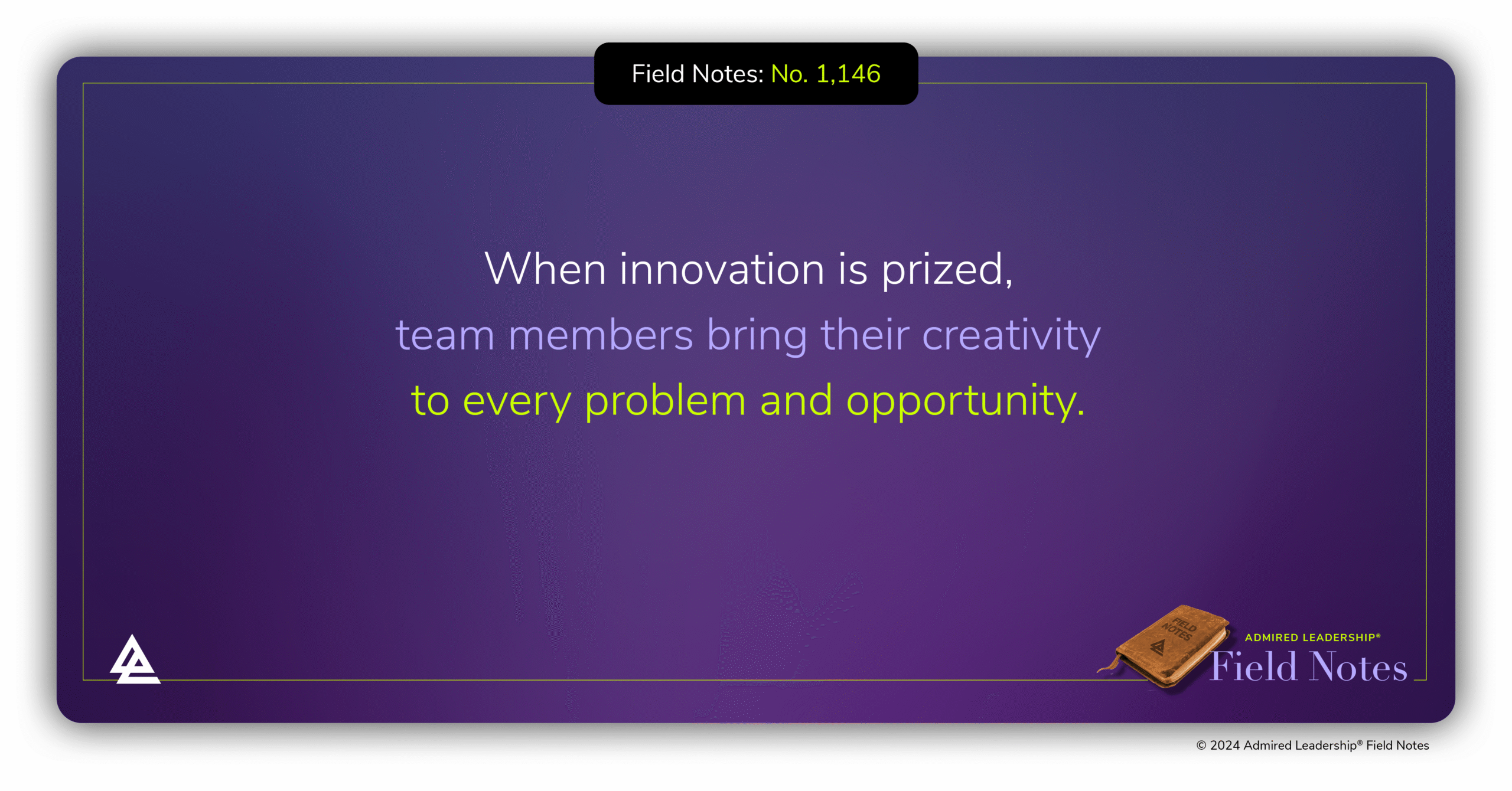
Creating a Competition for Innovation
Promoting a culture of innovation is no easy matter. One problem is that creativity is not equally distributed among team members and bursts of insight don’t happen on schedule. Getting team members to innovate and think creatively is not something leaders can mandate. Even crafting processes to promote innovation inside organizations has been shown to…