




FieldNotes
Our daily Field Notes email is just the kind of jumpstart you need. A fast read. Maybe less than a minute. Because sometimes it just takes one insight to change the trajectory of the day.
Search Field Notes
-
What Isn’t Coachable?
Spending more time on coachable qualities will likely promote more team member growth and development while accepting what can’t be markedly changed will result in less disappointment and friction. What is on your list of uncoachable qualities? Decide before you invest the time to push an immovable rock uphill in a storm.
-
Developing New Leadership Habits in Low-Risk Environments
New leadership habits are hard to develop but worth the effort. The leader’s habits determine almost everything they accomplish or fail to accomplish, especially with people. Give yourself the best odds of forging a new habit. Try them where and when it is safe first, and then spread out.
-
Not Everyone Should Raise Their Hand to Be a Titled Leader
People are more likely to be attracted to the perks of official leadership. They like the idea of the status, influence, and the increased compensation usually associated with most leadership positions. Especially the compensation. So, they raise their hands to become leaders, managers, and supervisors when they are ill-prepared and unmotivated to do the job.…
-

The Myth of Radical Transparency
Some leaders contend that radical candor and transparency are the foundation for the optimal organizational culture. The aim of creating the conditions for extremely candid feedback and transparency around matters typically not discussed sounds like the ideal environment to get things done with excellence. Imagine if everyone really shared what they really thought almost all
-
Teams That Conduct an Occasional Hot Wash Promote More Candor
Teams That Conduct an Occasional Hot Wash Promote More Candor.
-
Omissive Causation or the Failure to Act
The failure to act can have severe consequences, and leaders would be wise to learn as vigorously from omissive causation as they do from action and outcome relationships. Making it a critical part of the strategic thinking process can pay big dividends. Sometimes it is what we don’t do that has the biggest impact on…
-
Beating Others to ‘Thank You’
If you are truly a thankful person, thanking people before they thank you will feel good. It will allow you to express your inner gratefulness in a more creative way. It won’t take you long to think about what thanks you could give before you receive the recognition from someone else. Make it a habit…
-
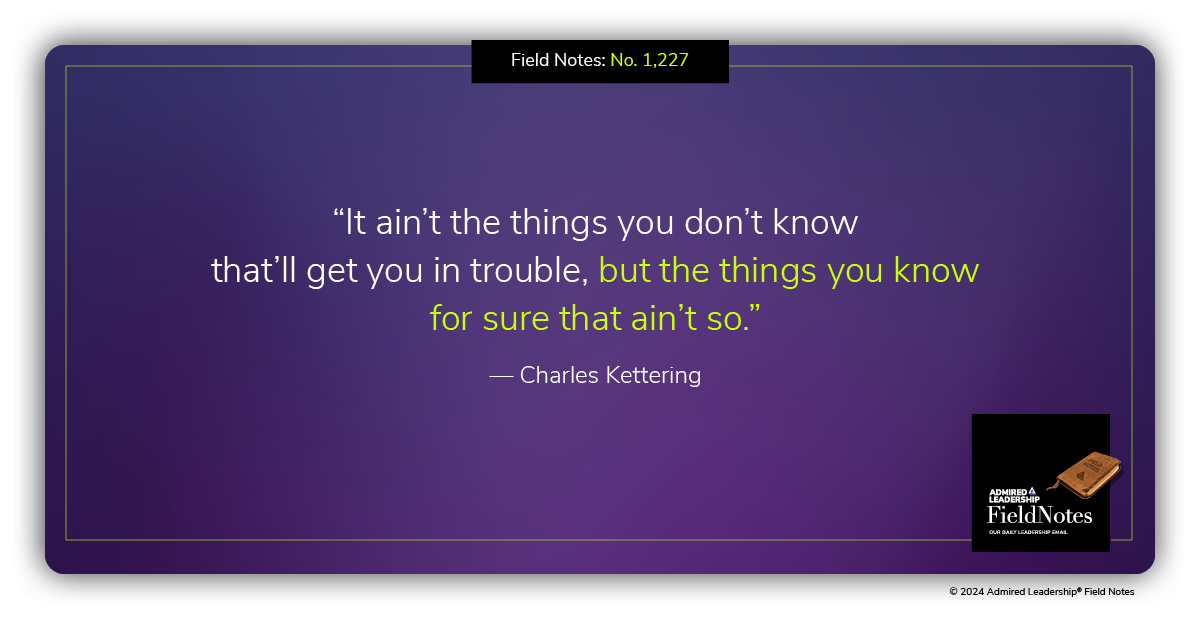
How Sure Are You?
Finding objective references to test for the accuracy of memories that are essential to performance seems a reasonable course of action. So does dampening the level of insistence we project when remembering an event completely and without error. As American inventor Charles Kettering reminds us: “It ain’t the things you don’t know that’ll get you…
-
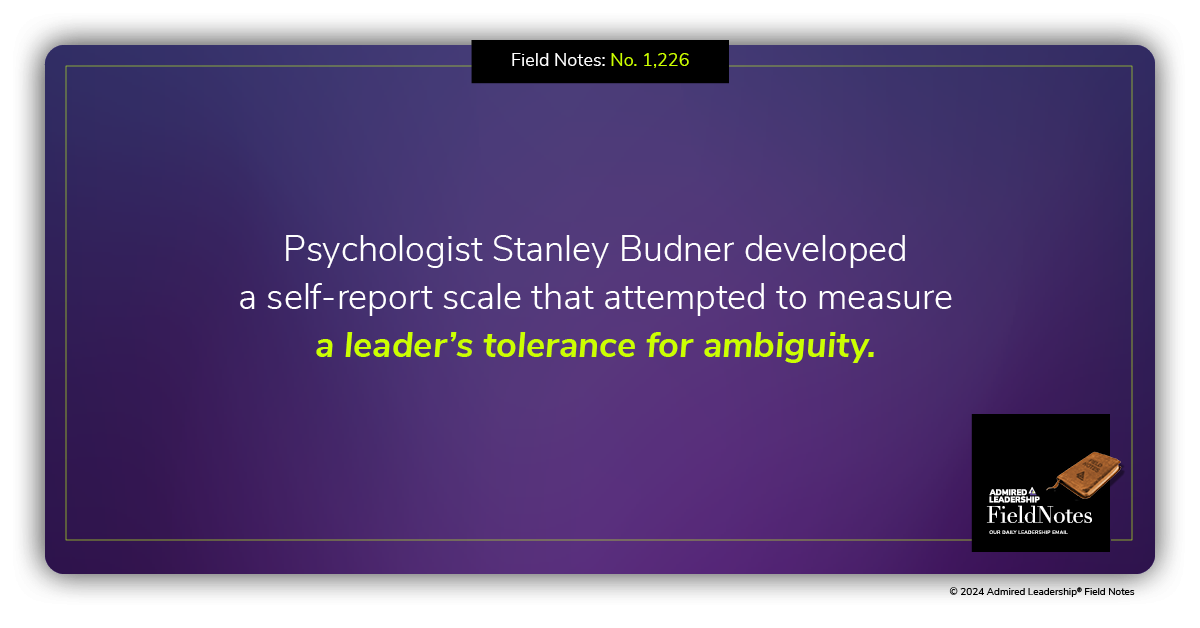
How Well Do You Tolerate Ambiguity?
Some leaders are much better than others at dealing with unfolding situations. When clarity and certainty remain elusive, some leaders shine. As conditions change rapidly, these leaders relax and take it all in. When information is unclear or incomplete, they formulate a flexible game plan. They engage uncertainty with an inner confidence and patience to
-
Curiosity Versus Continual Learning
Curious leaders investigate and explore. They have a deep desire to understand what makes people tick and tock, how they came to be who they are today, and what drives them toward achievement. They want to know how things work, from gadgets to businesses, and the chance to get under the hood and examine the