




FieldNotes
Our daily Field Notes email is just the kind of jumpstart you need. A fast read. Maybe less than a minute. Because sometimes it just takes one insight to change the trajectory of the day.

Search Field Notes
-
Making Decisions That Negatively Impact People You Care About
Perhaps the hardest task in leadership is making decisions that negatively impact people the leader cares about. Decisions are choices with consequences. By definition, deciding to follow a specific path forward eliminates other choices and pathways. This invariably means that some people will be negatively impacted by the choice. Good leaders make the call anyway.…
-

The Productivity Secret of Quincy Jones
Legendary musician, composer, and producer Quincy Jones died last week at the age of 91. Few artists have been as commercially successful or prolific as Jones during his more than seven decades of musical influence. He won 28 Grammy Awards, a National Medal of Arts, and placed his fingerprints on music icons that included Frank…
-
The Incompetence of Incompetence
Allowing an under-skilled team member to learn how others (not just the leader) view their performance and how those peers suggest developing those critical skills can promote a learning environment conducive to overcoming the effect.A change in self-assessment and skill may occur slowly, but raising the awareness of the team member is critical for future…
-
After a Major Decision, the Speed to Execution Matters
In too many cases, leaders behave as if making the decision signals the finish line rather than the starting line. They conclude that the hard work has been completed, and all that is needed is for the decision to be announced and for the team to begin making preparations to act on it. But without…
-
If You Want Your Team to Be More Productive, Consider Trying a New Periodization
In many instances, simply shortening a traditional timeframe dramatically shakes things up and produces a different level of engagement and production. Leaders sometimes make these changes temporary instead of permanent. Creativity and common sense are the primary guides for thinking about how to incorporate periodization into the workplace. Time traditions are highly resistant to change,…
-
Consider Crowdsourcing Your Next Meeting Agenda
Teams often get into a meeting rut. By following the same agenda and structure, they operate efficiently but sometimes bypass or overlook critical issues and discussions. Not addressing the most pressing issue that faces the team is far too commonplace. This is a direct result of depending on the same people and the same agenda…
-
When to Delegate a Decision
Leaders must never delegate strategy to others. But to accomplish that and still maintain the momentum of team progress, they must share decision-making on nearly everything else. The best leaders reserve their decision-making rights only for those choices and issues that will have a major and lasting impact on the team. If it doesn’t involve…
-
Why Do Team Members Work So Hard?
The success of any organization depends on team members working hard and making the necessary sacrifices to get the job done. Leaders know that a highly motivated workforce delivers more effort, quality, and output, so they do their best to light a bonfire of inspiration and motivation to propel them forward. By asking themselves what…
-
Consider Holding a Strategic Message Tryout
The age-old idea of Tryouts can serve an important but enjoyable role in the workplace. Absent the threat of being cut from the team, a tryout gets people’s juices flowing. The test of showcasing one’s skills in front of peers and leaders compels team members to bring their best game. They practice, rehearse, and compete…
-
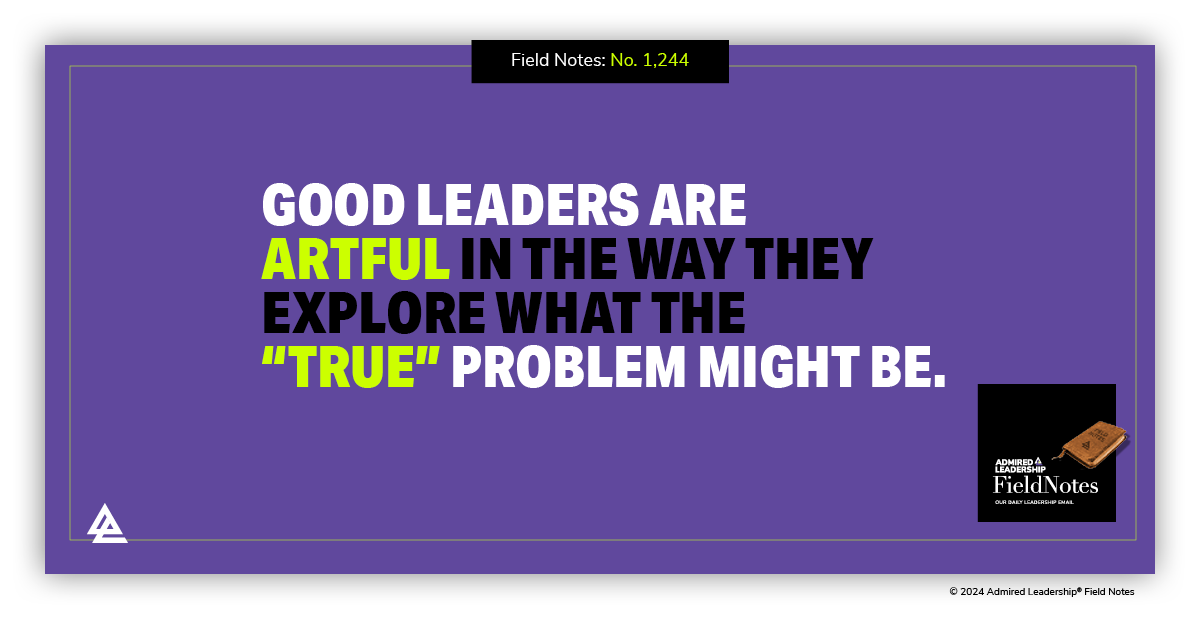
Never Accept Someone Else’s Definition of a Problem
Team members naturally raise problems to be solved. They bring needed decisions to the attention of leaders. Team members describe the risk/reward of the issue and presume, from their perspective, that a solution will make matters better or easier. Leaders are tasked with deciding whether this problem is worth the time and resources to address,…