




FieldNotes
Our daily Field Notes email is just the kind of jumpstart you need. A fast read. Maybe less than a minute. Because sometimes it just takes one insight to change the trajectory of the day.

Search Field Notes
-

The Impact of Compressing Timelines
Parkinson’s Law suggests that work always expands to fill the time available to do it. People naturally plan their work to fill whatever time has been allotted. Leaders who give a team a month to do something find that it takes a month.
-

The Unpacking Principle in Relationships
The Unpacking Principle suggests that the more detailed and specific information a leader or practitioner compiles, the more likely they are to understand the problem and devise a creative plan to address it. The same is true for relationships and how they develop. The problem in every relationship is how both parties can develop more…
-

Strategies to Cope With Larger Teams and More Direct Reports Than Ever Before
Strategies to Cope With Larger Teams and More Direct Reports Than Ever Before
-

The Difference Between Motivation and Inspiration and Why It Matters
Leaders who understand the difference between motivation and inspiration see their role as propelling people toward higher performance differently. Whereas motivational leaders focus exclusively on spurring people to achieve goals, those who also inspire help them to ignite their inner passion for performing. Defining the two concepts more precisely will assist leaders in understanding why this
-

The Need for Closure Can Lead to Faulty Decisions
Leaders can learn from seasoned athletic coaches when it comes to dealing with an abysmally poor initial performance. When teams get blown away and find themselves in a lopsided game, the best coaches take a pause (halftime) and reset the score to 0-0. They then encourage their team to fixate on winning the next phase…
-
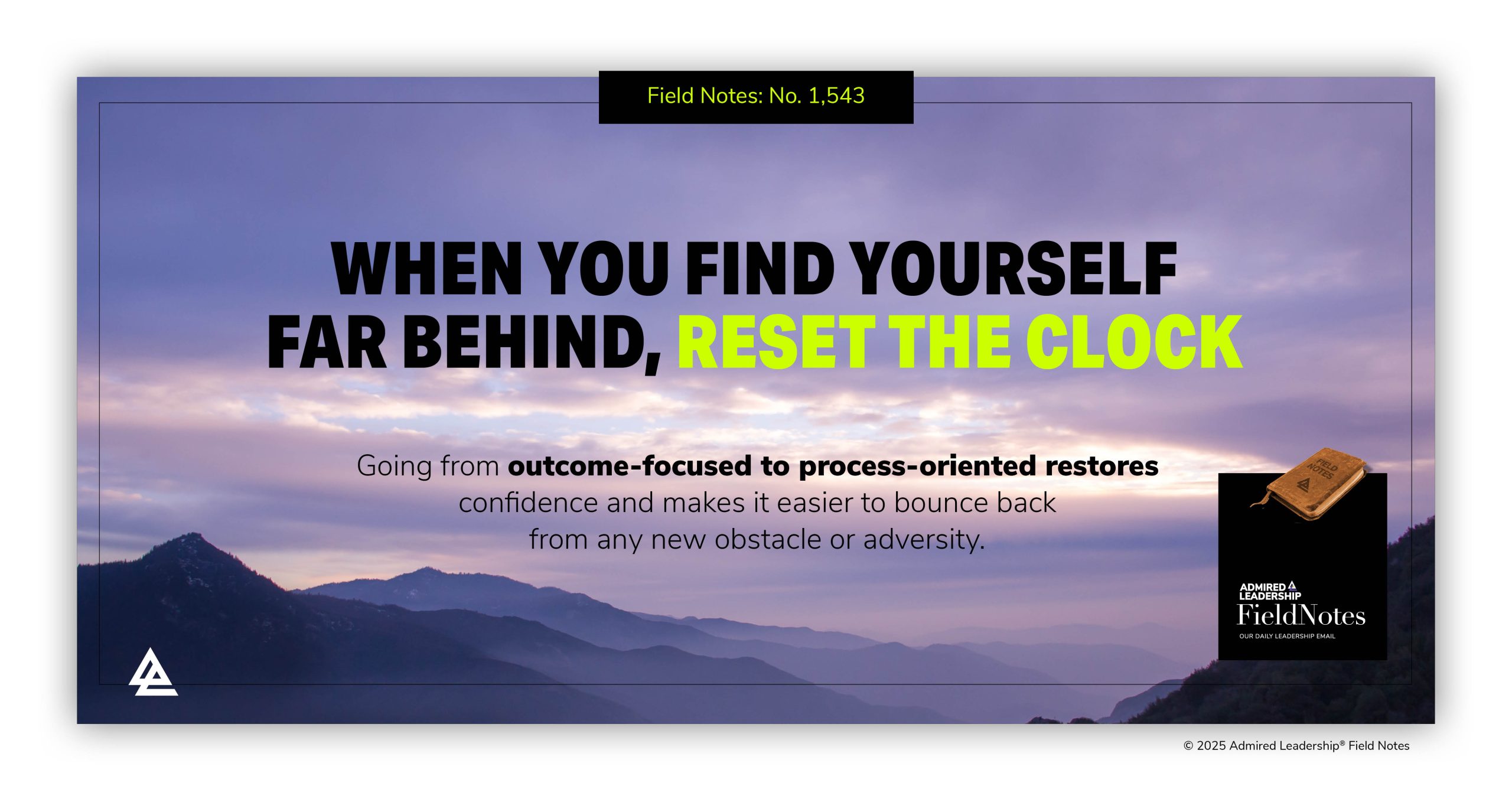
When You Find Yourself Far Behind, Reset the Clock
Leaders can learn from seasoned athletic coaches when it comes to dealing with an abysmally poor initial performance. When teams get blown away and find themselves in a lopsided game, the best coaches take a pause (halftime) and reset the score to 0-0. They then encourage their team to fixate on winning the next phase…
-

Creating New Habits Requires a Daily Rhythm
Creating a new habit is never easy. It requires real discipline to adhere to a new routine. What isn’t obvious is how frequently the routine needs to be repeated before a habit is formed. New behaviors that don’t occur daily seldom become habits. The human brain is hard-wired to create new connections. When a behavior…
-

What’s the Difference Between an A-Player and the B’s & C’s?
Leaders naturally discriminate between team members based on track record, reliability, and skill. Giving team members a letter grade to capture the difference between them is somewhat of a parlor game for leaders. They love to argue about how many A-players they have on the team and why others don’t make that grade. Every leader…
-

Micro-Goals Get Projects and People Back on Track
When team members focus on the smallest steps, the larger objective not only seems more achievable, but progress toward it continues.The best leaders know that the smallest goal can sometimes be the largest motivation.
-

How Leaders Unwittingly Create Entitlement
Leaders who care too much about the happiness of others and have a strong need to be liked by them often reward people indiscriminately. When they fail to tie their caring and rewards to measurable goals, a sense of entitlement is usually the result.