




Our daily Field Notes email is just the kind of jumpstart you need. A fast read. Maybe less than a minute. Because sometimes it just takes one insight to change the trajectory of the day.
Search Field Notes
-
Do You Nag People?
Nagging erodes trust and mutual influence, creating a pattern where one partner feels unheard and the other feels pressured.
-
AI Tools Have the Potential to Widen the Performance Gap Between High and Low Performers
Generative AI tools, like Claude, ChatGPT, and Gemini, are a tremendous help for team members with well-defined tasks, such as drafting emails, summarizing business strategy, or generating marketing ads.
-
There’s No Better Feeling Than Knowing You’re Getting Better
Jack Clark has been coaching rugby at the University of California, Berkeley, longer than most of the coaches he competes against have been alive. After 40 years at the same school, producing 24 National Championships and 135 All-Americans, he has learned a thing or two about what motivates people. Clark believes that one thing motivates…
-
People Anticipate a Negative Response in New Conversations
People are social creatures who are made happier and healthier by human connection. Yet, every day, people bypass scores of opportunities to connect. Research suggests they incorrectly predict that interacting with those they don’t know well will be awkward, uncomfortable, or unwelcome. So, they avoid making connections that would make their lives more satisfying. The…
-
Making It Easier for People to Ask for Help
In far too many organizations and teams, asking for help is viewed as a weakness rather than a smart move. When seeking assistance becomes a sign of incompetence, team members hide their struggles and work independently without making the progress they could. Over time, this breeds stress, burnout, overwhelm, and isolation on the team. Performance…
-
Staying on Message When Confronted by Tough Questions
Staying on Message When Confronted by Tough Questions
-
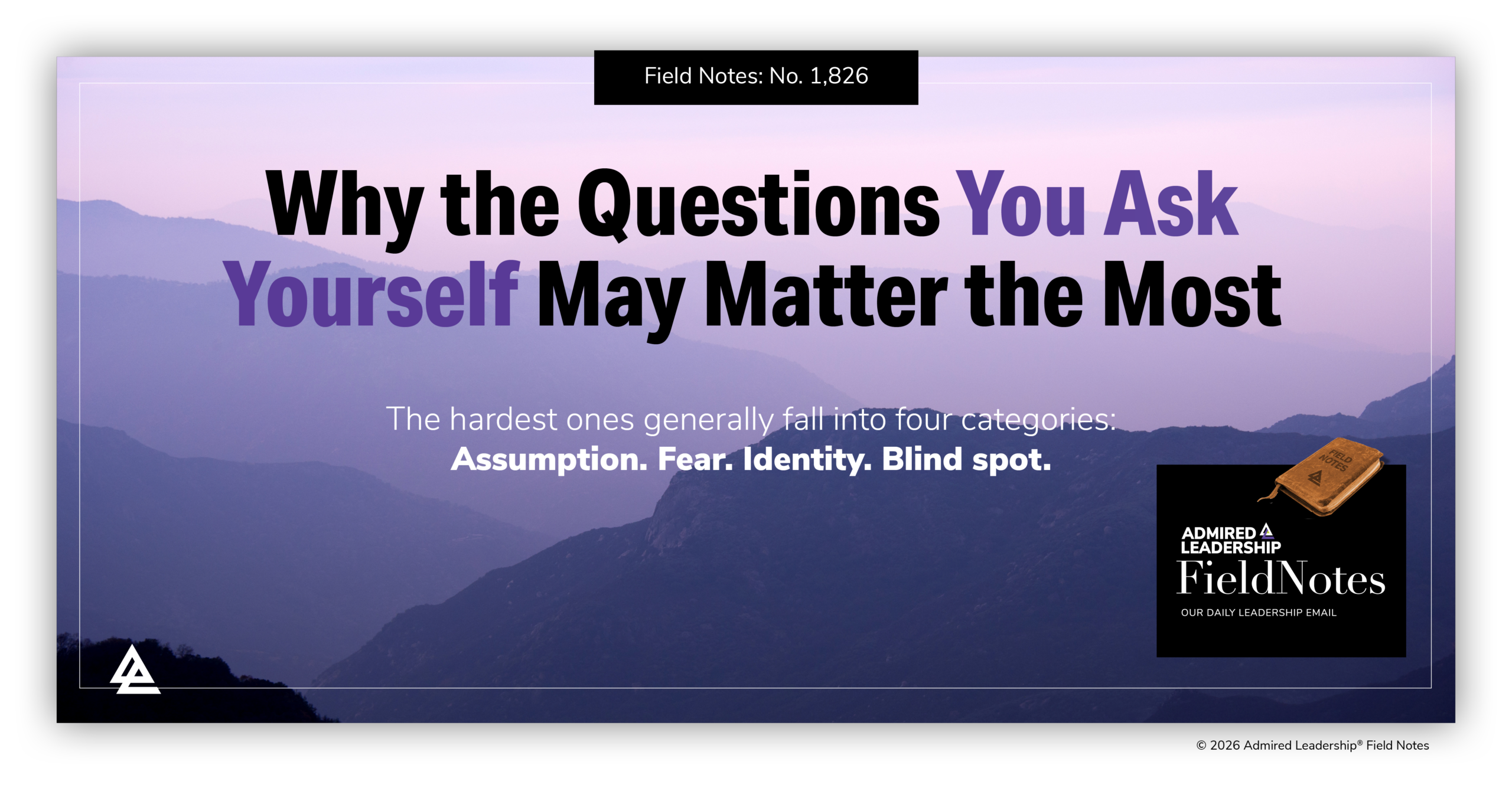
Why the Questions You Ask Yourself May Matter the Most
Most leadership mistakes don’t result from a lack of intelligence or experience. They occur because of unexamined assumptions, unrecognized fears, unchallenged self-interest, or unbridled enthusiasm. While seeking outside perspectives can help leaders understand what they may be overlooking, looking inward is also an essential part of the discovery process. Asking hard, self-directed questions is how…
-
Game Selection Is the Strategy Before the Strategy
After consolidating the nomadic tribes of the Mongolian steppe, Genghis Khan founded an empire that would span nearly 12 million square miles, waging roughly 70 battles across 20 campaigns along the way. He won all of them. Historians broadly attribute his unparalleled military success to Khan’s focus on extreme mobility, ruthless psychological warfare, and a…
-
Why Do Team Members Stay?
People remain committed and stay in an organization for a host of reasons, but “employee engagement” is no longer a reliable predictor of which ones will. A recent study of 3,000 workers, managers, and hourly team members across the U.S. and Canada revealed that job satisfaction no longer predicts retention very well. While a vast…
-
Fredkin’s Paradox of Similar Options
The more similar and equally attractive two alternatives are, the harder it is to choose between them. This is especially true when the outcome or consequence of the choice is insignificant. So, if a leader is choosing between two laptops and both seem great and largely alike, they will spend an inordinate amount of time…