




Our daily Field Notes email is just the kind of jumpstart you need. A fast read. Maybe less than a minute. Because sometimes it just takes one insight to change the trajectory of the day.
Search Field Notes
-
Good Apples in a Bad Barrel
When productive and committed team members are thrust into situations and environments with disgruntled colleagues, they are highly likely to be influenced negatively by them. Research over decades has confirmed that good apples placed in a bad barrel will turn sour. It’s not that team members are too easily influenced by the gripes and grievances…
-

Pushing Against a Candidate’s Flaw
Occasionally, a job candidate with huge upside displays a glaring flaw that prohibits their selection. Despite a set of amazing skills, talents, and experience, they exhibit a fatal flaw that turns a favorable review into one of deep concern. Once the selection team fully considers this imperfection, they normally conclude it is too risky to…
-
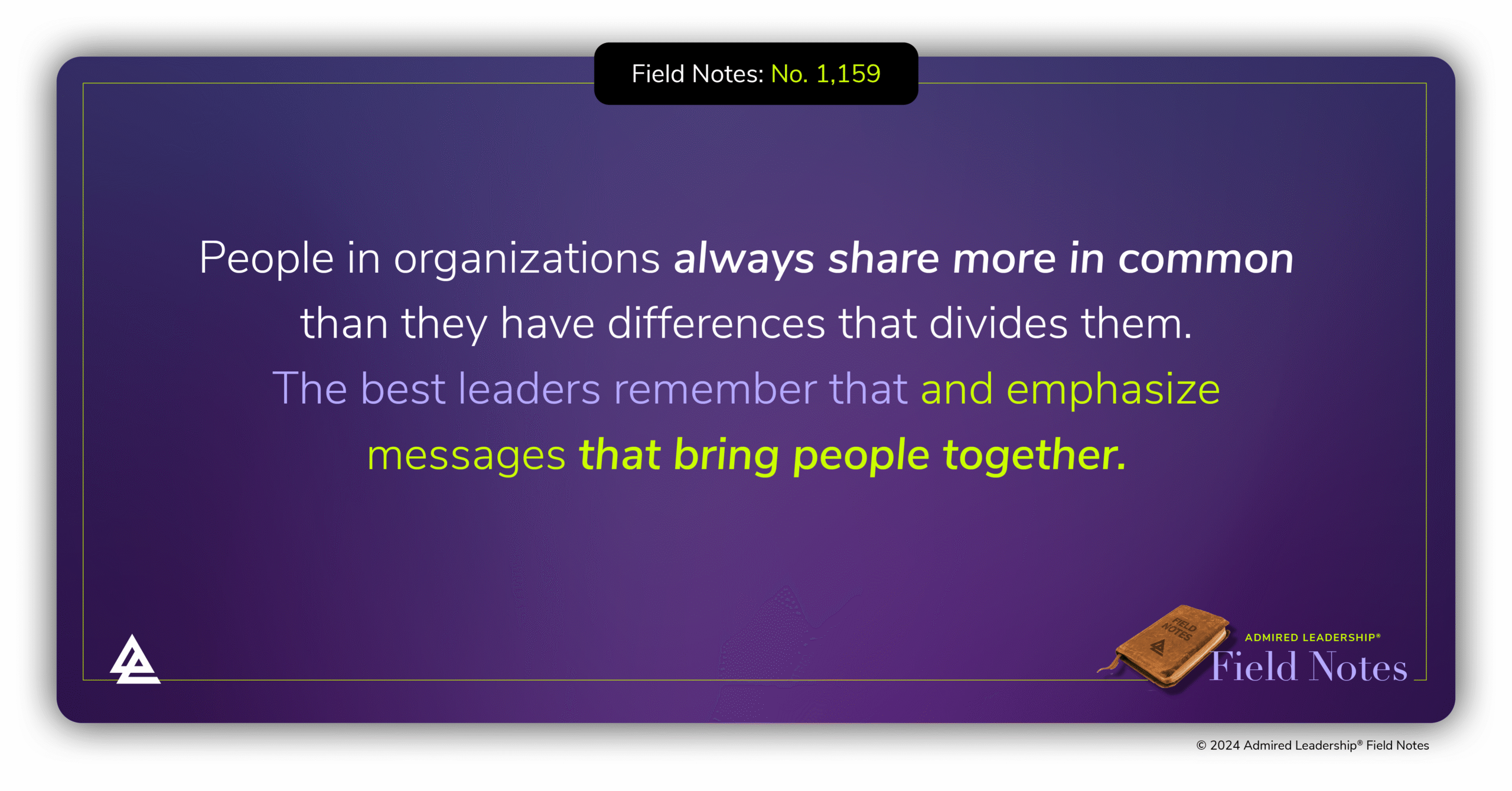
Leaders and Organizations Can’t Win When They Speak Out on Political Issues
As much as key stakeholders might want them to speak out, good leaders focus inward and not outward. No leadership team can or should speak for the entire audience of customers, team members, and investors. Weighing in on socially controversial issues undermines the ability to build a strong and cohesive team. People in organizations always…
-
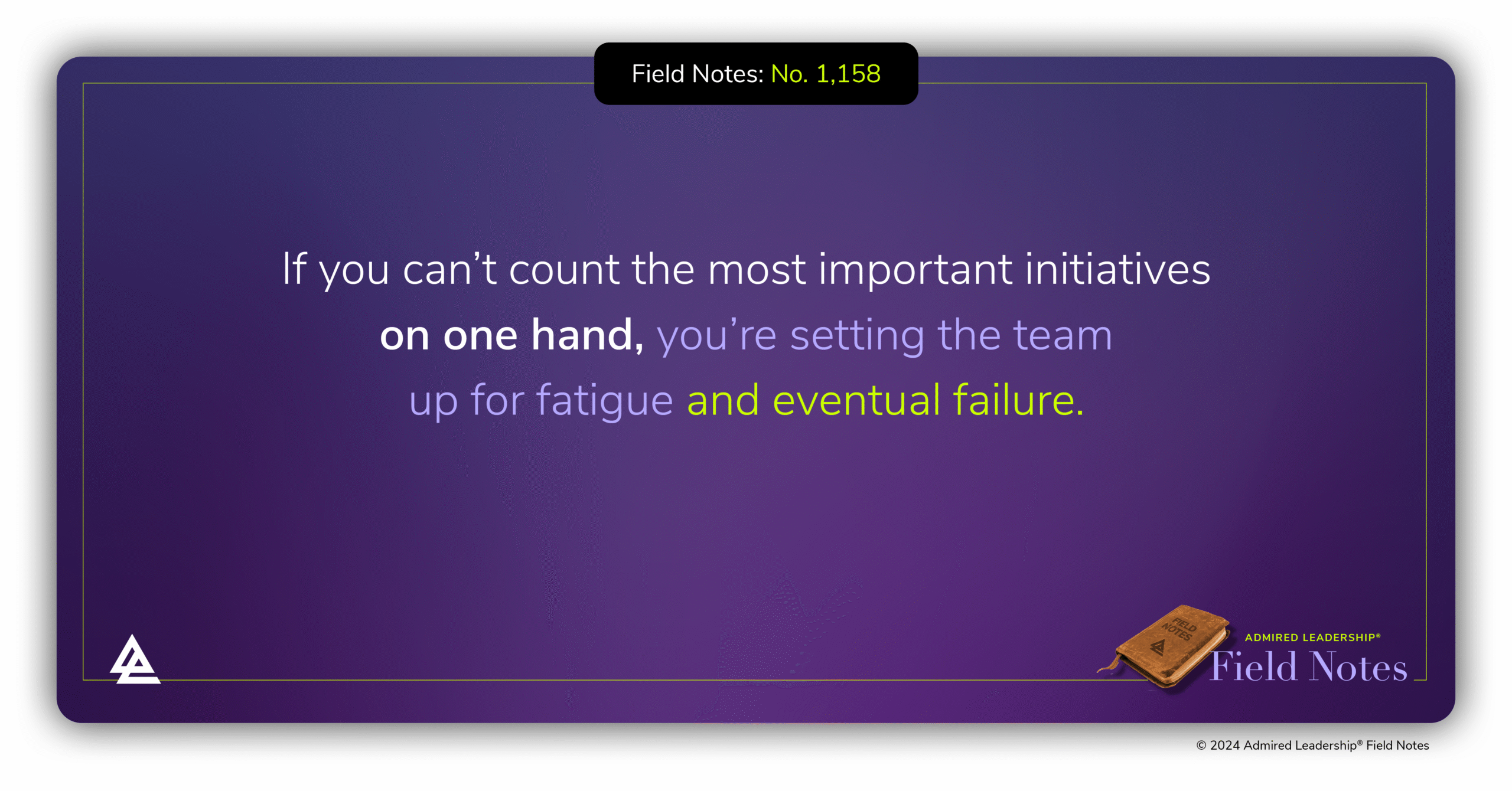
Preventing Initiative Fatigue
Leaders who believe that a sense of urgency and priority for all initiatives is how to get more done will soon find a team fatigued and exhausted. Instead, giving a team a healthy list of initiatives to move the organization forward but declaring which project has the highest priority is what good leaders do. Fatigue…
-
Negotiating With Team Members Looking to Leave
It is inevitable over time that a valued team member will receive a substantial bid to work elsewhere. Offer in hand, they commonly inform the team leader of their intention to leave the organization. The leader must then decide whether they want to make a play to retain the talents of the team member and…
-

Overcoming the Shadow of a Predecessor
Following a popular and effective predecessor can undermine the self-confidence of a new leader. Strong leaders who have held the role for a long time are a particularly tough act to follow. It is easy for leaders who follow an exceptional leader to feel self-conscious and less sure of their skills and talents. Those who…
-
The Importance of Retelling Stories of Success
With a renewed memory of success, team members are motivated to recapture the feelings and confidence that only success can generate. Everyone loves a good story, but they relish the success stories they were a part of. Good leaders remind the team of what they have accomplished so they are motivated to repeat that success.
-
Strengthening Weak Ties to the Organization
Strengthening Weak Ties to the Organization. For a host of reasons, some team members can become disconnected or uncommitted to the team and the team leader. Their everyday interaction, lack of connection to more than one or two colleagues, and reluctance to seek opportunities to collaborate reflect their weak ties to the organization and its…
-
Leaders Who Lack Courage Allow Bad Ideas to Prosper
When we think of leaders who lack courage, we typically envision people who have a difficult time making tough personnel decisions or delivering a strong message to those who need it. To be sure, courage is required to be an effective leader largely because decisions have consequences and workplace relationships need both caring and accountability.…
-
On Thinking Gray
The disadvantages of black and white thinking are well known. Any time a leader oversimplifies a decision or issue by choosing to see things in extreme good’s and bad’s or right’s and wrong’s, they typically make poor choices and draw inadequate conclusions. By giving up the middle ground, or shades of gray, leaders lose the…