




Our daily Field Notes email is just the kind of jumpstart you need. A fast read. Maybe less than a minute. Because sometimes it just takes one insight to change the trajectory of the day.
Search Field Notes
-
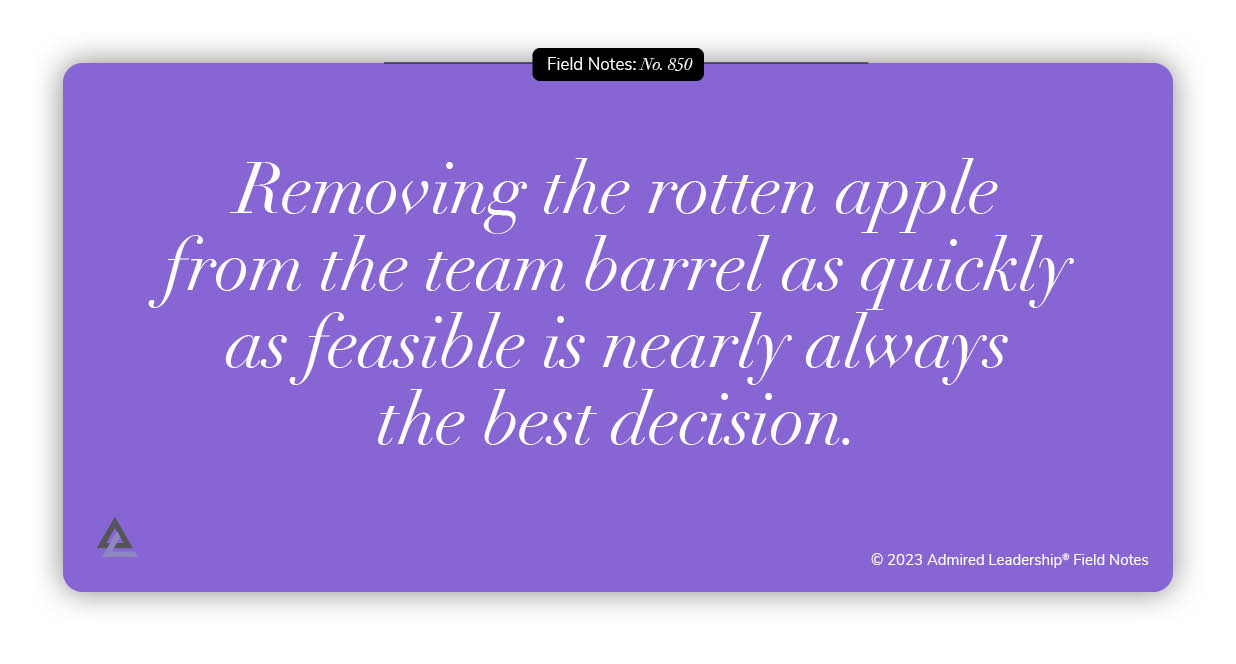
The Rotten Apple
One of the biggest challenges faced by leaders is what to do about a rotten apple on the team. Rotten apples come disguised in different clothes but they share some common qualities. They are typically poor performers who blame everyone and everything for their weak performance. Their negativity and disrespect for others make them a…
-
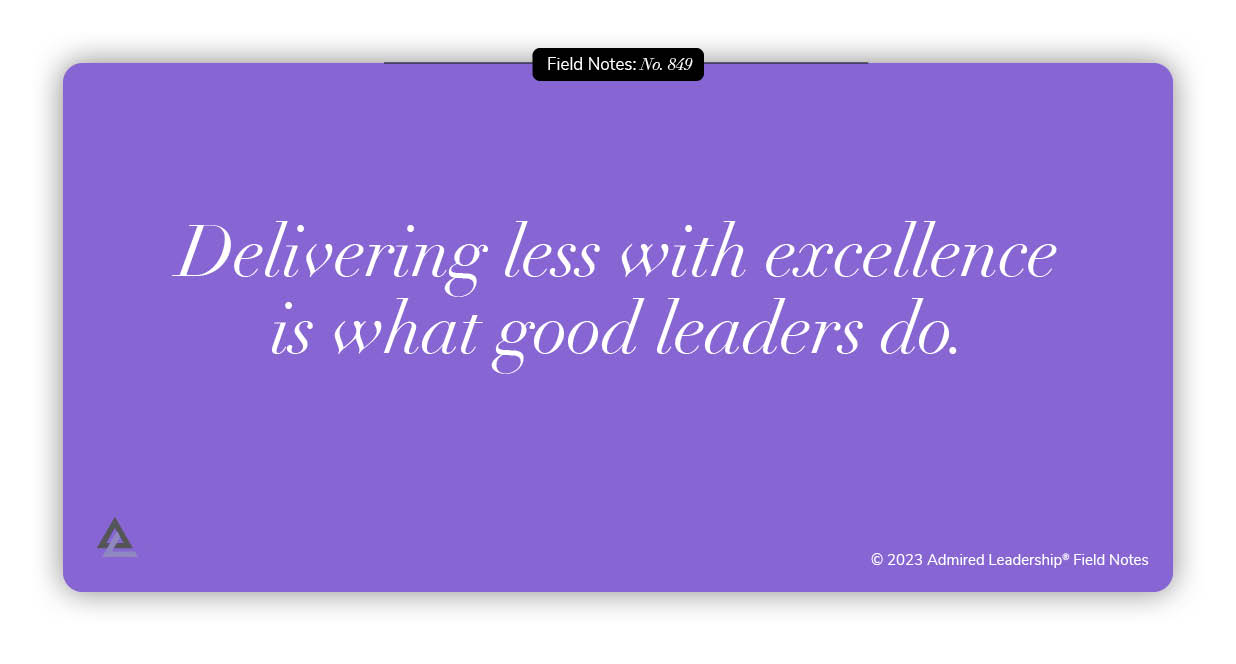
Do Less With Excellence
All leaders and team members must decide for themselves what is achievable with the highest excellence. When they deliver excellence on a smaller set of initiatives without completely ignoring the other projects, they are hailed as top performers. When those same leaders deliver everything asked of them with mediocrity, they are viewed as average performers…
-
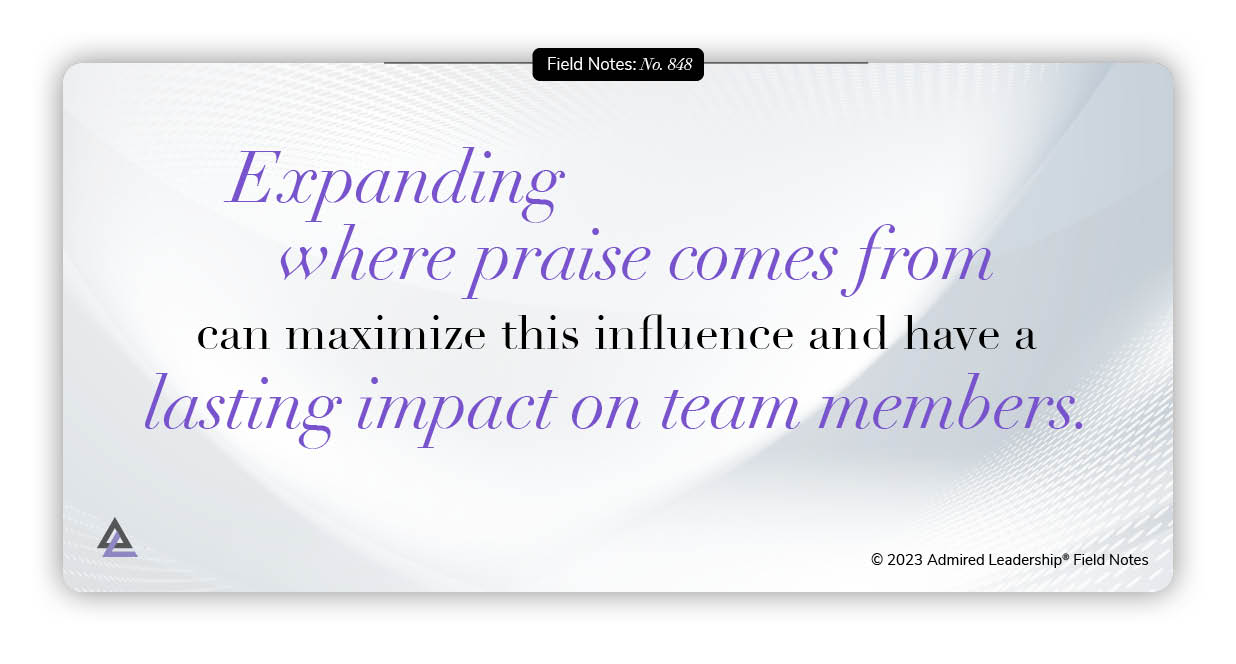
Ask Your Leader to Reach Down With Praise
It only takes a few minutes to update a more senior leader about the great work or accomplishment completed by someone on your team. Asking them to engage this person directly with some added praise is an easy do. Too often leaders overlook this advantage because they forget just how easy this is or the…
-
Burned by People Too Many Times
The obligation of every leader is to presume the best of people and to act accordingly. Anything less makes the job of leadership untenable for everyone involved. Without feeling and experiencing the leader’s trust and confidence, the best team members can’t reach their highest potential. They depend on their leader to forget the negative relationships…
-
The Five Languages of Praise
When author Gary Chapman described how intimates prefer to show and experience love, people finally understood why their affections sometimes missed the mark. In his 1992 book The Five Love Languages, he outlined the different ways intimates prefer to give and receive love: acts of service, gift dgiving, physical touch, quality time, and words of…
-
Make the Charitable Assumption
Leaders are often surprised by what they learn when asking others to explain their behavior in a considerate way. Family, medical, and other issues often clarify why people do what they do. Nothing feels worse to a leader than when they come down hard on a team member and later learn the colleague was experiencing…
-
Thank You for Your Candor
Thanking people for their candidness before responding is a habit of great leaders. People who are thanked for being candid often respond to the encouragement by doing more of it. Some leaders even thank people for their frankness in advance, before they begin discussing an issue. This sets an expectation that candor matters more than…
-
How Resilient Is Your Team?
When a team member needs to be comforted, encouraged, challenged or confronted, great teams don’t wait for the leader to interject and address the issue. They are empowered and expected to do it. Over time, the peer-like quality of everyone on the team takes hold and creates the foundation for resilience. When the marketplace throws…
-
Replace Improvement Decisions With Hard-and-Fast Rules
Some things can always be better. Good leaders never lose their focus on continually improving the ingredients that make teams and team members better. The team culture, team member skills, meeting effectiveness, and workstream processes are just some of the areas that should always be getting better. The same is true for making themselves better.…
-
Writing the Last Scene First
By working backward from a highly defined last chapter, the strategy for going forward to achieve it comes into sharper focus. It becomes easier to align actions and initiatives with the desired outcomes. Figuring out the many investments and steps required to achieve the end state in its entirety makes the strategy more robust and…