
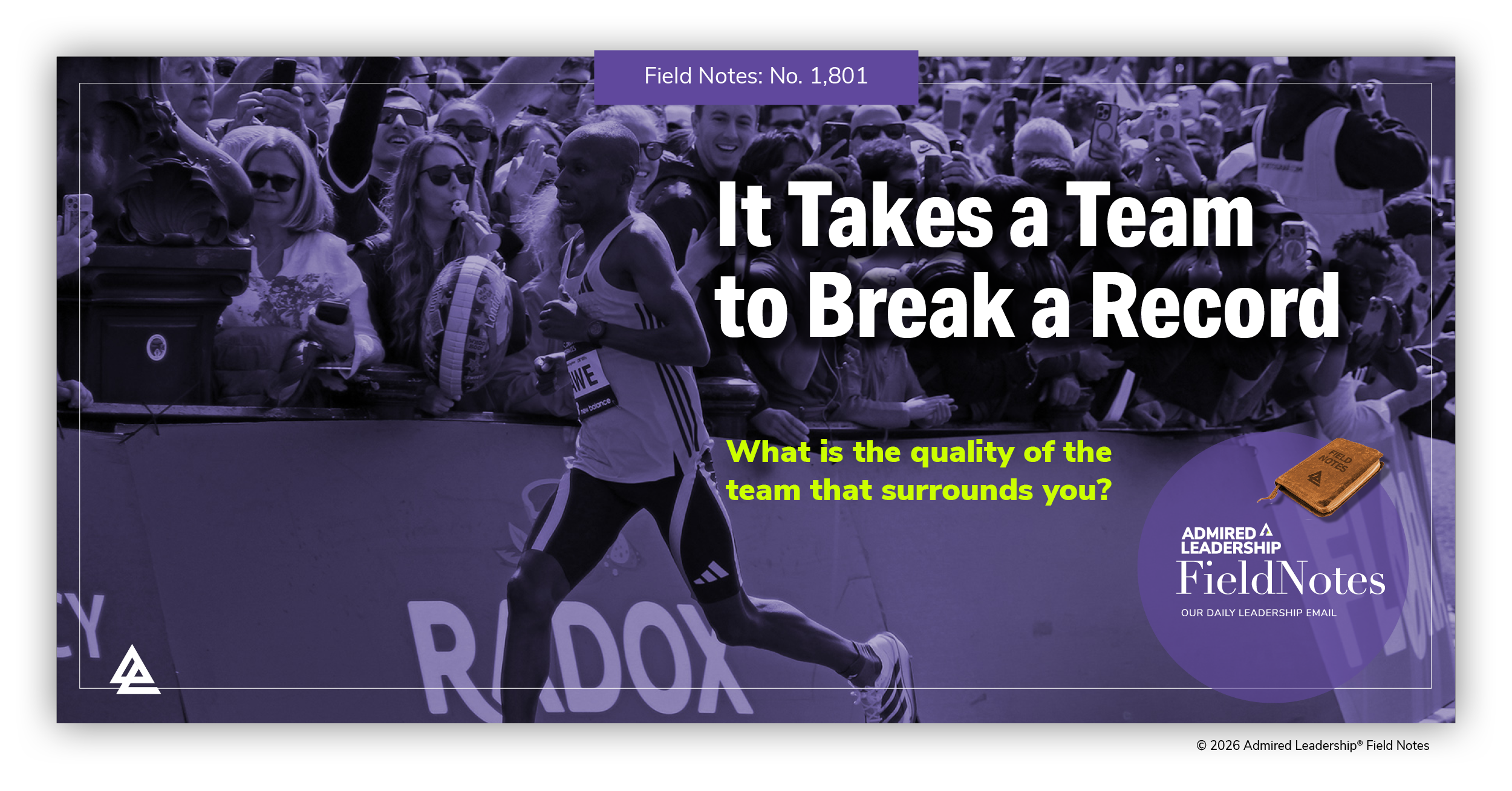
Kenyan long-distance runner Sabastian Sawe recently broke the two-hour marathon barrier in London with a time of 1:59:30, shattering the world record.
Amazingly, Ethiopia’s Yomif Kejelcha finished just behind him while also breaking the two-hour mark.
The performances once again proved that the ability to reach a new mark is shaped by expectations and self-imposed limits.
Once a barrier becomes imaginable, training, tactics, and confidence reorganize to push through it. Experts now expect that runners breaking the two-hour barrier will become routine.
But there is more to this story — and to the many record-breaking performances like it.
In today’s world, peak performance emerges as much from the quality of support and coordination of a team of experts as from the raw talent and individual training of the performers.
Athletes, and corporate athletes alike, depend on teams of support people to excel. What looks like a solitary sport is actually a deeply collaborative enterprise.
Premier athletes today have as many as 5 to 10 experts directly and indirectly shaping performance across physiology, biomechanics, nutrition, psychology, logistics, data science, and technology.
The old model was a single coach, a single training program, plus hard work. The modern formula resembles a Formula 1 pit crew.
From strength specialists to recovery experts, athletes draw on many disciplines to rework their training and approach to competition.
Setting new records is a team achievement, not an individual success story. Small changes make for big differences when the competition is fierce. It now takes a team of people to create an edge.
Corporate leadership is moving in the same direction. The “hero” leader model is officially obsolete.
Instead of expecting leaders to individually master every capability on their own, organizations are increasingly building performance ecosystems around their best leaders. That ecosystem includes executive coaches, chiefs of staff, strategic advisors, technology specialists, peer advisory networks, and wellness experts.
The question has shifted from “How exceptional is the leader?” to “How well designed is the system supporting this leader’s judgment, energy, and execution?”
Just as athletes use biometrics and video analysis, leaders are increasingly turning to behavior analytics, scenario planning, cognitive performance tools, and AI-assisted modeling.
The leader’s role becomes less about having all the answers and more about orchestrating expertise.
Leaders who can integrate human judgment with data and machine intelligence have a marked advantage. This takes a team of experts, not isolated brilliance.
What is the quality of the team that surrounds you? Do you have the right experts at your disposal, giving you an edge?