



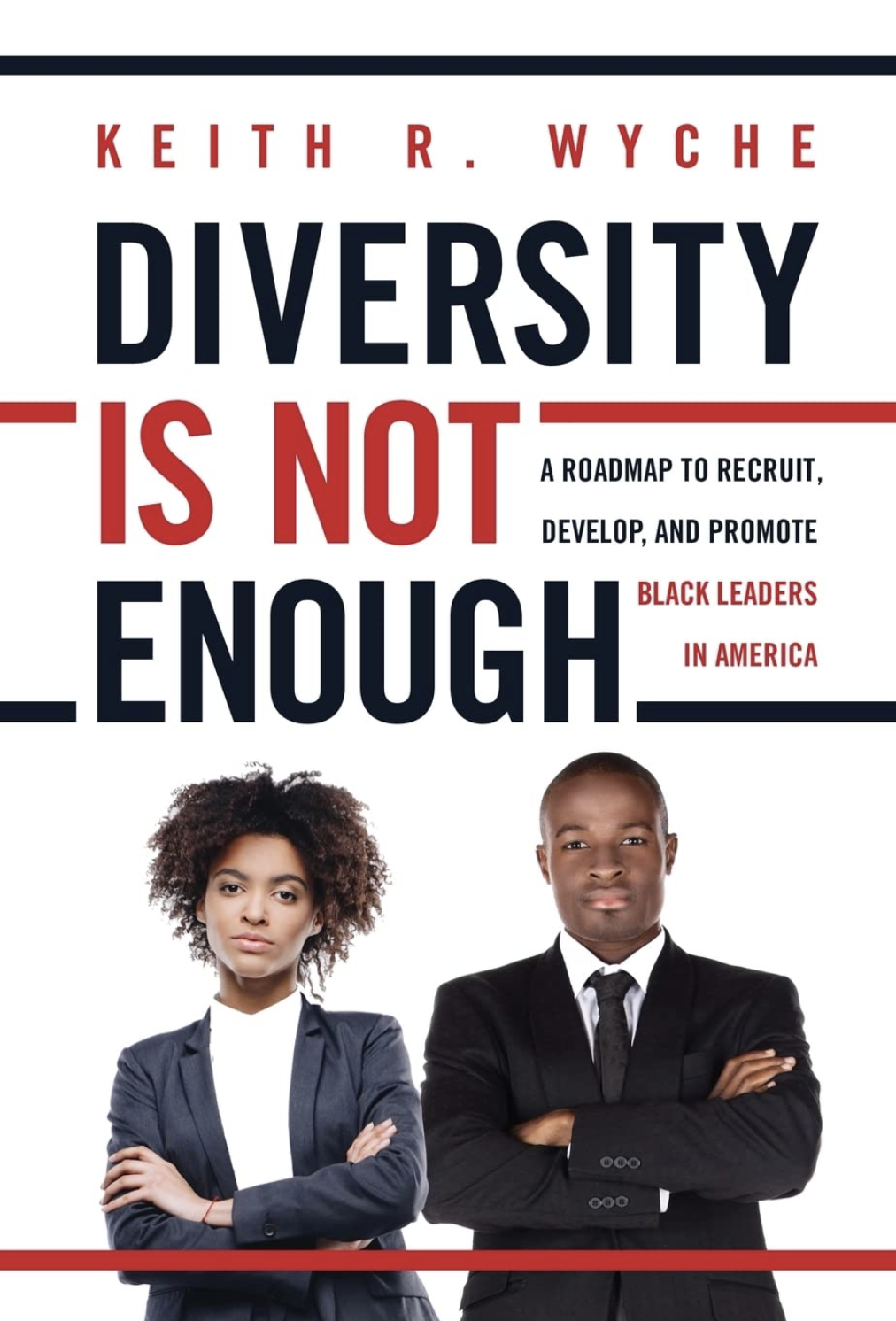
Key Quote: “Not only do employees with different perspectives and experiences help create more resilient and effective organizations; they also foster innovation, creativity and empathy in ways that homogenous environments seldom do” (p. xiv). — Keith R. Wyche
Key Points and Concepts
DE&I
The premise of DE&I (Diversity Equity & Inclusion) at its inception was based upon “the belief that all of us, regardless of age, race, ethnicity, sexual orientation or another unique characteristic, brought value to the workplace” (p. 10).
The intention of DE&I was to make organizations “more innovative, more attractive to potential job seekers, and, as a result, more profitable” (p. 10).
DE&I policies create a more inclusive workplace and create a better leadership pipeline for people of all demographics (p. 10).
Equity, in principle, takes “deliberate actions to provide everyone in the organization the same opportunity for success, realizing that we don’t all share the same privileges”. It considers everyone’s unique needs (p. 21).
Why Should Organizations Invest in DE&I?
Benefits like enhancing the working environment and culture, reinforcing the organization’s values, and gaining support of local communities are some of the top mentioned reasons companies cite for investing in DE&I (p. xiv).
“If organizations are serious about receiving the ROI of their diversity and inclusion efforts, they need to have meaningful Black representation at every level, board included” (p. xv).
“Research has shown that inclusive organizations are six times more likely to be innovative and have two times higher cash flow per employee over a three-year period, as compared with organizations whose employees don’t feel a sense of inclusion at work” (p. 5).
“Employees who do feel included are 28 percent more engaged and intend to stay three times longer at their organization than employees who work for non-inclusive organizations” (p. 5).
The Glass Ceiling
“Nearly one in five Black professionals believe that someone of their race would never achieve a senior leadership role at their company” (p. 7). When there are few Black leaders in top leadership roles or on boards, Black employees struggle to identify with senior leaders, leaders “who can mentor and sponsor them, or who can relate to their issues, experiences, and backgrounds” (p. 7). This further dissuades Black professionals from seeking leadership positions.
Diversity is Not Enough
Those in middle management are ultimately responsible for the execution of DE&I initiatives and it is necessary that they understand, accept, and embrace initiatives. Hold middle managers accountable if they refuse to embrace or perform to the company’s DE&I expectations (pp. 30-31).
Talented Black professionals could be overlooked if they are lumped in with other people of color (POC). Companies with a large Asian or Latinx employee base can skew POC metrics and give the impression that DE&I is not a problem. “Over time, these talented Black professionals get frustrated and leave the organization or remain with the organization but operate below their potential” (p. 32).
“Because there is so little, or practically no representation on senior and executive levels for Black professionals, we are often overlooked for sponsorship to fast track or to be tapped as a high potential candidate early and developed accordingly throughout our careers” (p. 44).
“When a Black professional does not see anyone in senior leadership who looks like them in decision-making roles, it gives the perception that such attainment is out of reach for them” (p. 74).
Effective DE&I Efforts
Include diverse associates in creating DE&I (p. 31).
Use inclusive language, action, and hiring processes at every level of leadership, emphasizing importance especially in middle management (p. 20).
Design a culture that makes all feel welcome and appreciated with a commitment to DE&I and respect for individual differences (pp. 42-43).
Have consistent, trusted methods to gather honest feedback at every level of the organization (p. 20).
Invest in data collection methods that allow for complete anonymity. Successful data collection methods include hiring outside consultants, hosting focus groups, and providing online surveys hosted on external websites. Anonymous data collection ensures employees feel safe when providing honest feedback without fear of retaliation (p. 84).
CDOs, chief diversity officers, have the power and influence to drive meaningful change when they “report directly to the CEO or to the head of HR, with a dotted line to the CEO”. Companies must also provide them with an adequate budget or staff and set the CDO up to succeed (pp. 75-77).
Recruit with DE&I
Seek referrals from existing Black professionals, who undoubtedly know other Black professionals who could be qualified for open positions (p. 48).
Develop relationships and partner with Historically Black Colleges and Universities (HBCUs), schools that “have produced some of the greatest Black executives, politicians, doctors, artists, athletes and leaders” (pp. 95-97).
Recruit through Black professional organizations that upskill and develop talent (pp. 97-102).
Development of Talent
Invest in onboarding, mentoring, development, and sponsorship of all employees (p. 33).
Fund internal talent and career development programs for Black professionals at the same level as programs dedicated to women (p. 40).
Take young professionals who “demonstrate intellectual curiosity, a passion for excellence, a willingness to do the work necessary to get results, and an openness to feedback” and provide them with Diversity is Not Enough “additional mentoring, access to senior leadership, assigned special projects, and put [them] in position to demonstrate their skills” (p. 45).
Identify and address your underutilized talent. Leverage their skills to the betterment of your organization and promote talent to roles where they can add more value and experience more job satisfaction (pp. 110-111).
“Encourage your senior leaders (especially White men) to take ownership of sponsoring your Black associates”. Organizations that prioritize inclusive talent development are more likely to have a leadership team focused on identifying and sponsoring top talent (p. 112).
Wyche, K. (2021). Diversity is Not Enough: A Roadmap to Recruit, Develop and Promote Black Leaders in America. Trinity: Kandelle Publishing.

The premise of DE&I (Diversity Equity & Inclusion) at its inception was based upon “the belief that all of us, regardless of age, race, ethnicity, sexual orientation or another unique characteristic, brought value to the workplace.”
Invest in data collection methods that allow for complete anonymity. Successful data collection methods include hiring outside consultants, hosting focus groups, and providing online surveys hosted on external websites. Anonymous data collection ensures employees feel safe when providing honest feedback without fear of retaliation.
Take young professionals who “demonstrate intellectual curiosity, a passion for excellence, a willingness to do the work necessary to get results, and an openness to feedback” and provide them with Diversity is Not Enough “additional mentoring, access to senior leadership, assigned special projects, and put [them] in position to demonstrate their skills.”