

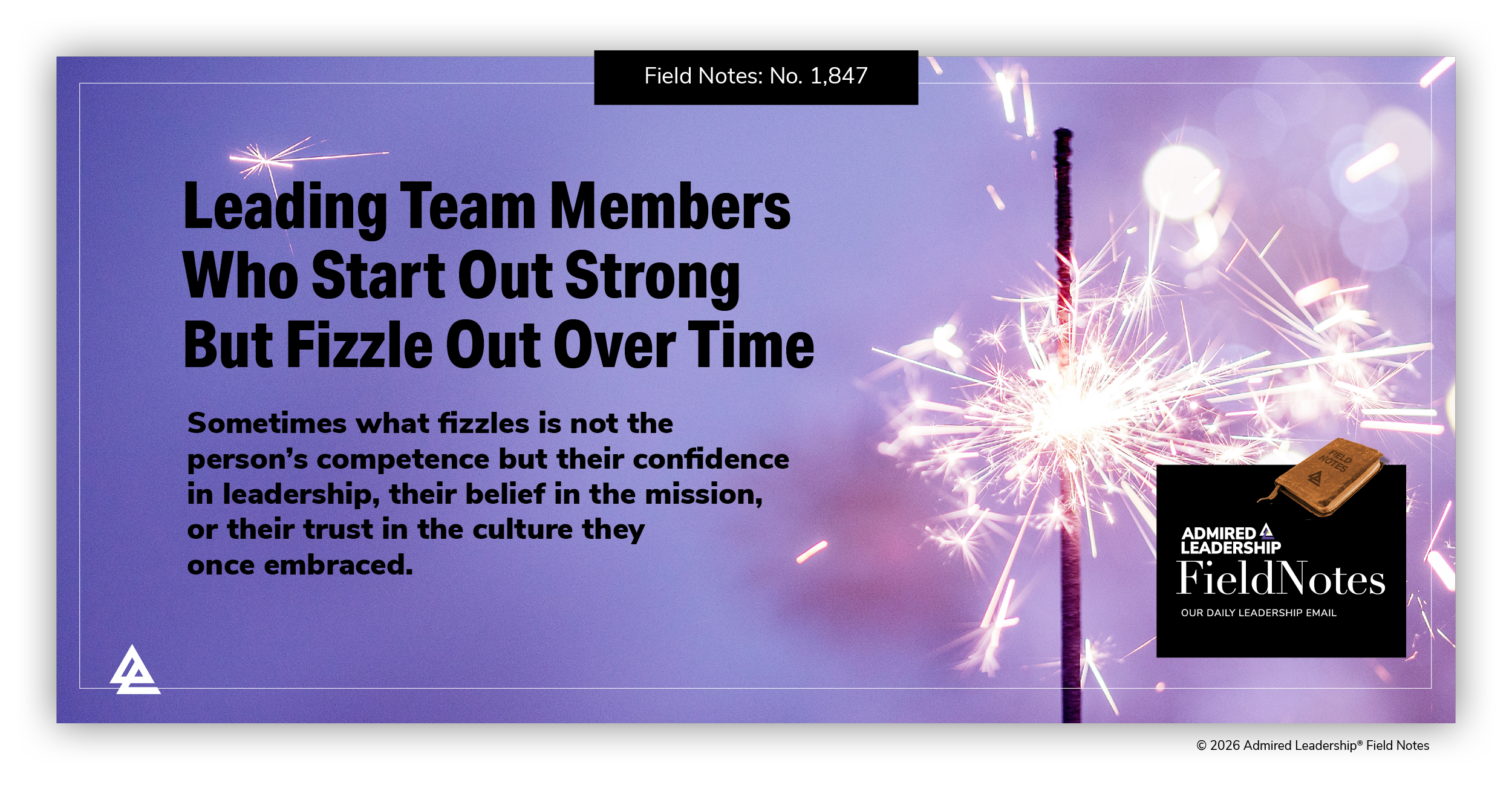
Team members who start out strong, demonstrate their skills through results, and appear to settle comfortably into the culture are a big win for leaders.
But over time, these capable people sometimes lose their momentum, begin to underperform, and seem very different from the persona they projected early on. Leading team members who begin powerfully but fizzle out over time is both highly disappointing and a unique challenge for leaders.
There are many reasons a team member’s performance can drop off a cliff after a couple of years of strong results — some preventable, others coachable, and a few that may well be unchangeable.
The first task of the leader is to generate a theory as to why. Exploring this reality, no matter how uncomfortable it might be for both parties, is the place to start formulating an explanation.
Among the most common explanations for this performance arc is a mismatch between the role and the person’s evolving ambitions.
People grow, and what once excited and challenged the team member may no longer hold the same appeal. When the role remains static even as the person develops new interests, stronger skills, or broader aspirations, disengagement becomes almost inevitable.
Leaders who surface this possibility early often discover that a modest adjustment in responsibilities, scope, or opportunity is all that is needed to reignite the energy and output that once defined the team member’s contribution.
A second and more difficult explanation involves the team member’s relationship with the organization itself. Sometimes what fizzles is not the person’s competence but their confidence in leadership, their belief in the mission, or their trust in the culture they once embraced.
Disillusionment is a quiet saboteur. It is rarely announced and easily mistaken for laziness or indifference.
Sometimes the disengagement can be rectified by exploring why they have come to believe what they do and advocating for a different frame or interpretation of the events and incidents that created their distrust.
Finally, leaders must accept that some fizzling is neither fixable nor anyone’s fault. People change, circumstances shift, and the fit that once felt natural can erode through no particular failure on either side. In those cases, the most generous and effective act of leadership is an honest and respectful conversation about what comes next.
Strong finishes are always preferable to prolonged fizzles, and it is the leader’s responsibility to help the team member either rediscover their mojo or leave the team to find excitement elsewhere.