



Key Quote:
“The term [Scrum] comes from the game of rugby, and it refers to the way a team works together to move the ball down the field. Careful alignment, unity of purpose, and clarity of goal come together” (p. 8).
Key Points and Concepts
Organization: Time Management and Tracking Progress
Determine what is the most important thing to focus on using the 80/20 rule: find the 20% that is most valuable, and work on that—the rest might not be that important (p. 12).
“Fail fast so you can fix early.” Set goals that must be completed in a fixed, consistent length of time (ideally one to four weeks), called a Sprint. Each Sprint should produce something that you can demonstrate, whether it is a feature, product, document, or a process.
Before each Sprint, there is a meeting to discuss how much work will be accomplished in that length of time (which cannot be changed after the Sprint starts). After the Sprint, the team meets to discuss what they got done and what got in their way in order to figure out how to get better for the next Sprint (p. 15).
The goals for the Sprint are written on post-it notes, which are placed on a white board so everyone can see the progress. There are three columns: Backlog, Doing, and Done (p. 15, pp. 75-77).
Do one thing at a time. When you multitask, you are slower and worse at both tasks.
Eliminate waste by eliminating the amount of half-built stuff lying around. Half-finished products are expended resources with nothing to show for it. “Doing half of something is, essentially, doing nothing” (p. 96).
Fix mistakes right away. In the Japanese car market, each worker had the ability to stop the production line if there was an issue and then everyone would help fix it. In the German car market, the cars were inspected after it was made. The Japanese had less than half the defects that the Germans had (p. 98).
Working fewer hours allows higher quality work to get done; working too many hours leads to mistakes that take more effort to fix (p. 103).
Get rid of waste, such as absurd goals, unreasonable expectations, overburden, and emotional waste.
“A team that depends on regular heroic actions to make its deadlines is not working the way it’s supposed to work” (p. 107).
Each item that needs to get done is put on a sticky note. These sticky notes also had a “definition of done,” which gave a description of how the team would know that that item was complete. Only once this criterion is met does it get moved to the Done column of the sticky note (p. 117).
We think in terms of stories—the who, what, and why? — answer these questions before prioritizing what you are going to do (p. 133).
Prioritize what needs to be done and then assess how much time each task will take in terms of relativity, rather than time estimates, for instance, use the Fibonacci sequence to assign which tasks will have more weight in terms of time and effort (p. 123).
Playing Poker: Everyone involved has cards that have the Fibonacci sequence, and all put down the effort they think it will take. Then, if there is a disagreement of more than three cards apart, the high and low people give their reasons and then everyone votes again. If it is within three cards apart, you take the average of the cards (pp. 129-131).
The team members should know their velocity, or how much work will get done in each sprint. When you know how fast you’re going, you’ll know how fast you’ll be able to deliver.
How the Team Operates
Teams are what make things get done; focus on changing team performance rather than individual performance (pp. 41-43).
Three necessary qualities of teams (p. 44):
• Transcendence: teams have a sense of purpose greater than the individual
• Autonomous: teams have the ability to make their own decisions
• Cross-functional: no separation of roles, everyone on the team has all the necessary skills needed to complete the project.
The ideal team size is seven, plus or minus two (p. 58). Larger teams don’t function as well because transparency is lost (pp. 60-61).
In addition to the team, there is a Scrum Master and A Product Owner:
• The Scrum Master makes sure the process is effective. The Scrum Master asks the team: “What did you do since the last time we talked? What are you going to do before we talk again? And what is getting in your way?” (p. 50, p. 62).
• The Product Owner decides what the work should be and owns the back log. The Product Owner delivers feedback to the team from the customer each Sprint (pp. 176-178). The Product Owner needs to be knowledgeable about the domain and empowered to make decisions, however “the product owner should be responsible for outcomes, but lets the team make their own decisions”
(pp. 176-179).
Within the team there are no titles, just team members (p. 78).
Have a mandatory Daily Meeting at the same time everyday to let the whole team know exactly where the Sprint stands and the Scrum Master asks each team member: “What did you do yesterday to help the team finish the sprint?” “What will you do today to help the team finish the sprint? What obstacles are getting in the team’s way?” The meeting doesn’t last more than fifteen minutes, and everyone has to actively participate (p. 77, p. 79).
Encourage autonomy by letting people make their own decisions about their job (p. 162).
If people can’t convince the teammates that something is worth working on, then it probably isn’t a good idea (p. 227).
“[…] personal concerns are raised first by fellow team members talking with one another. They may bring in others to consult. It may result in feedback, a harsh corrective move, or even dismissal. But it’s a team decision” (p. 227).
A Culture of Feedback
The Scrum process depends on continuous improvement where you plan, do, check, and act (“act means to change your way of working based on real results and real environmental input”) (p. 35).
Make mistakes early to get feedback. Have something to show the public as soon as you can (p. 190).
“Once people have your product or service or change in their lives, they’ll tell you what the next most valuable things are. Then develop 20 percent of that and deliver again. And again” (p. 191).
After each Sprint, the team has a Sprint Demo, an open meeting where the team demonstrates what they accomplished during the Sprint where anyone can attend.
The team assesses the Sprint after it is finished during the Sprint Retrospective to discuss what can improve in the next sprint. “To be effective, this meeting requires a certain amount of emotional maturity and an atmosphere of trust. The key thing to remember is that you’re not seeking someone to blame; you’re looking at the process. Why did that happen that way? Why did we miss that? What could make us faster? It is crucial that people as a team take responsibility for their process and outcomes and seek solutions as a team. At the same time, people have to have the fortitude to bring up the issues that are really bothering them in a way that is solution oriented rather than accusatory. And the rest of the team has to have the maturity to hear the feedback, take it in, and look for a solution rather than getting defensive” (p. 238).
“By the end of the meeting the team and the Scrum Master should agree on one process improvement to implement in the next Sprint” (p. 238).
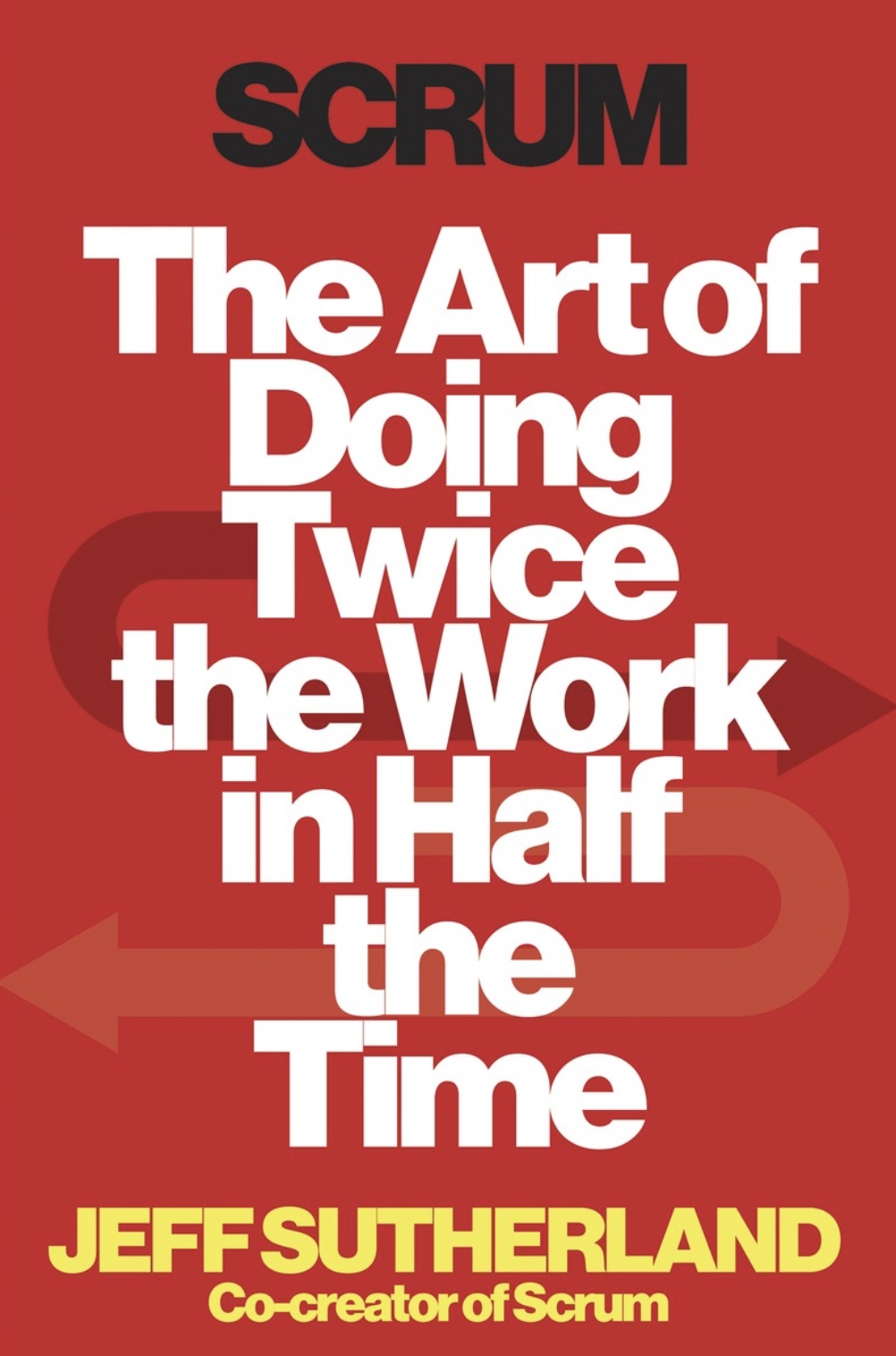
Sutherland, J. (2014). Scrum: The Art of Doing Twice the Work in Half the Time. New York: Crown Business.

“Prioritize what needs to be done and then assess how much time each task will take in terms of relativity, rather than time estimates, for instance, use the Fibonacci sequence to assign which tasks will have more weight in terms of time and effort.”
“[…] personal concerns are raised first by fellow team members talking with one another. They may bring in others to consult. It may result in feedback, a harsh corrective move, or even dismissal. But it’s a team decision.”
“The Scrum process depends on continuous improvement where you plan, do, check, and act (“act means to change your way of working based on real results and real environmental input.”