
Key Quote:
“Everything of significance a leader accomplishes happens not just because of his or her efforts, but through the efforts of others” (p. 102).
Key Points and Concepts
Part 1: A Leader Is…
Sanborn begins by redefining what it means to be a leader. He asserts that the most powerful organizations are the ones where everyone leads. This democratization of leadership fosters an environment where innovation and improvement thrive.
A true leader doesn’t need a title to be a leader. A leader strives to make things better.
Leadership is linked to service to the customer and the ROI (Relationships, Outcomes, and Improvements). A leader wants to help “shape or influence the world around them” (p. xii).
“You’re never going to get hired based on your title, in and of itself. A job title is more useful internally to your company and for how you feel you’re viewed. Influence and inspiration come from the person, not the position” (pp. 6-7).
The Power of Influence
Sanborn emphasizes that true leadership stems from influence rather than authority. He argues that job titles may provide a sense of status but do not inherently grant the ability to lead. Instead, effective leaders inspire others through their actions, character, and ability to connect with people. This principle encourages readers to focus on developing their influence, suggesting that anyone can lead by example and inspire others through their commitment to improvement.
Part II: The Six Principles of Leadership
Sanborn outlines six core principles that he believes are essential for effective leadership:
1. Self-Mastery
Self-mastery is the foundation of effective leadership. Sanborn encourages readers to engage in lifelong learning and personal development.
Reading outside your own area of expertise stimulates new thoughts. Everyone has ideas, but the problem is the lack of recall – so record your insights, make time to reflect, and mentor others.
2. Focus
Focus is crucial for achieving meaningful results.
“Focus and determination beats brains and intellect every time” (p. 41).
It’s easy to become distracted and drift away. There’s a difference between drifting (takes away the power of choice) and waiting (it’s intentional).
Create an agenda and prioritize it. Determine if your agenda items are your “Most Valuable and Profitable” activities and whether they are bringing you closer to your long-range goals (p. 49).
3. Power with People
Building strong relationships is vital for successful leadership. Sanborn advises leaders to appreciate their colleagues, encourage participation, and address issues directly rather than placing blame on individuals. By fostering a collaborative atmosphere, leaders can harness the collective strengths of their teams, leading to greater innovation and problem-solving capabilities.
4. Persuasive Communication
Effective communication is a cornerstone of leadership. Sanborn emphasizes that communication should aim for understanding rather than mere information exchange. He introduces the concept of “feed forward,” which focuses on providing constructive guidance for future actions rather than solely reflecting on past performance. This proactive approach helps create a culture of continuous improvement.
Feedback is remedial while feed forward is preventative and tells a future story.
5. Execution
Execution is where ideas meet reality. Sanborn quotes Henry Ford to underline that reputation is built on actions rather than intentions. He cautions against common pitfalls such as procrastination and fear of failure, which can hinder progress. Instead, he advocates breaking down large goals into manageable steps and taking decisive action toward achieving them.
“Henry Ford famously said, ‘You cannot build a reputation on what you are going to do’” (p. 70).
6. Giving
The principle of giving emphasizes that true leadership involves serving others. Sanborn posits that when leaders focus on making the world better for others, they ultimately enhance their own lives as well. This spirit of generosity fosters trust and loyalty among team members, creating a positive feedback loop that benefits everyone involved.
“When you make the world better for others, you make the world better for yourself” (p. 88).
Part III: Making a Positive Difference
In this final section, Sanborn reinforces the idea that every individual has the capacity to make a difference, whether positive or negative.
The Significance of Actions
Sanborn stresses that our actions carry weight and influence those around us more than we often realize. He encourages readers to be mindful of their behaviors and decisions, as they set an example for others to follow. Leaders must communicate the significance of their actions to inspire collective responsibility within their teams.
The Power of Everyday Leadership
Sanborn illustrates how leadership can manifest in everyday situations, highlighting that opportunities for leadership exist in all interactions—whether at work or in personal life. By recognizing these moments and stepping up to lead, individuals can create meaningful change without needing formal authority.
Developing Leadership Skills
Practical advice is offered throughout this section on how individuals can develop their leadership skills incrementally. Sanborn suggests setting specific goals for personal growth, seeking feedback from peers, and engaging in reflective practices to enhance self-awareness.
Creating a Leadership Legacy
Finally, Sanborn encourages readers to think about the legacy they wish to leave behind as leaders. He prompts them to consider how their actions will impact future generations and challenge them to strive for positive influence that endures beyond their tenure in any role.
Conclusion
Anyone can embody leadership qualities regardless of their position within an organization or community. By embracing self-mastery, focus, collaboration, effective communication, execution, and generosity, individuals can cultivate their potential as leaders and make lasting contributions in both their personal and professional lives. The book inspires readers not only to recognize their capacity for leadership but also to act upon it in meaningful ways every day.
“Our actions and behaviors matter more than we realize. People who act as leaders understand that everything they do – and do not do – is significant. The first job of those who act as leaders – whatever their title – is to convince others of the significance of their actions” (p. 94).
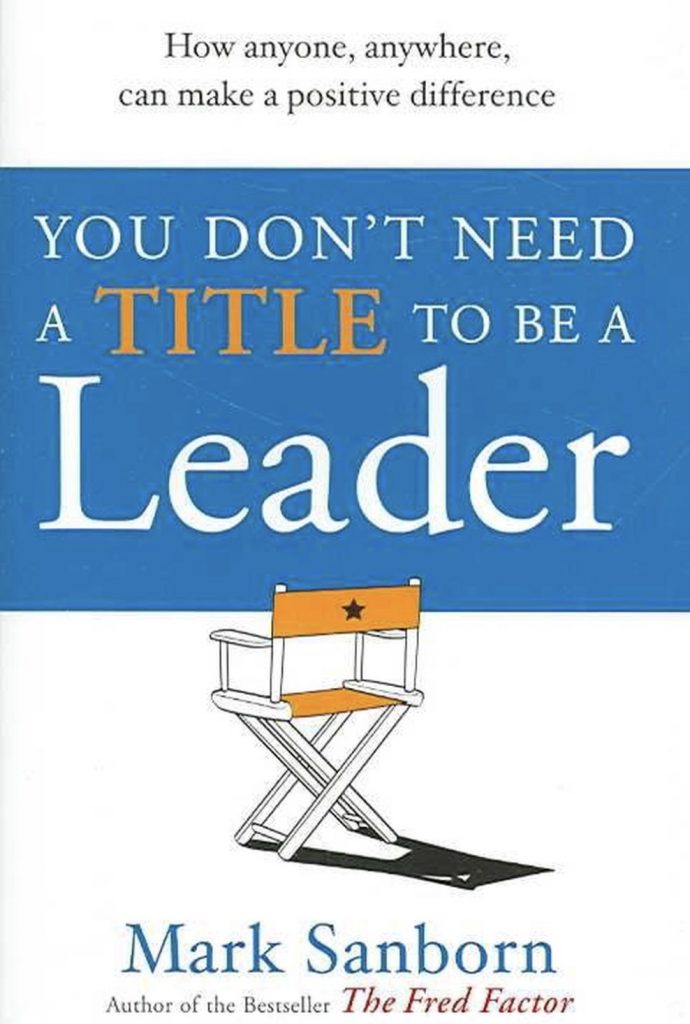
Sanborn, M. (2006). You Don’t Need a Title to Be a Leader. New York: Random House.

“Everything of significance a leader accomplishes happens not just because of his or her efforts, but through the efforts of others” (p. 102).
“Leadership is linked to service to the customer and the ROI (Relationships, Outcomes, and Improvements). A leader wants to help “shape or influence the world around them.”
“The principle of giving emphasizes that true leadership involves serving others. Sanborn posits that when leaders focus on making the world better for others, they ultimately enhance their own lives as well. This spirit of generosity fosters trust and loyalty among team members, creating a positive feedback loop that benefits everyone involved.”
“Our actions and behaviors matter more than we realize. People who act as leaders understand that everything they do – and do not do – is significant. The first job of those who act as leaders – whatever their title – is to convince others of the significance of their actions