
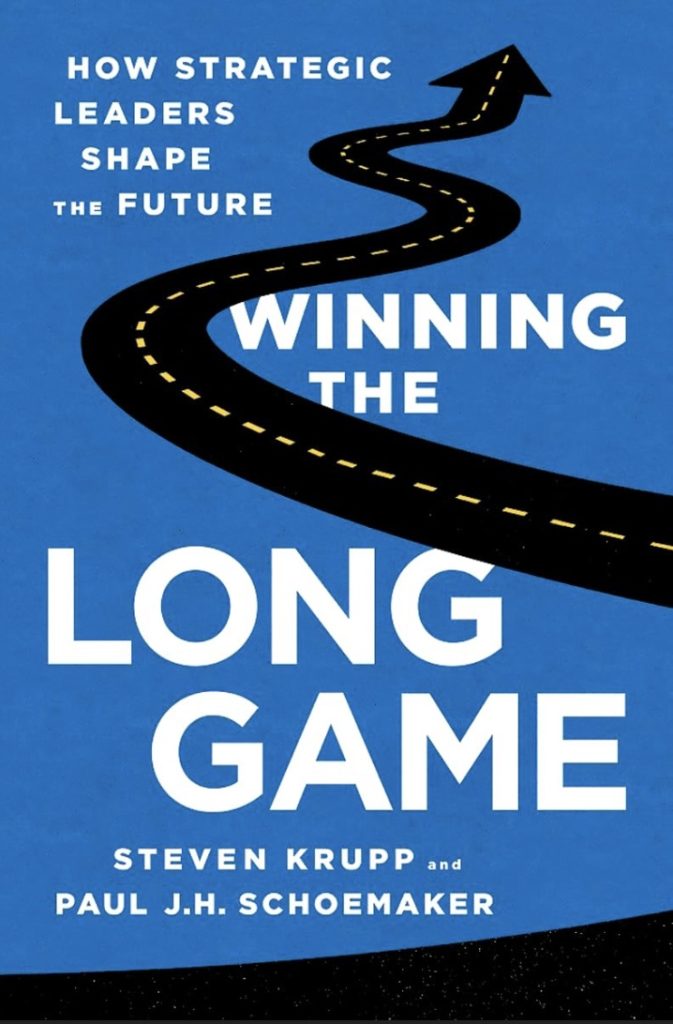
A Rule of Three Book Summary by Admired Leadership
The Book in 3 Sentences:
Strategic leaders who want to navigate uncertain and complex markets must master six interconnected disciplines that bridge strategy and leadership. The authors argue that successful leaders must learn to anticipate future challenges, challenge conventional assumptions, interpret ambiguous signals, make forward-thinking decisions, align stakeholders around shared purpose, and learn faster than competitors. These disciplines work together to help leaders shape the future rather than simply react to it.
The 3 Most Important Concepts:
Strategic Leadership Integration is the idea that strategy and leadership are not separate domains but must be combined to navigate uncertainty. Traditional approaches treat these as distinct areas, but the authors demonstrate that the most successful leaders seamlessly integrate strategic thinking with leadership execution across six key disciplines.
Future-Back Thinking involves approaching decisions and planning by starting from imagined future scenarios and working backwards to present actions. This includes scanning wider from outside perspectives, experiencing your business as customers and competitors would, and asking how decisions will hold up both in stable conditions and when “all hell breaks loose.”
Learning Velocity is the concept that the ability to learn faster than competitors may be the only sustainable competitive advantage. This involves experimenting widely, understanding global cultures, conducting intensive debrief sessions, and creating systems like “mistake banks” where employees can anonymously share learning experiences.
The Book’s 3 Most Essential Claim
1. Traditional approaches to strategy and leadership are insufficient for modern complex
environments. Leaders must master six interconnected disciplines rather than treating strategy and leadership as separate domains.
2. Anticipation and forward-thinking are critical competitive advantages. Leaders who can scan wider, see sooner, and think from future scenarios back to present decisions will outperform those who simply react to current conditions.
3. Organizational alignment and learning speed determine long-term success. Companies that can align stakeholders around shared purpose and learn faster through experimentation and cultural understanding will win the long game.
3 Surprising Facts or Insights:
The most effective strategic decisions come from imagining extreme scenarios – both stability and chaos – rather than planning for the most likely outcomes. Leaders should ask how their decisions will hold up when “all hell breaks loose.”
Pope Francis transformed a two-millennia-old institution by challenging assumptions through simple actions like carrying his own bag and riding in modest transportation, demonstrating that symbolic gestures can drive systemic change.
Google’s “moonshot factory” approach of focusing on society’s toughest problems with “science fiction-sounding solutions” exemplifies how wide experimentation creates breakthrough innovations that traditional R&D approaches miss.
3 Actionable Recommendations:
Practice “competitor workshops” where teams role-play as major competitors, running through scenarios to understand their likely behaviors, decisions, and tendencies in various market conditions.
Create relaxed decision-making environments that encourage sharing of “gut feelings” and intuitive insights, like General Colin Powell’s approach of removing uniforms and using round tables during strategic discussions.
Establish daily intensive debrief sessions and anonymous “mistake banks” where employees can share learning experiences, following models like the Israeli Army’s systematic approach to organizational learning.
3 Questions the Book Raises:
How can leaders balance the need for quick decision-making with the discipline of thorough anticipation and analysis in fast-moving competitive environments?
What are the practical limits of challenging conventional wisdom within established organizations that have built their success on current assumptions?
How do you measure and optimize “learning velocity” as a competitive advantage when the benefits may not be immediately visible in financial metrics?
3 Criticisms of the Book:
The six disciplines framework, while comprehensive, may be too complex for practical implementation in smaller organizations or during crisis situations where immediate action is required.
The examples, while compelling, are heavily weighted toward large organizations and high-profile leaders, making it unclear how these principles apply to mid-level managers or smaller companies.
The book provides extensive description of what strategic leaders should do but offers limited concrete tools or step-by-step processes for developing these disciplines systematically.
3 Quotations Worth Remembering:
“The ability to learn faster than your competitors may be the only sustainable competitive advantage.” (p. 186)
“How will my decision look if everything remains stable and rational? Conversely: How will my decision hold up when all hell breaks loose and unintended consequences start to shape the outcomes?” (p. 123)
“We are not going to tolerate stoppages in the processes because a material, a piece of equipment, or a truck that you did not ask for, but needed, was not there.” – Laurence Goldborne during mine rescue (p. 114)
