
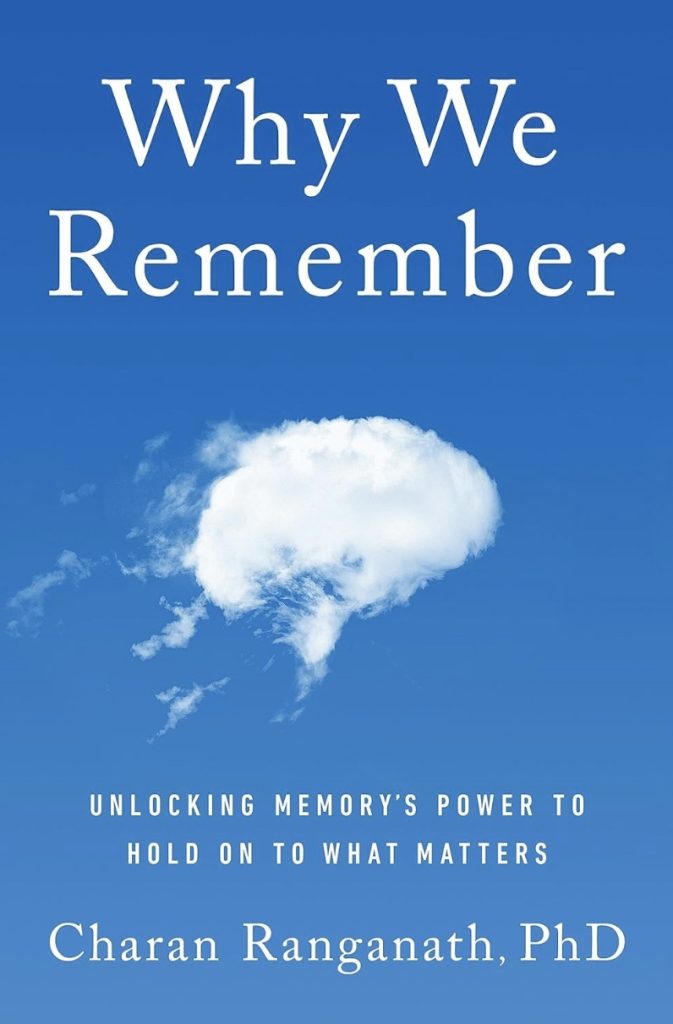
A Rule of Three Book Summary by Admired Leadership
Charan Ranganath, PhD professor at the University of California at Davis, uses memory science to reset readers’ expectations about what our memories are and are not designed to do. Ranganath argues that memory does not objectively record the past, but instead shapes, and is shaped by, our understanding of the present. When we understand how memory works and why, we can learn to capture the things we want to remember most and use the past to better inform our present.
The 3 Most Important Concepts:
Interference is the term scientists use to describe the way our neurons compete to hold on to individual memories. If you have lots of memories of doing the same task—such as, say, brushing your teeth or locking the door—you’re much less likely to be able to remember any instance of that activity. This helps us understand why we forget so many of the little details in our lives. If a memory doesn’t stand out, the brain is designed to forget it.
Our semantic and episodic memory work together to inform how we see the world. Semantic memory is responsible for the everyday knowledge we gain across all our experiences. Episodic memory helps us recall specific times, places, or events. Together, they help us make decisions in the present based on both our generalized and specific knowledge of the world.
Collective memory refers to the memories we share with our friends, families, and cultures. These memories inform our sense of identity and belonging and are powerful enough that they can directly influence how we see the world and interpret information.
3 Surprising Facts or Insights:
Thanks to TV, movies, social media, email, books, podcasts, text messages, and the like, the average modern American is exposed to about 34 gigabytes, or 11.8 hours, of information a day.
The brain’s mechanisms for memory and imagination are linked. Even the most vivid memory requires us, on some level, to imaginatively fill in the blanks. And vice versa—even when we imagine an entirely made-up scenario or place, we use our semantic memory to re-assemble things we know about the real world into new stories or scenes.
The prefrontal cortex works like the “CEO” of the brain. It coordinates and helps make sense of activities happening in more specialized parts of the brain. Damage to this area of the brain can, as a result, significantly affect memory. One study even showed that depression can lead to cognitive issues nearly identical to those with early-stage Alzheimer’s.
3 Actionable Recommendations:
Be intentional about attention. We pay attention to lots of things, big and small, every single day. Just because you’re paying attention to something right now doesn’t mean you’ll remember it later. That’s where intention comes in: when you really want to remember something—especially something small, like where you put your keys—you need to intentionally pay attention to something specific or unique to help your brain make a distinctive memory.
Use the “chunking” technique to remember large amounts of arbitrary information. This is why we break up phone and social security numbers into small groups. It’s easier to remember three big numbers than seven to nine individual digits. This concept also explains why acronyms are helpful in remembering long titles or phrases.
We’re wired to learn from our mistakes. We are more likely to remember the answer to a question if we first had to struggle to answer it or got it wrong entirely. We learn best when we have a chance to learn what we did wrong.
3 Questions the Book Raises:
Why do we forget so many of the details of our everyday lives?
How are our memories of the past altered by what is happening in the present?
Is it possible to influence or control what we remember?
3 Criticisms of the Book:
Most of the advice and actionable tidbits the book offers are, like the three we summarize above, interesting but relatively obvious—most of us probably know instinctively that those things help us remember, even without knowing the science behind them.
The book’s structure is quite repetitive. Ranganath shares lots of lengthy explanations and anecdotes of various studies he and his team have conducted over the years. Some of those stories are included to credit smart colleagues or explain how groundbreaking theories came to be, but it can be difficult to separate one anecdote or study from the next.
Ranganath does not always succeed in connecting the argument of one chapter to the next. The chapters often read like disparate collections of facts, rather than building blocks to a cohesive, overarching argument.
3 Quotations Worth Remembering:
“Memory is much, much more than an archive of the past; it is the prism through which we see ourselves, others, and the world.” (p. 6)
“If you revisit the past and introduce something new to the memory, the past can be changed. At least, your memory of it can be changed, which for your brain is more or less the same as if you had traveled back in time and changed the past itself.” (p. 139)
“We learn and retain more from the struggle of pushing ourselves to the edges of our knowledge than we do by memorizing and regurgitating on command. Perhaps instead of rewarding success, we should normalize mistakes and failures and incentivize constant improvement.” (p. 174).
