
A Rule of Three Book Summary by Admired Leadership
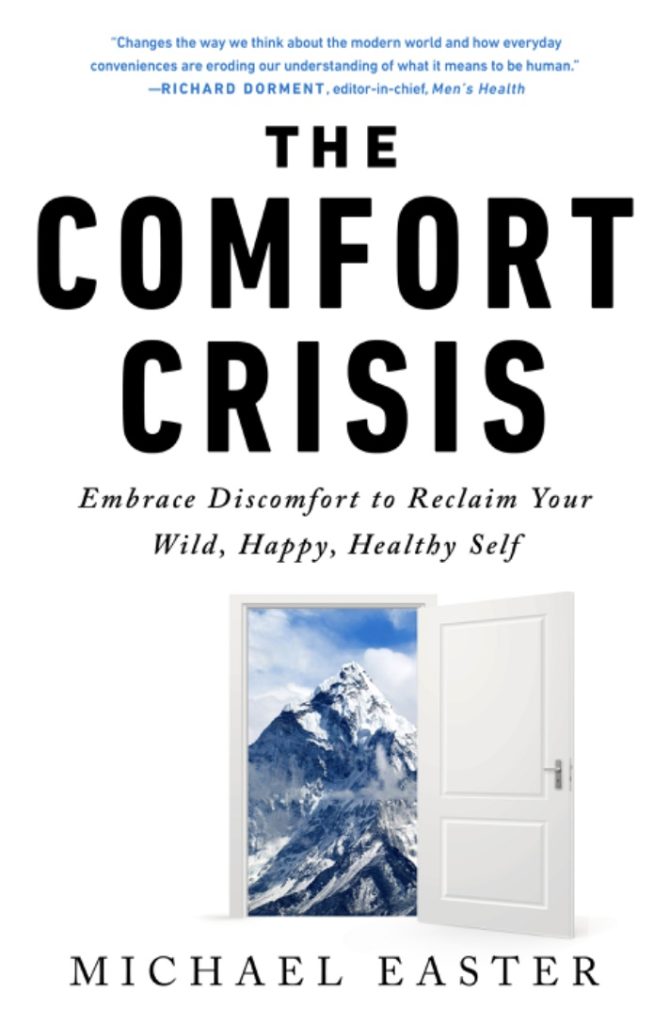
Michael Easter argues that modern comfort—from grocery stores to air conditioning—has dulled human resilience and meaning. The conveniences we’ve built to make life easier have removed the challenges humans need to stay healthy and fulfilled. His solution is to reintroduce controlled discomfort—through physical challenge, boredom, and time in nature—to reconnect with our natural strength and purpose.
The 3 Most Important Concepts:
Problem Creep is our inclination to find issues in any situation, no matter how comfortable. As humans evolved, the threshold for what we constitute as a problem has lowered but the quantity has remained the same. This follows comfort creep, where our tolerance for discomfort drops because we’re able to tailor our needs so precisely.
Misogis are emotional, spiritual, and psychological challenges presented as intense physical tests. The end goal isn’t the achievement of the physical feat but a deep shift in perspective. Historically, misogis have been rites of passage in many cultures, meant to mark the transition from childhood to adulthood and cement one’s role as a contributing member of a tribe.
Rucking is the act of moving on foot while carrying extra weight on your back—a method taught to Easter by a former Special Forces ranger. By purposefully adding difficulty, you rebuild strength, endurance, and focus.
The Book’s 3 Most Essential Claims:
Modern comfort is hurting us more than it’s helping us. It’s unnatural to be able to alter the conditions around ourselves and never have to leave our neighborhood for anything. We’ve created a cushion around ourselves that’s hurt both our mental and physical health. We’re less resilient than the generations before us.
Growth—physical, mental, and emotional—requires discomfort. We all have self-limiting beliefs, and our minds are more powerful than we give them credit for. Pushing yourself past what you think you can do is Easter’s ask of readers—not to be confused with pushing to a limit set by someone else. Fulfillment must be individualized.
Returning to primal challenges reconnects us to human nature and our role in the ecosystem. Hunting has gone from a means of survival to a recreational activity many people look down on. It’s deemed unnecessary due to modern technology, and many question why people still do it. While some find the idea of stalking and hunting their dinner through the Alaskan wilderness appalling, they have no problem buying a pound of ground beef from the supermarket.
3 Surprising Facts or Insights:
Even though urban communities promote opportunity and connection, people who live in cities are 21 percent more likely to suffer from anxiety and 39 percent more likely to suffer from depression than those in rural areas. Feelings of isolation are at an all-time high despite millions living on top of one another in major cities. The comforts of working from home, ordering food, doing virtual workouts, and scrolling social media have made us lonelier in an increasingly connected world.
More than 100 million Americans live with noise levels louder than a working washing machine or dishwasher (70 decibels). Most people also express discomfort when faced with deep silence or boredom. Simply sitting outdoors, quietly, with nothing to do has proven too difficult for many.
Checklists are destroying American happiness. We measure progress against tasks completed, which fuels a “grind mentality” that leaves people more depressed and unfulfilled. Happiness in America has dropped sharply over the last two generations.
3 Actionable Recommendations:
Take inventory of your comforts: For one week, track what’s making your life easier and how it’s shaping your habits. Consider the last time you felt discomfort? How uncomfortable were you really?
Sit in boredom; Resist the urge to stay occupied and let your mind wander.
Add friction: Ruck, take the stairs, skip the Uber. Start incorporating small discomforts to build strength.
3 Questions the Book Raises:
Why is death an uncomfortable topic in western culture when it’s part of life?
Should we expect to see a surge in rural living as people search for more fulfilling lives?
Easter describes individual solutions to this comfort crisis. Is there a future where we design work and society to include more healthy discomfort?
3 Criticisms of the Book:
The book speaks mostly to the privileged—the majority of the world still doesn’t live in comfort.
His advice feels surface-level and individual, not systemic.
Advising people to push past their physical limits can result in harm, so tread carefully into a misogi.
3 Quotations Worth Remembering:
“In today’s increasingly hyper-connected and tribal society-where we define ourselves by the group or movement we belong to—it’s not a bad idea to occasionally be alone.” (p. 77)
“I believe people should be doing less and eliminating limiters to progress. It’s more effective to modify the behaviors and thought patterns that are keeping you from progressing because your progress is only as good as your most obvious limiter.” (p. 144)
“We’ve allowed comfort to calcify our natural movements and strengths. Without conscious discomfort and purposeful exercise—a forceful push against comfort creep—we’ll only continue to become weaker and sicker.” (p. 251)
