
A Rule of Three Book Summary by Admired Leadership
The Book in 3 Sentences:
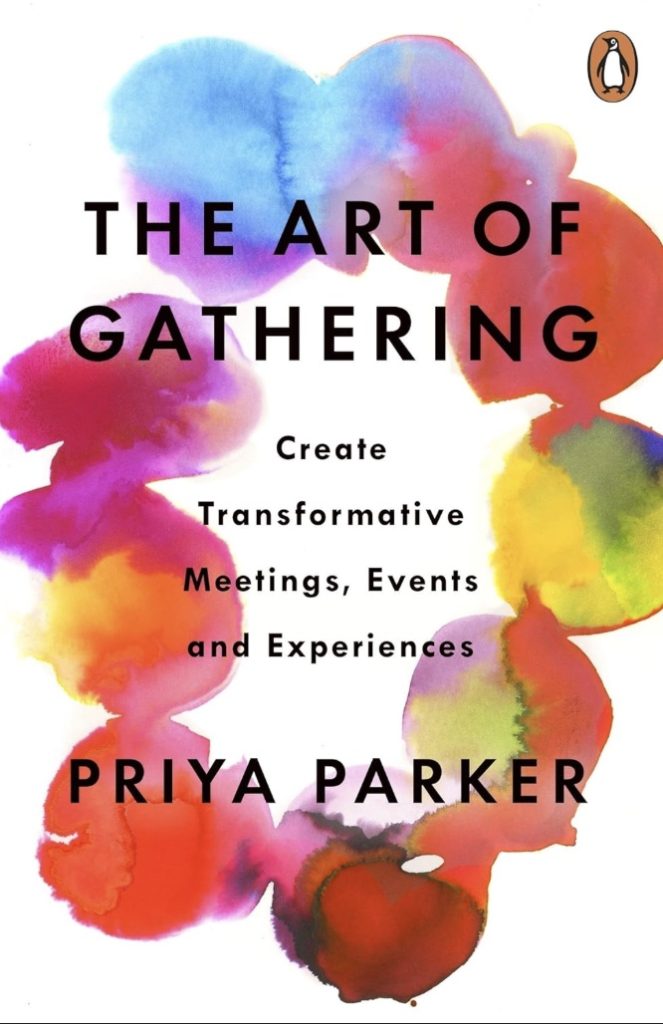
Priya Parker argues that how we gather is often overlooked, leading to unmemorable or unproductive gatherings. She outlines several frameworks for thinking about, planning, and hosting events that help attendees recognize the gathering as a gathering unlike any other and willingly participate. By anchoring gatherings in a meaningful purpose and designing thoughtfully based on that purpose, any host or facilitator can improve the way they bring people together
The 3 Most Important Concepts:
To be successful, a gathering should have a bold and meaningful purpose. Oftentimes, gatherings are given broad “categorical” purposes that are not specific or unique enough to make the event special. Or, they have too many purposes and are trying to do too many things at once. The best gatherings have purposes that are narrowly framed and unique enough to distinguish the event from any other like it. Lastly, they are disputable, which allows the host to use the purpose as a filter for designing and making decisions related to the gathering.
Hosts need to lead with generous authority. Setting a purpose and ground rules is not sufficient for a great event. Many hosts want to appear “chill”— like they don’t care too much about what happens or how things unfold. If a host does not enforce their purpose or ground rules, they risk attendees’ personal purposes taking over. “Generous Authority” is the concept of a host imposing in a way that serves their guests and their gathering’s purpose. It includes taking steps to protect, equalize, and connect guests in accordance with the gathering’s purpose.
The best gatherings create a temporary world. Building on the idea of any gathering as a single, unrepeatable moment in time, Parker encourages hosts to think of their gathering as a temporary world participants must enter. There are several ways hosts can do this: by selecting a location that embodies your purpose while also removing people from “typical” settings that might inhibit the gathering’s success; by creating temporary “pop-up” rules that allow guests to avoid cultural norms and enable shared experience; by thinking about and priming guests for your event well before the event actually starts; by “ushering” your guests into the gathering with a sense of honor and awe; by setting an example for ground rules by being an active participant; and by closing the gathering with both a looking inward and a looking outward.
The Book’s 3 Most Essential Claims:
1) any gatherings begin with “who” and with a powerful, meaningful purpose in place, you must exclude with purpose. We are often told “the more the merrier,” but this idea sometimes goes against our purpose. In these cases, exclusion is generous and “by closing the door, you create the room” (p. 38).
2) Etiquette allows people to work from a common code to minimize social risk. It is most valuable in stable and homogenized groups. When gathering across differences, which is more realistic in modern society, pop-up rules give people a kind of temporary etiquette that opens them up and equalizes the experience, in spite of their culture-specific gathering etiquette.
3) Gatherings, and the conversations within them, often stay at the surface level for two reasons: because people are presenting a version of themselves instead of being truly vulnerable; and because controversy is not planned and therefore avoided.
3 Surprising Facts or Insights:
One of the ways to host with generous authority is to protect your guests from other attendees. This requires being active and intercepting natural behavior patterns of those who might not always be considering the group’s experience or the gathering’s purpose. This may seem rude at times, but it’s actually respectful to the rest of the group.
Event planners and space designers have rules of thumb for event density to best achieve the desired ambience for your gathering. The set of parameters Parker uses is based on the number of square feet required per guest for different “vibes:” (p. 69)

Good controversy doesn’t just happen. Hosts and facilitators create “heat maps” of where controversy lies, usually via one-on-one conversations before the gathering. Then, they work to create safe spaces and ground rules, again thinking about creating a temporary world, where attendees can take risks, voice what hasn’t typically been voiced, and engage in controversy.
3 Actionable Recommendations:
If you are struggling with finding your bold, meaningful purpose for your gathering, ask yourself why you are doing it, and with every answer you give yourself, ask why again. Ask why until you hit a belief or value. This is your purpose.
In an effort to remove the “puffery” typical of gatherings like conferences, ask people to share stories that are new, delicate, or vulnerable. Ask guests to bring their “sprout” speech instead of their “stump” speech to your next gathering. Even better, require everyone to share a story.
Never start or end a gathering on logistics. Lean into the anticipation of the beginning and the culmination of the close. If you have to thank people, consider moving it to the second-to-last spot and instead honoring others rather than simply thanking them.
3 Questions the Book Raises:
How can we be better hosts? What one or two pieces of advice in this book would make the greatest difference in the next gathering we organize?
How can we be better participants?
How might our personal and / or professional lives be different if we committed to creating more meaningful and productive gatherings?
3 Criticisms of the Book:
Parker is a practicing facilitator and some of her guidance, especially around navigating controversy, requires experience and judgment that the average reader likely does not have.
The book argues that the most meaningful purposes are those that “stick their neck out” or “take a stand.” Many examples throughout the book are representative of this mindset and readers who are not operating in an organizational context or who have little control over gatherings they are hosting may see this as limiting.
Parker is likely over-simplifying complex organizational dynamics at play in some of the stories and examples she shares in her book. While the book is not meant to be a manual, it’s probably worth calling out that results are contextual and not guaranteed.
3 Quotations Worth Remembering:
“In gatherings, once your guests have chosen to come into your kingdom, they want to be governed—gently, respectfully, and well.” (p. 74)
“In a world of infinite choices, choosing one thing is the revolutionary act. Imposing that restriction is actually liberating.” (p. 139).
“The meaningful gatherer doesn’t fear negativity, thought, and in fact creates space for the dark and the dangerous.” (p. 212)
