
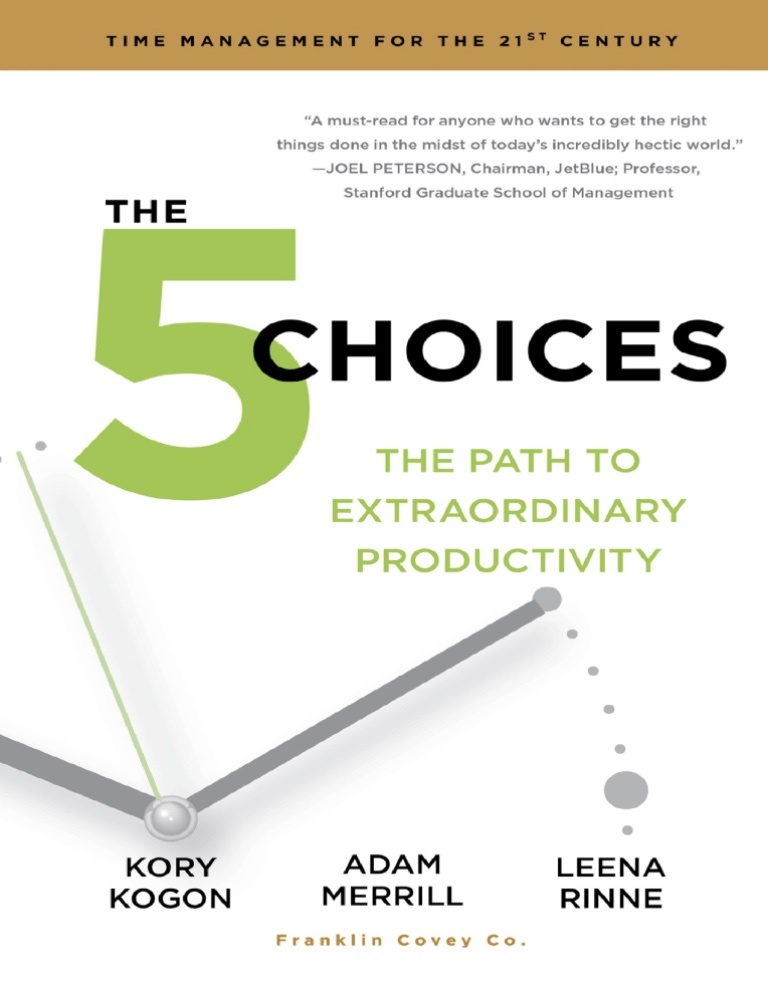
A Rule of Three Book Summary by Admired Leadership
The Book in 3 Sentences:
The authors argue that extraordinary productivity comes from making five critical choices that help manage decision-making, attention, and energy rather than simply doing more tasks. The book emphasizes the importance of engaging the conscious “Thinking Brain” rather than the reactive, automatic responses that lead to poor time management and burnout. The framework provides practical strategies for focusing on what matters most, scheduling priorities effectively, managing technology, and maintaining the physical and mental energy needed for sustained high performance.
The 3 Most Important Concepts:
The Reactive Brain vs. The Thinking Brain represents two distinct modes of human cognition that determine how we respond to daily challenges. The Reactive Brain operates on autopilot, driven by fight-or-flight responses and emotional reactions developed over generations for survival. The Thinking Brain enables conscious, deliberate decision-making that allows us to transcend primitive responses and make better choices about how to spend our time and energy.
Big Rocks vs. Gravel is the central metaphor for prioritization, where Big Rocks represent the most important priorities in life—key relationships, critical projects, and meaningful responsibilities—while gravel consists of lesser items like emails, phone calls, and routine tasks that can consume time without adding significant value. The key principle is scheduling Big Rocks first before allowing gravel to fill the remaining time.
The Five Energy Drivers are the essential components for maintaining mental and physical energy: Move (staying physically active throughout the day), Eat (making health-conscious food choices for brain fuel), Sleep (allowing time for memory consolidation and recovery), Relax (managing stress responses), and Connect (building meaningful relationships). These drivers work together to prevent burnout and sustain high performance.
The Book’s 3 Most Essential Claim
1. True productivity is not about doing more things but doing the right things well. The focus should shift from “doing more with less” to “doing more about less” by concentrating best attention and resources on the few projects that really matter.
2. Most people operate primarily from their Reactive Brain, making automatic, unconscious decisions that lead to constantly reacting to urgent but unimportant tasks rather than acting on what’s truly important for long-term success and fulfillment.
3. Extraordinary productivity requires managing three core areas: decision management (choosing important over urgent), attention management (focusing on priorities), and energy management (maintaining physical and mental capacity through proper self-care).
3 Surprising Facts or Insights:
The human brain’s reactive responses, developed for caveman survival needs, are often counterproductive in modern work environments where the biggest threats are not physical dangers but information overload and competing priorities.
Extraordinary doesn’t mean perfection or standing out compared to others, but rather going to bed each day feeling satisfied and accomplished by focusing on activities that add the most value to work and life.
Mental energy for important work comes from only two sources: having a powerful purpose connected to something larger than yourself, and maintaining physical health through the five energy drivers.
3 Actionable Recommendations:
Create a master task list that organizes all information into four categories: Appointments, Tasks, Contacts, and Notes/Documents, using whatever system (paper, digital, or hybrid) works best for you as long as content is managed and properly prioritized.
Practice “Big Rocks” scheduling by identifying your most important activities at the beginning of each week and scheduling them first, before allowing smaller tasks and interruptions to fill your calendar.
Implement the five energy drivers daily: Move (take active breaks), Eat (choose brain-healthy foods), Sleep (prioritize rest for memory consolidation), Relax (manage stress responses), and Connect (invest in meaningful relationships).
3 Questions the Book Raises:
How can individuals and organizations distinguish between what feels urgent in the moment versus what is truly important for long-term success and fulfillment?
What would happen to productivity and job satisfaction if more people consistently operated from their Thinking Brain rather than their Reactive Brain?
In an age of constant connectivity and information overload, how can people maintain the discipline to focus on Big Rocks when technology and workplace culture often reward reactive behaviors?
3 Criticisms of the Book:
The five choices framework, while practical, largely repackages well-established productivity and time management concepts without offering significantly new insights beyond the brain science metaphors.
The book relies heavily on anecdotal examples rather than robust research data to support its claims about productivity improvements, making it difficult to assess the actual effectiveness of the methods.
The energy management section oversimplifies complex issues like burnout and work-life balance by reducing them to five basic drivers, potentially overlooking systemic workplace problems that individual actions alone cannot address.
3 Quotations Worth Remembering:
“Today, the key to true productivity is not doing more things, but doing them right. It is not about doing more with less, but doing more about less” (p. 95).
“Dealing with the vast amount of incoming information while trying to overcome the allure of our technology is difficult. It takes real effort to defend our most important priorities and give them our finest attention” (p. 119).
“Our mode of life today–constant stress, poor diet, lack of exercise and sleep–leads to what scientists call exhaustion syndrome. The rest of us call it burnout” (p. 163).
