
A Rule of Three Book Summary by Admired Leadership
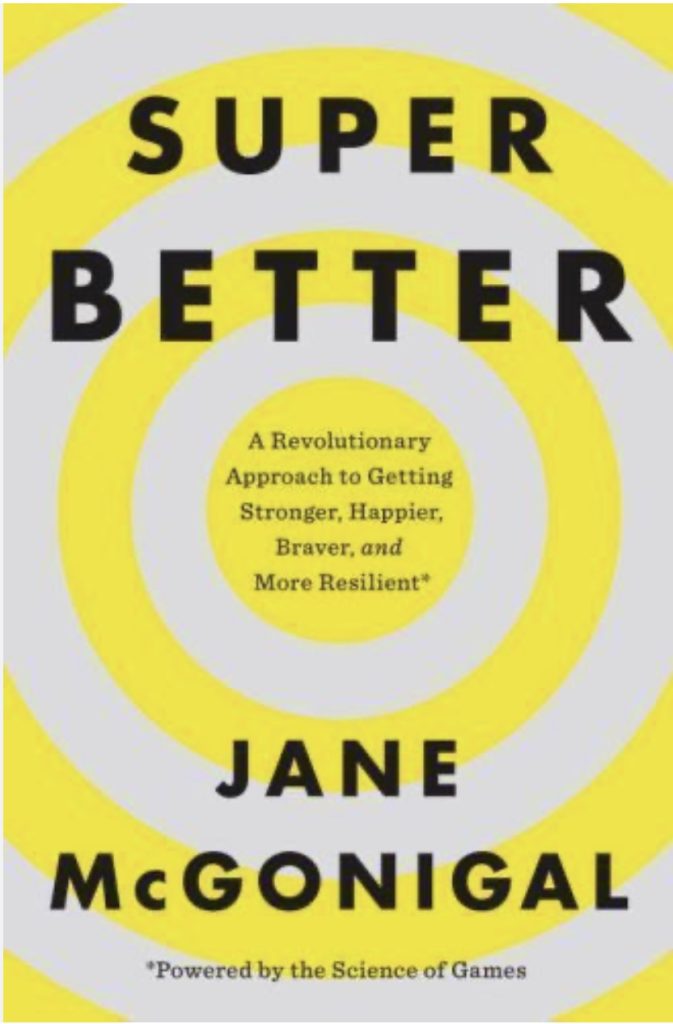
The Book in 3 Sentences: The author argues that by adopting a gameful mindset and viewing life’s challenges through the lens of games—complete with power-ups, bad guys, quests, and allies—anyone can become stronger, happier, braver, and more resilient. Drawing from her personal experience recovering from a severe concussion by creating an alter ego called “Jane the Concussion Slayer,” McGonigal demonstrates how game mechanics can transform how we approach obstacles and build mental strength. The book presents scientific research showing that treating life like a game increases perseverance, optimism, social connections, and our capacity to overcome adversity.
The 3 Most Important Concepts:
A Gameful Mindset is the practice of approaching life’s challenges with the same engagement, optimism, and determination that characterizes gameplay. According to the author, this mindset involves accepting challenges voluntarily, making consistent efforts toward goals, getting feedback, improving concrete skills, and persisting until success is achieved. The gameful mindset transforms how we perceive obstacles, shifting them from threats that overwhelm us into challenges that stretch our capabilities and help us develop new strengths.
Power-Ups are defined as any positive actions you can take easily that create quick moments of pleasure, strength, courage, or connection. The concept emphasizes that frequency matters more than intensity when it comes to positive emotion—micro bursts of positive feeling throughout the day are more effective for building resilience than occasional intense experiences. McGonigal explains that collecting power-ups means identifying positive actions you want to try, while activating them means actually incorporating these actions into daily life to maintain emotional resilience and motivation.
Bad Guys represent anything in your life—whether depression, anxiety, insomnia, or other obstacles—that makes it harder for you to achieve your goals. Dealing with bad guys involves a two-part process: first, increasing mindfulness and awareness of anything that might block your progress or cause distress; and second, developing a flexible response by creating multiple strategies for dealing with challenges rather than relying on a single dominant approach. The author recommends battling with bad guys at least once daily, always collecting a power-up after each battle, tracking these encounters, and learning to coexist with persistent bad guys that won’t go away.
The Book’s 3 Most Essential Claims:
1) Games provide a reliable and efficient path to increased self-efficacy and resilience. Through their inherent structure of accepting goals, making efforts, receiving feedback, and improving skills, games naturally cultivate grit, perseverance, and the ability to learn from mistakes—players fail 80 percent of the time on average, experiencing twelve to twenty failures per hour, which accelerates the development of these crucial strengths.
2) Strategic thinking and problem-solving abilities are significantly enhanced through gameplay. Research cited in the book demonstrates that games like StarCraft, Mass Effect, and Final Fantasy improve concrete skills that predict academic success and higher achievement in daily life, including more effective information gathering, faster evaluation of options, stronger strategic planning abilities, and greater flexibility in generating alternative approaches.
3) Social connections and relationships are strengthened through gameful interactions. Playing games with others encourages emotional and physical synchronization, making it easier to understand each other and creating smoother social interactions. The higher the frequency of primarily positive interactions, the stronger the social bond becomes, and even thinking about giving or receiving help can boost social resilience.
3 Surprising Facts or Insights:
Playing Tetris or other visually demanding games immediately after a traumatic event can greatly reduce flashbacks and PTSD symptoms. By occupying victims’ visual attention, researchers were able to reduce instances of involuntary remembering—preventing people from replaying trauma over and over in their minds, since human attention functions like a spotlight that can only process limited information at any given moment.
Frequent game players demonstrate dramatically different approaches to difficult tasks compared to non-gamers. When given a series of easy and difficult puzzles, regular gamers spent significantly more time on challenging puzzles and showed much higher persistence and perseverance, while infrequent players gave up much faster and showed less interest in mastering difficult tasks.
Time affluence—the feeling of having abundant time for everything that matters—is not related to how busy your schedule is but rather to tiny daily mental, physical, emotional, and social habits. Little choices like how you sit, commute, or breathe influence your perception of available time, and giving away just ten minutes of free time will make you feel more time-rich than receiving sixty minutes of free time.
3 Actionable Recommendations:
Adopt an alter ego when facing significant challenges. Create a character version of yourself with a name that reflects your quest, just as Jane became “Jane the Concussion Slayer,” to help you gain psychological distance from your problems and approach them with fresh determination and a sense of adventure.
Keep score of your progress by tracking the number of power-ups you’ve used, bad guys you’ve vanquished, or quests you’ve completed. The specific metric doesn’t matter as much as consistently tracking your progress so you can hold up your score as tangible evidence of your strength and resilience.
Practice active constructive responding when someone shares good news with you. Relive the experience with them by asking detailed questions that put them right back in the happy moment, showing genuine enthusiasm and interest rather than passive acknowledgment or deflecting to your own experiences.
3 Questions the Book Raises:
How can we better integrate gameful thinking into traditionally serious contexts like healthcare, education, or workplace environments without trivializing important challenges?
What are the potential downsides or limitations of viewing life through a game lens, and are there situations where this mindset might be counterproductive or inappropriate?
How can people who don’t enjoy or relate to traditional video games still benefit from the principles of gameful living and develop similar resilience-building habits
3 Criticisms of the Book:
The book relies heavily on McGonigal’s personal anecdotal experience with post-concussion recovery, which, while compelling, may not generalize to all types of challenges people face. A severe concussion is a specific medical condition with known recovery patterns, and the approach may not translate as effectively to chronic conditions, systemic problems, or challenges requiring structural change rather than individual mindset shifts.
The emphasis on positive psychology and collecting power-ups may come across as overly optimistic or even dismissive of serious mental health challenges. While the author acknowledges the need for some negative emotions, the framework may oversimplify complex conditions like clinical depression or anxiety disorders that require professional intervention beyond gameful thinking.
The practical application of the gameful mindset requires significant mental and emotional energy to maintain. For people already struggling with exhaustion, depression, or overwhelming circumstances, the effort required to reframe life as a game, track progress, and consistently activate power-ups may feel like yet another demand rather than a helpful tool, potentially adding to their burden rather than relieving it.
3 Quotations Worth Remembering:
“In digital games, we fail as much as 80 percent of the time, on average twelve to twenty times an hour. This extremely high and rapid rate of failure helps players more quickly cultivate the strengths of grit and perseverance, as well as the ability to learn effectively from mistakes” (p. 25).
“The research shows that when it comes to positive emotion, frequency is more important than intensity. Little positive things matter and pile up. You don’t have to make major improvements in your life or experience huge bursts of powerful, all-consuming positive emotion to increase your resilience. Instead, the most effective strategy is to collect as many micro bursts of positive emotion as you can throughout the day” (p. 169).
“Taking committed action means doing at least one thing every day that speaks to your most important goals and values, no matter what obstacles are in your way…every time you successfully take a committed action you increase your hope, optimism, and self-
efficacy” (p. 216).
