
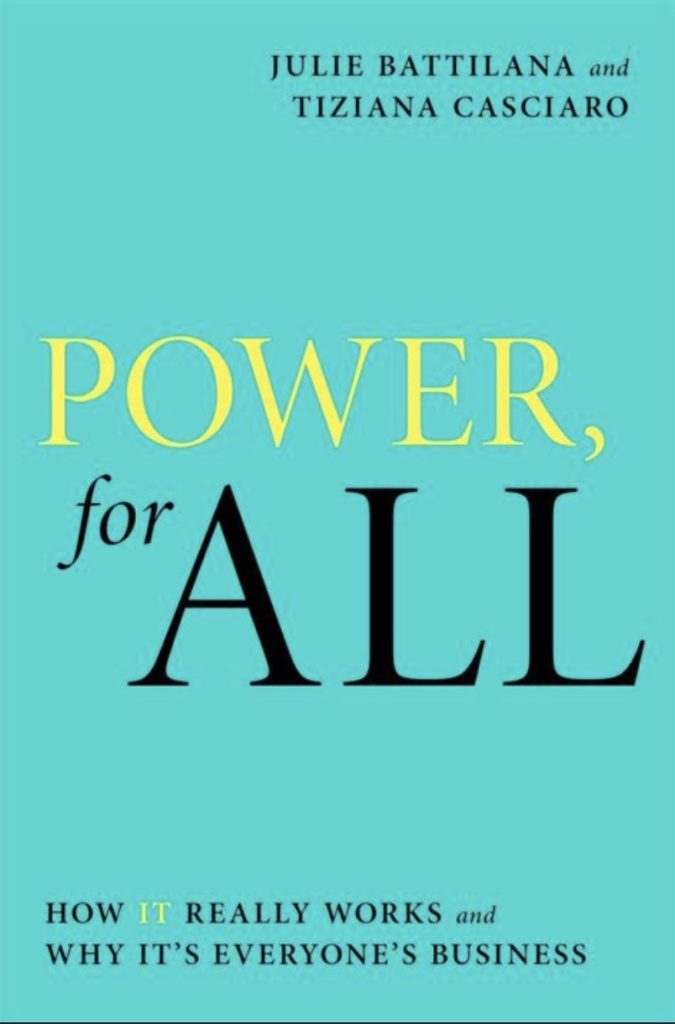
A Rule of Three Book Summary by Admired Leadership
The Book in 3 Sentences:
The authors define power as the ability to influence another’s behavior, through either coercion or persuasion. The ability to wield power ultimately depends on whether one person or group has control over a resource that another person or group values. This book unpacks how these dynamics play out in relationships, organizations, and society, offering ways to navigate power hierarchies and shift the
balance of power when needed.
The 3 Most Important Concepts:
Resources. When we think of resources it’s easy to jump straight to the tangible—budget, a nicer office, access. But what about the intangible things we value—expertise, relationships, kindness, praise? When evaluating the balance of power in a relationship, a resource can be whatever you have to offer, or whatever it is the other party desires.
Dependence. Power dynamics hinge on dependence. Regardless of the resources you have, they only grant power when another is dependent on you for them. Similarly, if someone has a resource you value, they only have power over you to the extent to which you depend on them for it. Understanding that shifts in power are really shifts in dependency is key to understanding how power can move from one party to another.
Autonomy. Most people don’t strive to wield power over others. Rather, they put their energy and attention toward freeing themselves from the influence of others.
The Book’s 3 Most Essential Claims:
Power is not inherent nor is it fixed. Because it’s based on resources and dependency, the balance of power across parties can shift—and we can make choices to influence it.
Concentrating power increases certain risks. Those with power have an increased propensity to act, a greater sense of entitlement, and decreased ability to empathize. These three factors increase the likelihood a person with power will abuse it.
Interdependence is key to avoiding the pitfalls of power. It’s rare for one person or party to have control over all the resources the other values. We each depend on each other for different reasons. When we acknowledge this, we become less likely to fall into the trappings of power.
3 Surprising Facts or Insights:
1) There are three conditions that facilitate changes in power
a. Crisis. When there’s significant disruption, whether through disasters, new technologies, or any other means, the resources people value likely shift and the ability to access them can also change.
b. The degree to which power is entrenched in an existing hierarchy. The newer the power hierarchy, the more susceptible it is to disruption. On the other hand, the more entrenched the hierarchy is, the more difficult it becomes to upend.
c. An alternative vision for power. Those who would disrupt the existing power hierarchy need to articulate a vision for how power ought to be distributed. It cannot simply be an exercise in tearing the old structures down.
2) Those with power tend to be more comfortable exercising it to gain more, while those without power are more reluctant to act. Simply put, power hierarchies tend to reinforce themselves in the absence of other forces.
3) Empathy stems from interdependence. Building empathy by seeing the world through the eyes of another is difficult to sustain over the long term. We are better served by deepening our understanding of how dependent we are on each other, regardless of who holds more power at a particular moment in time.
3 Actionable Recommendations:
Build a power map. When driving change, we need to understand where power really resides. While formal structures may offer clues, power is separate from title, rank, or role.
Understand what people really value. The resources people truly care about can surprise us. Spend real time with those whose behavior you’re trying to influence to understand the tangible and intangible resources they value.
Keep the fence-sitters close when driving change. We’re unlikely to change resisters’ minds and there’s little to gain in over-engaging with champions. For those on the fence, relational closeness, and the social obligation that comes with it, may be enough to push them over to your side of the change.
3 Questions the Book Raises:
How do you cut through the noise to understand which power dynamics are material to your goals and which are not?
When does it make sense to distribute versus consolidate power?
How can we cultivate self-esteem in those with less power to encourage more action?
3 Criticisms of the Book:
There is an underlying presumption throughout the book that power ought to be more distributed in all cases.
The book makes a connection between power and larger, institutional changes, but it offers little advice on how to affect change and power at a more immediate, interpersonal level.
The authors give little airtime to actionable advice compared to the stories they use to make their points.
3 Quotations Worth Remembering:
“This, after all, is what power ultimately is: the ability to influence another’s behavior, be it through persuasion or coercion.” (p. x)
“Overcoming resistance to change requires lifting the veil from the formal structure, accounting for people’s connections to one another, and building a detailed power map to answer the following questions: Who are the powerful players in your immediate circle, your organization or institution, your industry or profession? What resources do those players value, and what valued resources does each possess? How much control over access to those resources do they have? What are the alliances or coalitions among those players? And what is the nature of your relationship with each of them?” (p. 74)
“Give any individual enough power for enough time and the risk of abuse inevitably increases.” (p. 166)
