
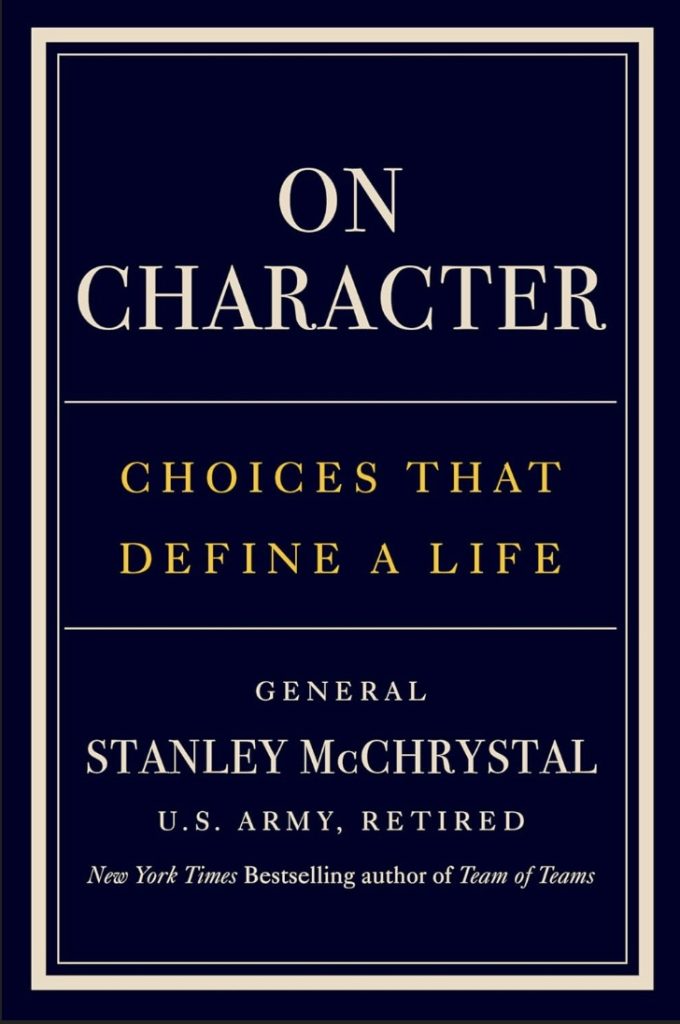
A Rule of Three Book Summary by Admired Leadership
General Stanley McChrystal recounts his lifelong pursuit of character through stories about his life before, during, and after his military career. He distills character to a simple equation: Character = Convictions x Discipline, and he dedicates each section of the book to providing firsthand experiences of how he developed his own convictions, discipline, and ultimately, his character. He believes that reflecting on your values and consistently demonstrating them in your behavior builds character.
The 3 Most Important Concepts:
Conviction: What we believe, and how we enforce those beliefs, form the foundation of our character.
Discipline: Our ability to follow through on our stated beliefs provides the sinew to connect our convictions to the character they are meant to uphold.
Character: The essential structure of our lives is what we are willing to tolerate – and what we are not.
The Book’s 3 Most Essential Claims:
Leadership is not about title or position, it is a choice. It requires tireless focus and a willingness to step up whenever the opportunity to lead presents itself.
Even in an increasingly virtual world, being with your team in person is essential. Teams need to see and feel their leader’s presence to trust and believe in them, and for the team to function at its best.
Self-discipline is a choice, not a natural skill. If you are intentional about what you decide to do and who you decide to be, hold yourself accountable.
3 Surprising Facts or Insights:
When people ask General McChrystal what he would have done differently regarding America’s involvement in Afghanistan, he answers with “I would have gone white water rafting.” The act of white water rafting isn’t the point, but he argues that if the administration had spent more time focusing solely on building relationships with one another, they would have developed stronger trust, collaboration, and cooperation, leading to better results.
For the last forty years, General McChrystal has eaten one meal a day: dinner. He didn’t start doing it for the health benefits, but he claims he did it to have one less thing to worry about over the course of the day. By eliminating decisions about what to eat and time spent eating, he created extra time to focus on what needed to be done for the good of the unit he was commanding.
Today, Ranger Units have an infamously rigorous selection process, but they don’t select based on natural talent or previous performance. They instead look for commitment, perseverance, and a willingness to commit to the highest standards possible.
3 Actionable Recommendations:
When a leader finds themselves angry or disappointed, they should remain calm when addressing the responsible party. This proves more powerful than acting out. People typically receive positive displays of emotion well, but not negative ones.
Ask questions you already know the answer to, especially with direct reports or junior team members. It shows you are engaged in the conversation, take the discussion seriously, and puts the other party’s mind at ease.
At the beginning of each month, write down your top three to four priorities. Track your time, and at the end of each month, review how much of your time you actually spent on those priorities.
3 Questions the Book Raises:
How much time do we spend actually thinking versus listening to others and regurgitating their views?
Is obsession in the pursuit of a goal necessary for society or something we should discourage? How can we stop obsession from taking us over the edge before it happens?
Even when you act in a manner respected by others, are you doing it for your own values, or doing it for someone else’s approval?
3 Criticisms of the Book:
Chapters are typically two to three pages long, and many of the claims the author makes aren’t given enough time to be fleshed out beyond a short story about how his view was shaped on a topic.
Several chapters don’t tie directly to character and serve only as a section for the author to share opinions on how to fix politics in America or why corruption is so prevalent in politics, for example.
The author frequently makes vague calls to action that focus on the collective “we”, rather than giving actionable, concrete advice for how individuals can build their character or lead others and help shape character.
3 Quotations Worth Remembering:
“ Gardens don’t grow without committed effort, and communities are nothing more than recalcitrant gardens.” (p. 38)
“The next time you start a sentence with “I think,” make sure you did.” (p. 98)
“The character we reflect summarizes our lives as no other metric can.” (p. 282)
