
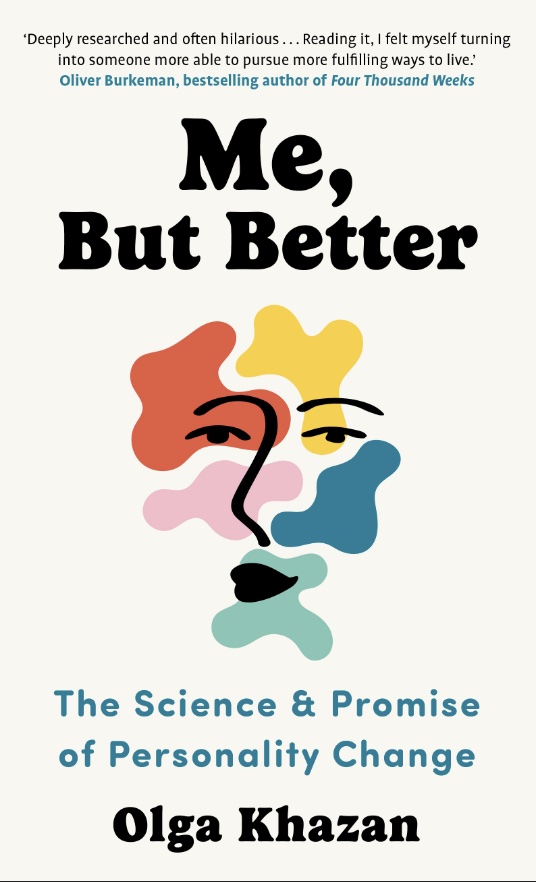
A Rule of Three Book Summary by Admired Leadership
The Book in 3 Sentences:
The author argues that personality is not a fixed state but can be changed—permanently or temporarily—to improve an individual’s experiences. The book explores the Big 5 personality traits and provides a narrative of the author’s experiences adjusting the prevalence of each in her reactions and perspectives. Through interviewing experts and other individuals and reflecting on her own experiences, the author advocates that each of us should more intentionally craft the personality we want.
The 3 Most Important Concepts:
Personality is defined as actions or behaviors that we do automatically or habitually—whether in how we think about things, feel about things, or do certain things. The modern idea of ‘personality’ did not emerge until the late 1800s, and the field of personality research is still developing, with a variety of methods to define and study it (Jungian psychology, Myers-Briggs, the Big Five). Genetic factors determine 30-50% of the differences between any two people’s personalities, with the remaining influenced by environmental or social factors.
The Big Five are the most agreed-upon traits that influence or create your personality. Originally, psychologists defined thousands of personality traits that were eventually consolidated into the Big Five—1) openness, 2) conscientiousness, 3) extroversion, 4) agreeableness, and 5) neuroticism. These traits help researchers and individuals define personality by plotting the prevalence of these traits on a spectrum. Usually, personality tests or assessments will indicate when an individual is “high” or “low” on a given trait which, when combined with other measures, can illustrate tendencies or likely habits of a person.
Values are defined as “enduring, ongoing guides to living” that differ from goals in being indefinite and, often, unattainable. Values serve as important indicators of what specific aspects of a person’s personality, reactions, or habits may need to change to better align with who they want to be. Values anchor any potential changes or recommitments to aspects of our personality to something bigger and more fulfilling than the act of changing itself.
The Book’s 3 Most Essential Claims:
Most people want the personality they do not have. In many studies, it’s common for participants to indicate that they want to change their personality somehow. For many extroverts, they may crave more peace in quiet moments. For introverts, they likely want to be more outgoing. It’s common for people to often feel like “the grass is greener on the other side” as it relates to personality.
Personality change is easier for people who think it will be easy, and harder for those who think it will be hard. When researchers study people attempting to change their personality, they observe those who believe it to be easy to experience more improvements than those who believe it to be difficult—regardless of the objective difficulty of the change.
Most social “consequences” that people imagine can be explained by an underlying negative feeling. During many instances of doubt, uncertainty, fear, shame, or anxiety, people are likely to react to a future negative feeling rather than a future negative outcome. For example, if someone feels hesitant to speak up in a social setting, they are more likely to be worried about judgements or perceptions from the other group rather than the material consequences from the group.
3 Actionable Recommendations:
When you’re uncertain if you can do something, tell yourself “You seem like the kind of person who does this all the time.”
Visualize yourself being the type of person you want to be—research shows this exercise helps us more easily adapt new ways of thinking, talking, and doing.
Discipline is critical—doing things when you don’t feel like doing them is the key to personality change. The way to get more disciplined is to believe and act like you are more disciplined.
3 Questions the Book Raises:
Does personality change really happen, and does it matter if it doesn’t? The book challenges the idea that personality change is even something that occurs. If our personalities are fluid, aren’t they always changing?
Why do people struggle to more intentionally develop a specific personality?
Why don’t we prioritize defining our individual values socially more (e.g., as friends, a family group, colleagues, etc.), if it has an inordinate impact on what we do and how we feel?
3 Criticisms of the Book:
The book repackages prior research and use cases rather than providing novel frameworks or concepts. The author relies on the expertise and ideas of others and uses the book to detail her own experience practicing them, not furthering our understanding of the topic as a whole.
The author prioritizes stories, anecdotes, and individual experiences to prove her points. While it illustrates the subject nicely, grounding it more deeply in research would make it more authoritative.
The author spends about as much time diving into her own grievances and neuroses as she does exploring the topic. At times, the book reads like a journal or informal stream of consciousness regarding the author’s perspective. Stylistically, it serves as an interesting way for the reader to feel her neuroticism, her struggle to be more conscientiousness, or other facets of her personality, but at times it overwhelmed the message of the book.
3 Quotations Worth Remembering:
“People miscalculate how well these deep interactions will go because we tend to evaluate our own behavior in terms of competency: How well am I doing on this? But others evaluate us in terms of our warmth: How kind is this person?” (p. 136)
“Think of it [a particular thought] as a word of advice from someone you don’t totally trust: You can choose to believe your thoughts only to the extent that they serve you.”(p. 187)
“Understanding this ongoing quality of personality change allowed me to see that there’s always a way out; I’m never trapped being
a way I don’t want to be.” (p. 204)
