
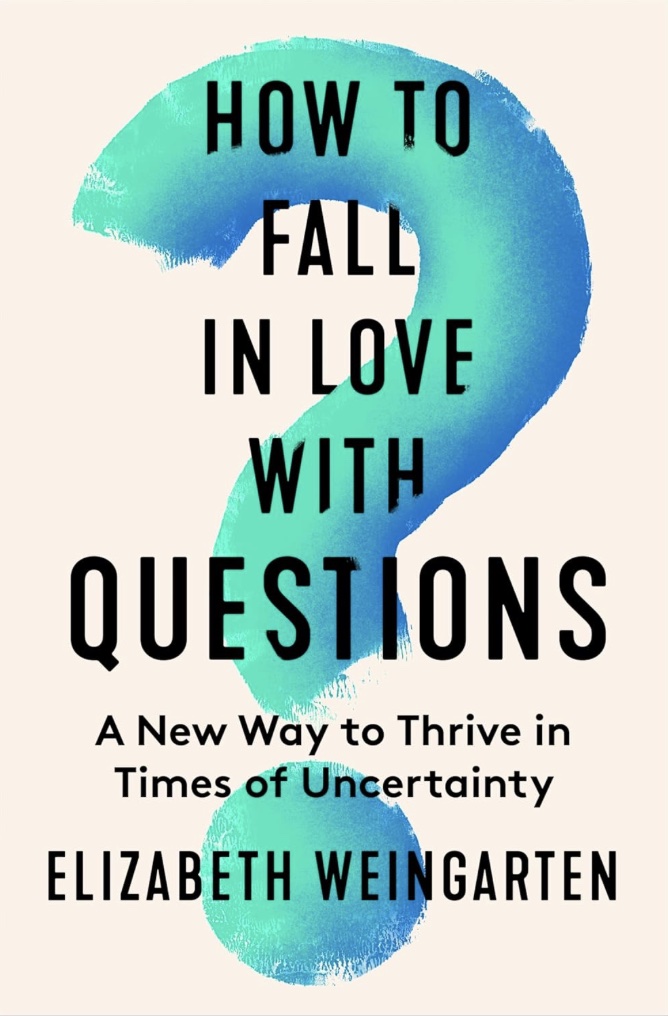
A Rule of Three Book Summary by Admired Leadership
The Book in 3 Sentences:
The author argues that questions aren’t just tools for finding answers but worthy companions capable of guiding us through uncertainty and difficult decisions. The book introduces a “questions practice” built on curiosity, conversation, community, and commitment that treats questions as ongoing explorations rather than problems requiring immediate solutions. The author, a behavioral scientist and journalist, shows through research and personal narrative that learning to sit with questions deepens relationships, improves decision-making, and builds resilience.
The 3 Most Important Concepts:
The Questions Practice is built on four elements. Curiosity means approaching questions with openness rather than rushing to answers. Conversation involves discussing questions with others to gain perspective. Community requires identifying who can support your exploration. Commitment means staying with your question rather than abandoning it when answers don’t come quickly. Together, these elements offer direction rather than fixed destinations.
Questions evolve through iteration and time. The practice involves returning to your question at committed points, possibly weeks or months apart, recognizing that what you discover may lead to answers, new questions, or deeper commitment to the original question. This treats questions as fluid inquiries rather than fixed problems. The outcome isn’t predetermined. You might find resolution, shift your question entirely, or choose to continue the exploration.
Identifying the real question is often the most challenging part. The question you’re really asking might be hiding behind anger, sitting with uncomfortable emotions, or masked by the question you think you should have. Your actual question is often the one you’re not sure how to face. You may already have one in mind, or you might need to work toward it by identifying a similar question first. The key insight: “How, in the face of our most challenging and painful experiences, can we be curious?”
The Book’s 3 Most Essential Claims:
1) Questions deserve to be treated as destinations, not vehicles. We’ve been conditioned by education systems to answer questions quickly rather than sit with them, but the practice of staying with questions can be more valuable than rushing to resolve them.
2) Question-asking is a learnable skill. Anyone can develop this practice through deliberate attention to the four elements and by unlearning the conditioning to seek immediate answers.
3) Working with questions without demanding immediate resolution builds resilience and strengthens relationships. When we approach challenging experiences with curiosity, we develop deeper connections with others and make better decisions over time.
3 Surprising Facts or Insights:
Research shows questions reduce polarization and deepen relationships. Asking questions in difficult conversations helps people feel heard in ways that stating positions cannot achieve. The act of inquiry itself creates connection.
The discomfort of uncertainty is productive. The author reframes the anxiety of not having answers as a necessary part of growth rather than a problem to fix. This challenges the cultural expectation that uncertainty should be eliminated as quickly as possible.
Multiple outcomes are valid. The questions practice allows for finding an answer, discovering a new question, sticking with your original question longer, or letting it go entirely. Success isn’t defined by resolution but by the quality of engagement with the question itself.
3 Actionable Recommendations:
Identify your actual question, not the one you think you should have. Ask what you’re really trying to understand. The question might be sitting with heavy emotions or hiding in anger.
Create an action plan and commit to a specific return date. Determine what you want to learn, how you’ll learn it, and who can support you. Schedule a time when you’ll deliberately reflect on what you’ve learned and where you want to go next.
Practice asking: “How, in the face of our most challenging and painful experiences, can we be curious?” This reframe shifts from seeking immediate resolution to approaching difficult situations with openness.
3 Questions the Book Raises:
How do we distinguish between questions worth sitting with and problems requiring immediate action?
What would change in organizations and schools if we taught question-asking as a skill rather than prioritizing quick answers?
Can a questions practice work in contexts where decisions truly are urgent, or does it require the luxury of time?
3 Criticisms of the Book:
The book relies on metaphorical language throughout that may not translate easily into practice. Readers seeking clear instructions may struggle to move from poetic imagery to practical application.
The author uses the book to work through her own questions as much as to teach the practice. While this creates an intimate portrait of her experience, it comes at the cost of demonstrating how the framework applies across different situations or types of questions.
The framework assumes questions benefit from extended exploration but doesn’t address when decisiveness matters more than reflection.
3 Quotations Worth Remembering:
“The relationship you have with uncertainty is a proxy for the relationship you have with yourself. The act of loving your questions represents a commitment to listening to and learning from yourself that leads to greater self-compassion and self-integrity.” (p. 97)
“Questions lead us to places that exist already inside of ourselves. Discovered long ago or waiting to be found.” (p. 131)
“A questions practice is grounded in a mindset of curiosity. That means relating to the uncertainty in your life with more curiosity than fear. By approaching uncertainty with curiosity, you’ll start asking questions, allowing yourself to see your experience more clearly.” (p.199)
