
A Rule of Three Book Summary by Admired Leadership
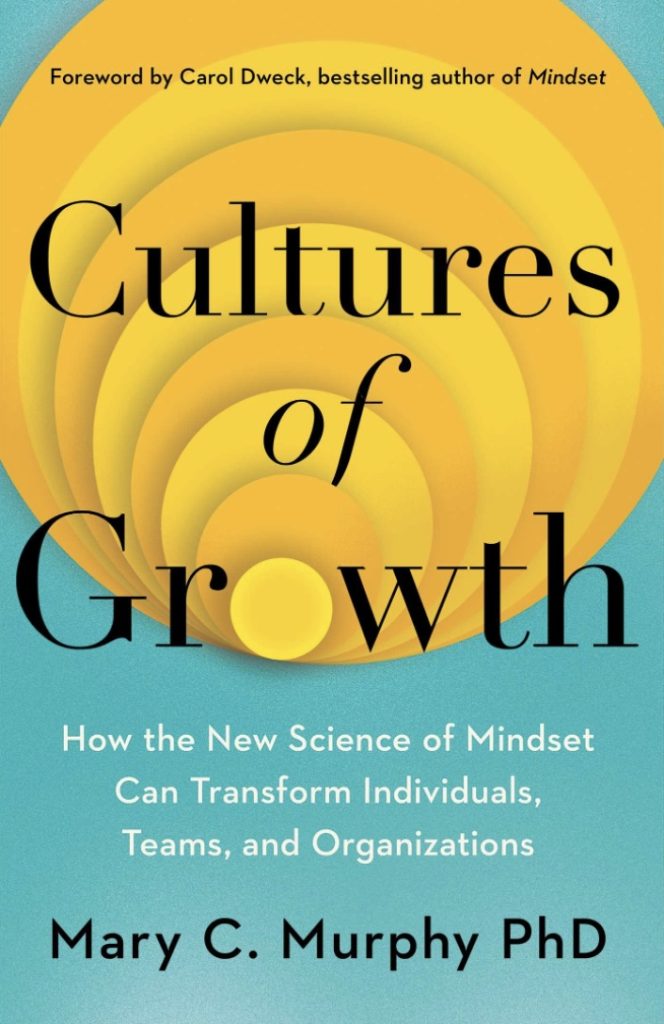
The Book in 3 Sentences: Mary C. Murphy, a mentee of Growth Mindset’s Carol Dweck, shows that mindset isn’t just individual – it’s a culture that influences people toward fixed or growth behaviors. She posits that organizational cultures fall into two categories: genius cultures that prize innate talent and growth cultures that value development. This distinction profoundly shapes employee experience and company success in areas such as innovation, financial performance, inclusion, collaboration, and adaptability. The book provides leaders with practical tools to diagnose their current culture and implement changes that cultivate organizational growth mindsets by choosing learning over status.
The 3 Most Important Concepts:
Organizational Mindset. Beyond individual psychology, entire organizations develop collective beliefs about our talent and ability that shape policies, practices, and daily interactions.
System Design for Learning. Shifting from genius to growth culture requires changing organizational systems and structures, not just encouraging individual mindset changes through communication or trainings.
Culture Cues. Subtle signals in hiring practices, meeting dynamics, performance reviews (or lack thereof), and leadership language indicate where an organization values fixed talent or continuous development.
The Book’s 3 Most Essential Claims:
1. Adult brains possess far greater plasticity than previously believed, making lifelong learning not only possible but beneficial for cognitive health and personal development. The notion of a “fixed” adult brain is outdated, and we can continue to develop new neural pathways throughout our lives.
2. Learning new skills provides measurable physical and mental health benefits including reduced stress hormones, increased oxytocin levels, enhanced pain tolerance, and improved overall well-being. Activities like choir singing and surfing have been shown to have therapeutic effects on both body and mind.
3. The barriers to adult learning are primarily psychological and societal rather than biological. Adults often limit themselves through fear of looking foolish, unrealistic expectations about mastery, and societal messages that learning is primarily for children.
3 Surprising Facts or Insights:
Fixed mindset “genius”-leaning cultures are more prone to unethical behavior like hoarding information, hiding mistakes, or stealing ideas.
Employees can accurately detect their organization’s culture within their first few weeks, often through subtle cues in onboarding and early interactions rather than explicit statements.
Organizations that publicly espouse growth mindset values but maintain genius-oriented practices (like stack ranking financial performance or “up or out” policies) create particularly toxic environments due to the disconnect between rhetoric and reality.
3 Actionable Recommendations:
Move away from “know-it-all” behaviors by ritualizing “learn-it-all” practices. Instead of only celebrating big wins, debrief misses and explain the recovery process and spotlight how people improved regularly.
Restructure evaluations to focus equally on learning goals and outcomes, specifically rewarding instances where employees took intelligent risks that didn’t pan out.
Create psychological safety by having leaders regularly share their own failures and lessons, normalizing growth and iteration at all organizational levels.
3 Questions the Book Raises:
When microcultures in an organization already model a growth culture, how can we scale their practices?
How can organizations balance the real need to assess capability and performance with fostering a truly developmental environment?
Where does an organization’s current processes trigger fixed responses, and what changes would eliminate activation of the triggers?
3 Criticisms of the Book:
The book may oversimplify the genius-vs-growth comparison, when most organizations likely exist on a spectrum or exhibit mixed characteristics across different departments or functions.
Some readers might find the practical implementation guidance too general seeking harder metrics and step-by-step diagnostics to track culture shifts.
The research presented focuses heavily on corporate environments, potentially limiting applicability to non-profits, government organizations, or educational institutions with different constraints and missions.
3 Quotations Worth Remembering:
“The biggest influence on whether you’re operating from your fixed or growth mindset isn’t necessarily between your ears – it’s outside of you.” (p. xvi)
“When employees are motivated to perform out of fear of losing their job to colleague-competitors or stars who will be brought in to replace them, it not only undermines their sense of psychological safety and potentially their long-term health, it’s also likely to impair their ability to develop and improve.” (p. 41)
“Do you want to be better or feel better? That’s the question that confronts us when we’re presented with critical feedback.” (p. 207)
