
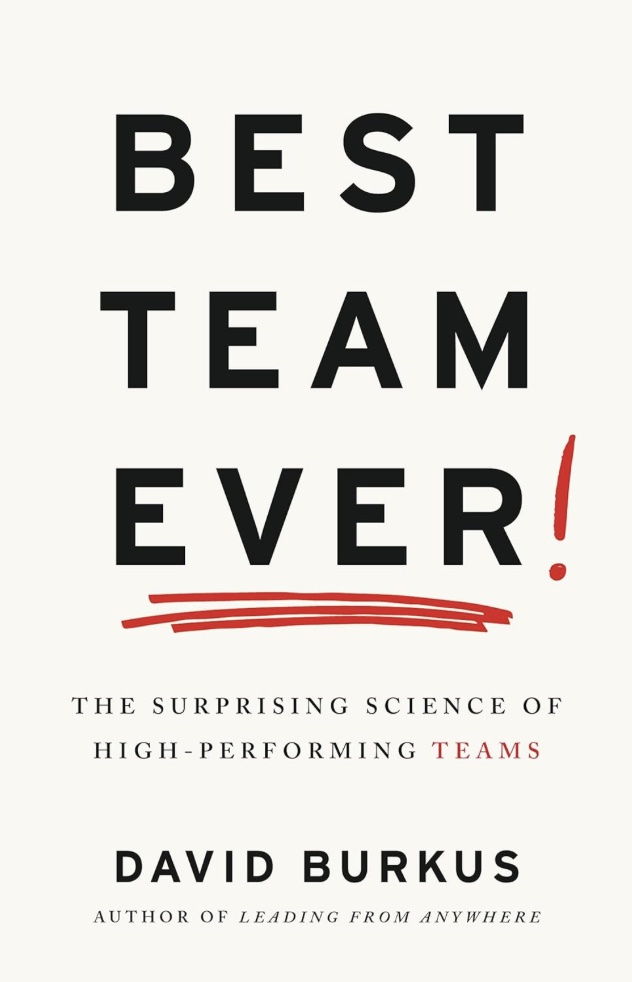
A Rule of Three Book Summary by Admired Leadership
The Book in 3 Sentences:
Teams work best when they understand how each individual works best. With common understanding, team members can leverage the team’s expertise, assigned tasks, context, and preferences. When teams understand not just their roles and responsibilities (clarity), but also the emotions and desires of their teammates (empathy), they operate at a higher level.
Psychological safety drives performance. The interplay between trust and respect builds safety within teams, creating belief that they can share their authentic self with others and expect that they will be respected and accepted. If I trust you, then I will share honestly with you. If you respect me, then you will value what I’ve shared.
Meaning and impact found prosocial purpose. Meaning is knowing that your contribution counts, and impact is knowing who is counting on you. High performing teams actively engage their members in making purpose personal, creating an awareness and experience of why their work matters.
The Book’s 3 Most Essential Claims:
1. The culture of a team is more important than who is on it. Team culture – the collective values, beliefs, behaviors, and ways of working that the members share has an outsized impact on the results a team achieves. The author makes the assertion: Talent doesn’t make the team. The teams make the talent.
2. Leaders set the tone in championing the essential elements. The author uses the narratives of successful leaders, like Ford CEO Alan Mulally’s ability to create safety among leadership as well as Frontier Communication CEO Maggie Wilderotter’s respect for all voices to illustrate the essential role leaders play in high performing teams. Each led their organizations in the early 2000s to significant transformations in culture and business performance.
3. Trust begets trust. Leaders who take responsibility for their mistakes and are willing to admit when they don’t know the answer signal trust to those around them. Trust develops out of experience and working together. Conversely, leaders who preach team effort, but don’t own up to their own shortcomings quickly lose their credibility and the trust of their team.
3 Surprising Facts or Insights:
Great team performance involves discovering and creating a foundation of relationships to avoid disaster. According to the National Transportation Safety Board, around 73% of flight incidents happen on the first day an airplane crew flies together and 44% of those occur on the crew’s very first flight when clarity of roles and personalities are at their lowest.
Members of high-trust teams experience 74% less stress, 40% less burnout and 29% more satisfaction with their overall lives.
The case study of WD-40 CEO Gary Ridge is a compelling example of the author’s concepts. As an iconic product in many households already, Ridge sought to create impact with a focus not on changing the product – but the culture. He sought to create a “tribe”, building common understanding through responsibility and accountability and psychological safety operating with care and candor, to ultimately create exponential growth under his leadership.
3 Actionable Recommendations:
We all want to do work that matters. Asking “who is served by the work we do” is a powerful question to inspire purpose and meaning by creating conversation about the impact a team’s work creates.
After-action reviews of projects can be highly effective in driving performance and building trust, by extracting lessons to identify team strengths and opportunities. As a starting point, consider creating a less formal, high frequency approach on daily basis with two questions: What worked well? What would be even better?
Leaders can create small-scale moments of vulnerability to build more empathy and understanding with team icebreakers like Triple H: each member of the team shares a hero, highlight and a hardship. This exercise gives access to a team member’s values and a view to their sense of personal strengths and challenges.
3 Questions the Book Raises:
What is the significance of people having the feeling that their contribution matters?
Is selective vulnerability where you show a weakness that doesn’t undermine your leadership, as effective as being more openly vulnerable?
How do the most effective leaders succeed in fostering cultures where high performing teams thrive?
3 Criticisms of the Book:
The author cites well-worn research and studies, like Google “Project Aristotle” and Amy Edmondson’s “Psychological Safety and Learning Behavior in the Work Teams” to illustrate its view. If a reader is already familiar with this research and theories, this book may feel redundant.
The author cites research that concludes that people who model respect tend to move toward central positions in the information network of an organization. In contrast, disrespectful behavior can limit career growth in organizations. This lands as generalized theory and does not consider organizations that may champion results over culture and overlook respect as a cost of doing business.
Some suggested action reads as elemental and generic, like amplify unheard voices and share gratitude. There was a missed opportunity at times to go beyond bromides and present a view into the unique behaviors of leaders that foster and promote the best teams ever.
3 Quotations Worth Remembering:
“Talent doesn’t make the team. The team makes the talent” (p. 9)
“Great teams play chess, not checkers” (p. 52)
“Purpose isn’t a why. Purpose is a who” (p. 152)
