
A Rule of Three Book Summary by Admired Leadership
The Book in 3 Sentences:
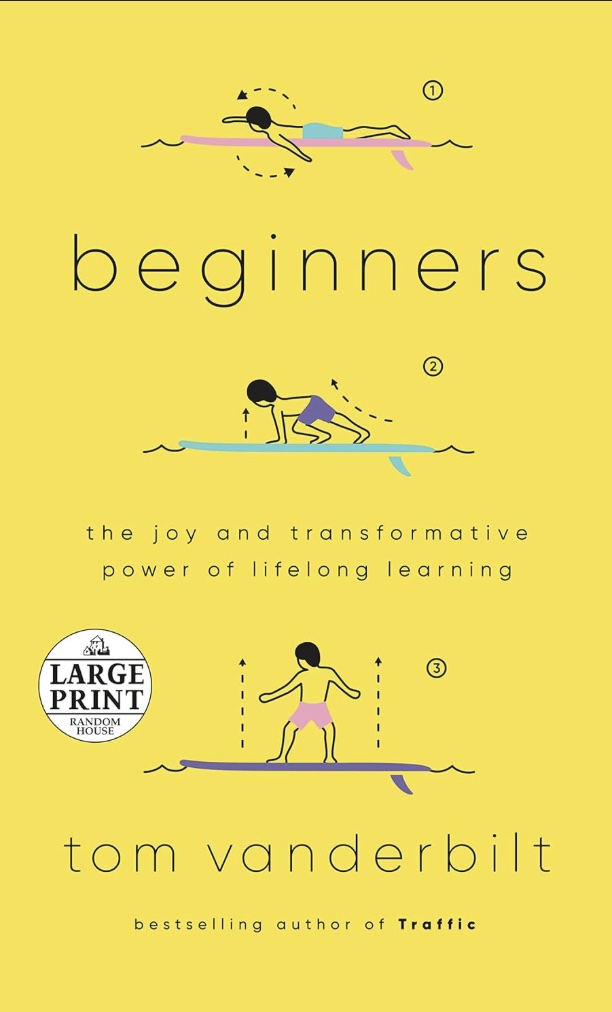
Inspired by his daughter’s curiosity, author Tom Vanderbilt documents his year-long pursuit of learning new skills to prove it’s never too late to begin something new. Through interviews with researchers and personal experimentation, he discovers that adult learning is not only possible but beneficial, requiring us to embrace beginner status and focus on the learning process rather than expertise. The book challenges the notion that learning is primarily for children and demonstrates that maintaining a beginner’s mindset throughout life enhances both personal growth and well-being.
The 3 Most Important Concepts:
The Beginner’s Mind is the cultivation of naive optimism, hypervigilant alertness that comes with novelty, willingness to look foolish, and permission to ask obvious questions without being unencumbered by expertise or ego. This mindset allows adults to approach new skills with the same curiosity and openness that children naturally possess, making learning both possible and enjoyable regardless of age.
Process Over Product means focusing on the act of learning itself rather than becoming fixated on results or mastery. According to learning authority Barbara Oakley cited in the book, much of our pain in learning comes from getting hung up on outcomes rather than embracing the journey of skill acquisition.
The Five-Stage Model of Adult Skill Acquisition developed by University of California professors outlines the progression from Novice to Advanced Beginner, Competence, Proficiency, and finally Expertise. In the novice stage, learners rigidly follow context-free rules, but advancement requires understanding how to apply rules across various contexts and situations.
The Book’s 3 Most Essential Claim
1. Adult brains possess far greater plasticity than previously believed, making lifelong learning not only possible but beneficial for cognitive health and personal development. The notion of a “fixed” adult brain is outdated, and we can continue to develop new neural pathways throughout our lives.
2. Learning new skills provides measurable physical and mental health benefits including reduced stress hormones, increased oxytocin levels, enhanced pain tolerance, and improved overall well-being. Activities like choir singing and surfing have been shown to have therapeutic effects on both body and mind.
3. The barriers to adult learning are primarily psychological and societal rather than biological. Adults often limit themselves through fear of looking foolish, unrealistic expectations about mastery, and societal messages that learning is primarily for children
3 Surprising Facts or Insights:
The popular notion of being “left-brained” or “right-brained” isn’t backed by strong scientific evidence, nor is the idea that the right hemisphere is more creative. This debunks a common excuse people use to avoid trying creative skills like drawing.
Infants spend roughly a third of their day for six solid months practicing walking and don’t truly perfect it until several years later. This perspective reframes how we should think about the time investment required for adult skill acquisition.
Social facilitation—the phenomenon discovered by psychologist Norman Triplett studying bike racing—shows that humans perform better in the presence of others. Being surrounded by other learners or performers can significantly accelerate skill improvement.
3 Actionable Recommendations:
Take the most notes on the first day of learning something new, as that’s when you observe the most before the environment becomes familiar. Document your initial observations and questions while your perspective is freshest.
Focus on external targets rather than internal mechanics when learning physical skills. Darts players perform better focusing on the board rather than their arms, and golfers improve by focusing on the hole rather than their elbows.
Join a group learning environment or find practice partners for your new skill. The combination of social facilitation and shared beginner status creates optimal conditions for improvement and enjoyment.
3 Questions the Book Raises:
Why do we continue to structure learning opportunities primarily for children when adult brain plasticity allows for lifelong skill acquisition?
How much of our resistance to learning new skills stems from societal expectations about expertise versus genuine cognitive limitations?
What would society look like if maintaining beginner status in multiple domains was valued as highly as achieving mastery in a single area?
3 Criticisms of the Book:
The author’s year of learning multiple skills simultaneously may not be realistic for most adults with typical work and family responsibilities. His privileged position as a writer with flexible time isn’t adequately acknowledged.
While celebrating amateur learning, the book doesn’t sufficiently address when expertise actually is necessary or valuable. Not all skills can or should remain at the beginner level, particularly in professional contexts.
The anecdotal nature of much of the evidence, while engaging, sometimes lacks the scientific rigor needed to support broader claims about adult learning capacity. More systematic research citations would strengthen the arguments.
3 Quotations Worth Remembering:
“The objective should be learning itself. Much of our pain in learning… comes from getting hung up on results” (p. 150).
“The preservation, even cultivation, of that spirit of the novice: The naïve optimism, the hyper-vigilant alertness that comes with novelty and insecurity, the willingness to look foolish, and the permission to ask obvious questions—the unencumbered beginner’s mind” (pp. 29-30).
“Skills take time. Infants spend roughly a third of their day for six solid months practicing walking (and don’t truly perfect it until several years later). Think of that the next time you fret about your tennis serve or your ability to paint clouds during that hour per week you spend on an activity. They’re called baby steps for a reason” (p. 67).
